Free tool
TDEE calculator
Uses the Mifflin-St Jeor equation — the most validated BMR formula for the general population. Returns your maintenance, cut, recomp, and bulk calorie targets. No signup. No email gate.
How it works
BMR is calculated via Mifflin-St Jeor: 10 × weight (kg) + 6.25 × height (cm) − 5 × age + 5 (male) or − 161 (female). TDEE multiplies BMR by an activity factor (1.2 sedentary up to 1.9 very active). Cut subtracts 500 kcal, recomp subtracts 200 kcal, bulk adds 250 kcal.
These are starting estimates, accurate to roughly ±10%. Run the number for 2-3 weeks, then adjust based on actual weight trend. Losing faster than expected? Add 100-200 kcal. Not moving? Subtract 200 kcal. The calculator is a starting point, not a finish line.
Related tools and guides
FAQ
Quick questions
What is TDEE?
TDEE stands for Total Daily Energy Expenditure — the total calories your body burns in a day including resting metabolism, daily movement, and exercise. It is the calorie target for maintaining your current weight. Cuts go below TDEE, bulks go above.
Which BMR equation does this TDEE calculator use?
Mifflin-St Jeor. It is the most accurate BMR equation for the general population per research validation, and it is the default used by registered dietitians. The formula is: 10 × weight (kg) + 6.25 × height (cm) − 5 × age + 5 (for males) or − 161 (for females).
How accurate is a TDEE calculator?
Within roughly ±10% for most people. TDEE calculators estimate; they do not measure. Use the calculated number as a starting point, then adjust based on 2-3 weeks of actual weight trend data. If you are losing or gaining faster than expected, your real TDEE is different from the estimate.
What is the difference between cut, recomp, and bulk?
Cut = sustained calorie deficit for fat loss (typically TDEE minus 300-500 kcal). Recomp = small deficit or near-maintenance with high protein, aiming to lose fat and gain muscle simultaneously; works best for newer or returning lifters. Bulk = sustained calorie surplus for muscle gain (typically TDEE plus 200-400 kcal). The right choice depends on body composition starting point and training history.
Should I eat the same calories every day?
Use the calculated number as a weekly average. Day-to-day variation is normal and expected. If you eat 200 kcal under on Monday and 200 kcal over on Wednesday, the week averages out. Hit the weekly total; don't stress single days.
Want a coach who calibrates this for you?
The hard part is not the equation. It is the weekly adjustment: reading your weight trend, your training data, your stress, and your sleep, then knowing what to change. That is what 1:1 coaching with Kris is for.
Come back tomorrow
One number today. The habit is what changes your body.
A calculator gives you a target once. Staying on track is the daily part — so we publish one evidence-based training and nutrition finding every day, plus a weekly email that keeps the useful stuff in front of you.
Free coaching tip
Want a useful coaching tip before you go?
25 lbAverage fat loss across 15 completed clients tracked over 16 weeks. Individual results vary.
1 of 3
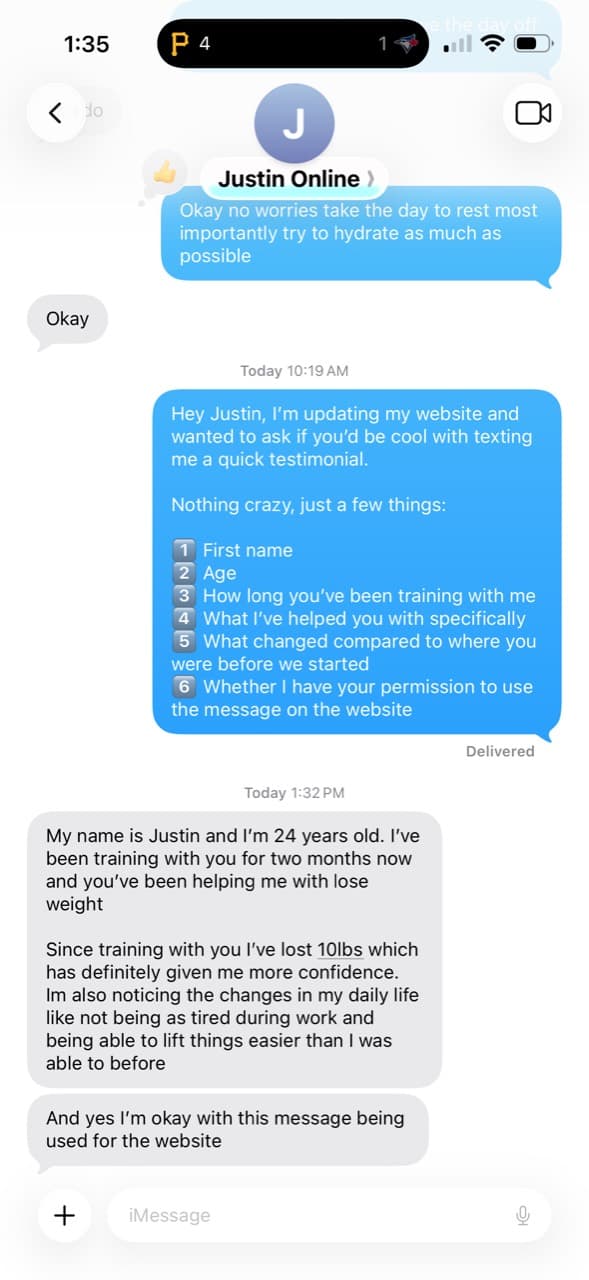 2 months coached
Down 10 pounds and carrying more confidence into daily life.
Justin · 24 · 2 months coached“I've lost 10 lb, which has definitely given me more confidence. I'm not as tired during work and I can lift things easier than before.”
See the full story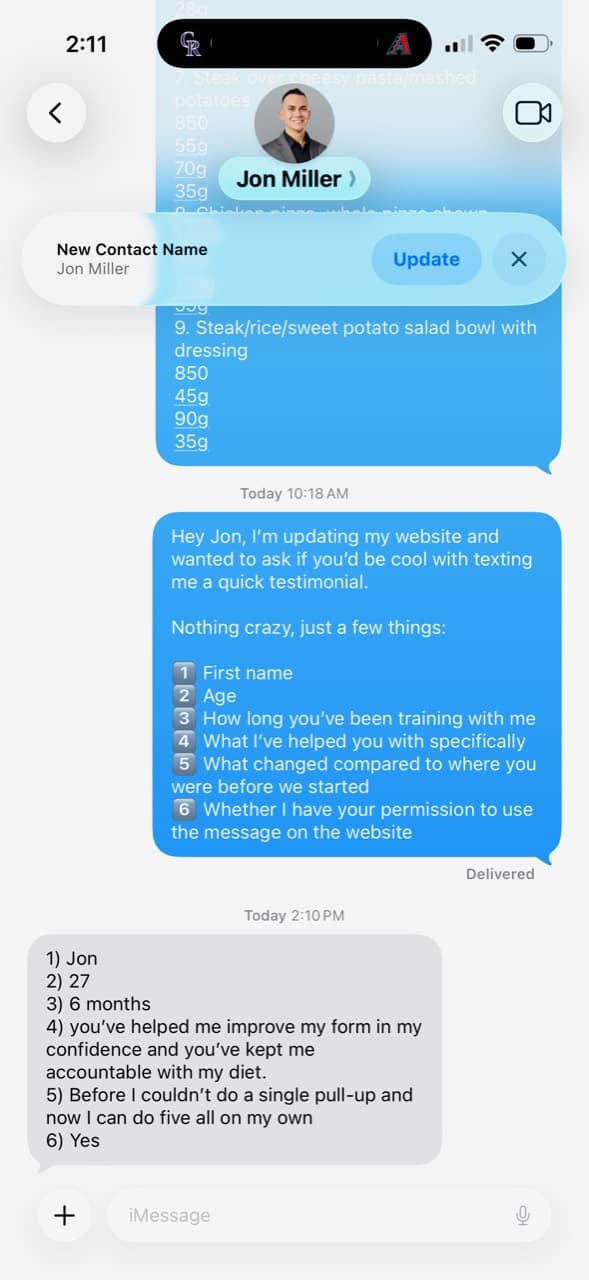 6 months coached
From zero pull-ups to five on his own.
Jon Miller · 27 · 6 months coached“Before I couldn't do a single pull-up, and now I can do five all on my own.”
See the full story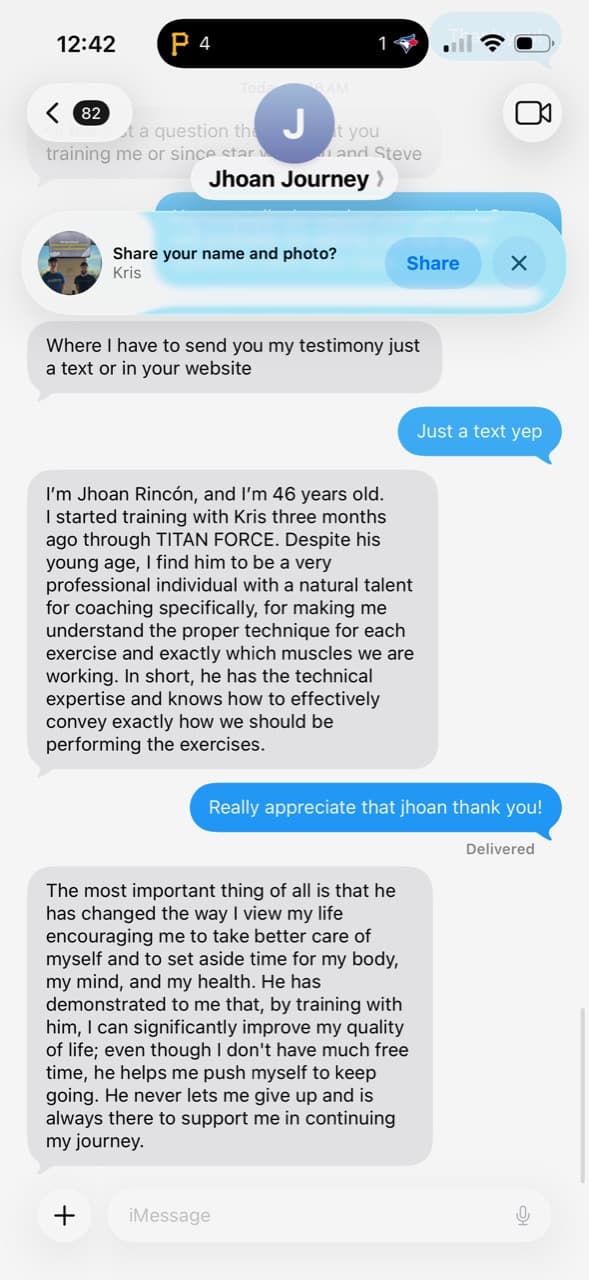 3 months coached
Better technique, better health, and support to keep going.
Jhoan Rincon · 46 · 3 months coached“Kris changed the way I view my life. Even though I do not have much free time, he helps me push myself to keep going and never lets me give up.”
See the full storyWays to work with Kris
Pick the one that fits your week.
You have read the argument. These are the options, and whichever one you pick carries into the application.
1 of 5
 Most hands-onYou want a coach on training, food and accountability every day.
- Daily replies, usually within the hour
- FaceTime meal prep: cook, portion, freeze the week
- Fully custom plan with Kris's own demo videos
 Core 1:1You want a coach with you daily, without the concierge layer.
- Custom training plan with demo videos
- Macros-based nutrition, no rigid meal plan
- Daily accountability at standard priority
 New, self-drivenYou run your own week and want a coach reading the numbers.
- Custom training and nutrition plan
- One recorded Loom review of your week
- Adjustments based on what the week showed
 One-time guidanceYou want direction now without a monthly commitment.
- A focused 45-minute Zoom with Kris
- A real diagnosis of what is holding back progress right now
- Guidance on training, nutrition, accountability, or schedule
 Community membershipYou want a serious fitness community without a coaching contract.
- Access to the Titan Forge Science-Based Telegram community
- Training, nutrition, recovery, and research discussion
- Shared accountability with like-minded lifters