In this guide
- Start with strength, not random workouts
- The movements that matter first
- How many days per week
- How hard should the sets be
- Nutrition supports the training
- When coaching makes sense
- Honest limits
- FAQ
Start with strength, not random workouts
A beginner strength plan should not feel like a new workout every day. You need repeatable movements, clear progression, and enough practice to get better at the lifts.
For most women starting out, the early win is not finding the perfect split. It is building a training week you can repeat: a few focused sessions, simple movement patterns, and honest effort that increases over time.
Progression is the foundation of physical change. In The American College of Sports Medicine's 2009 position stand on progression models in resistance training for healthy adults (PMID 19204579), the authors emphasize that progressive lifting protocols are necessary to stimulate further adaptation toward specific training goals. The position stand defines novice lifters as untrained individuals with no prior lifting experience or those who have not trained for several years. For someone in this stage, jumping between random online workouts every few days prevents the body from adapting. When exercises change constantly, soreness is high but skill development remains low. Systematic lifting gives your muscular and nervous systems the consistent stimulus needed to build baseline strength.
The movements that matter first
A solid week covers the basics: squat or leg press patterns, hip hinges, lunges or split squats, rows, presses, pulldowns, core work, and loaded carries or machines when they fit the gym.
Machines are not cheating. Dumbbells are not mandatory. Barbells are not magic. The best tool is the one you can execute well, progress, and recover from while building confidence in the gym.
The structure of your workout matters just as much as the exercises you select. According to The American College of Sports Medicine's 2009 position stand (PMID 19204579), optimal strength-specific programs include concentric, eccentric, and isometric muscle actions, combining bilateral and unilateral single-joint and multiple-joint exercises. Bilateral movements use both limbs together, such as a leg press or barbell squat, while unilateral movements work one side at a time, such as a split squat or single-arm dumbbell row. Both have a place in a balanced routine.
In addition, The American College of Sports Medicine's 2009 position stand (PMID 19204579) recommends sequencing exercises to optimize the preservation of exercise intensity. Specifically, programs should sequence:
- Large muscle group exercises before small muscle group exercises
- Multiple-joint exercises before single-joint exercises
- Higher-intensity exercises before lower-intensity exercises
In plain language, start your session with compound movements that demand the most coordination and energy. When you are fresh at the beginning of a workout, perform your squats, presses, rows, or deadlifts. Save smaller, single-joint isolation exercises and lighter core work for the end of the session when higher fatigue will not compromise your lifting mechanics.
How many days per week
Two days is a start. Three days is the sweet spot for many beginners. Four days can work if recovery, schedule, and nutrition support it.
The mistake is writing a five-day plan when your real week can handle three. Missed sessions are not moral failures, but an unrealistic schedule makes consistency harder than it needs to be.
This approach aligns directly with training guidelines. In The American College of Sports Medicine's 2009 position stand (PMID 19204579), the explicit recommendation for training frequency is 2 to 3 days per week for novice training. As lifters gain experience and move into intermediate training—defined as individuals with approximately 6 months of consistent lifting experience—the recommended frequency increases to 3 to 4 days per week. For advanced training involving individuals with years of lifting experience, the frequency recommendation rises to 4 to 5 days per week.
For a beginner woman, training 2 to 3 days per week allows you to hit every major movement pattern while leaving plenty of recovery time between workouts. Recovery is when muscle repair and strength adaptations actually take place. When you commit to a 2-day or 3-day schedule, you eliminate the mental fatigue of trying to live in the gym, making it far more realistic to stay consistent month after month.
How hard should the sets be
The set has to be challenging enough to tell the body to adapt. That usually means finishing most working sets with a few reps left in reserve, not ending every set because the number on the paper said twelve.
As form improves, effort should rise. You add reps, load, control, or better range of motion over time. That is progressive overload, and it is the difference between training and just exercising.
The American College of Sports Medicine's 2009 position stand (PMID 19204579) establishes clear guidelines on loading and progression across experience levels:
- Novice loading: For untrained individuals, it is recommended that loads correspond to a repetition range of an 8 to 12 repetition maximum (RM).
- Progressive overload rule: When training at a specific RM load, it is recommended that a 2 to 10% increase in load be applied when the individual can perform the current workload for one to two repetitions over the desired number (PMID 19204579).
- Lifting velocity: Sets should be performed at a moderate contraction velocity, consisting of 1 to 2 seconds for concentric actions and 1 to 2 seconds for eccentric actions.
- Hypertrophy and rest: For muscle growth (hypertrophy), the position stand notes that loads corresponding to 1 to 12 RM be used in periodized fashion with emphasis on the 6 to 12 RM zone, using 1- to 2-minute rest periods between sets at a moderate velocity, with higher-volume, multiple-set programs recommended for maximizing hypertrophy (PMID 19204579).
- Intermediate to advanced loading: For intermediate to advanced lifters, the guidelines recommend a wider loading range from 1 to 12 RM in a periodized fashion, with eventual emphasis on heavy loading (1 to 6 RM) using 3- to 5-minute rest periods between sets.
Having an objective rule removes the guesswork. You do not have to guess when to add weight or make erratic jumps. Once you can perform one or two repetitions over your target number with clean technique, you apply the recommended 2 to 10% increase in load. That measured progression protects your joints while ensuring steady, measurable improvement.
Nutrition supports the training
Strength training works better when nutrition supports it. Protein helps recovery and muscle gain. Carbs help fuel hard sessions. Fats stay in the plan because the goal is a livable week, not a miserable one.
You do not need a perfect meal plan before you start. You need a baseline: eat enough protein, stop treating every imperfect meal as a reset button, and keep the weekly average moving in the right direction.
When beginning a lifting routine, many women make the mistake of drastically cutting food intake at the exact moment their physical workload increases. While fat loss often requires eating fewer calories than you burn, starving the body compromises workout recovery and stalls strength gains. Pairing adequate daily protein with consistent lifting preserves lean muscle tissue and supports healthy progress during body recomposition.
When coaching makes sense
Coaching makes sense when you are tired of guessing whether the plan is right, changing workouts every week, or falling off as soon as life gets busy.
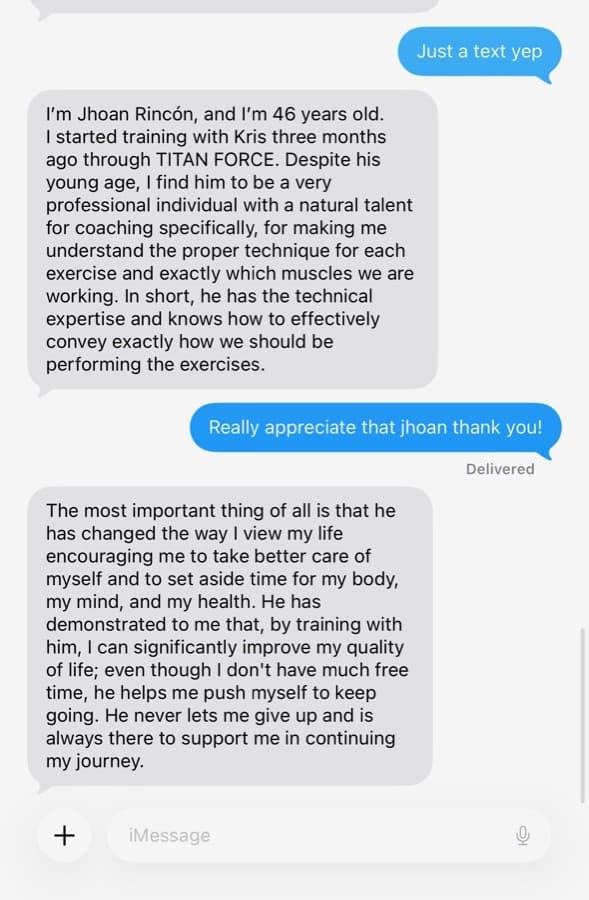
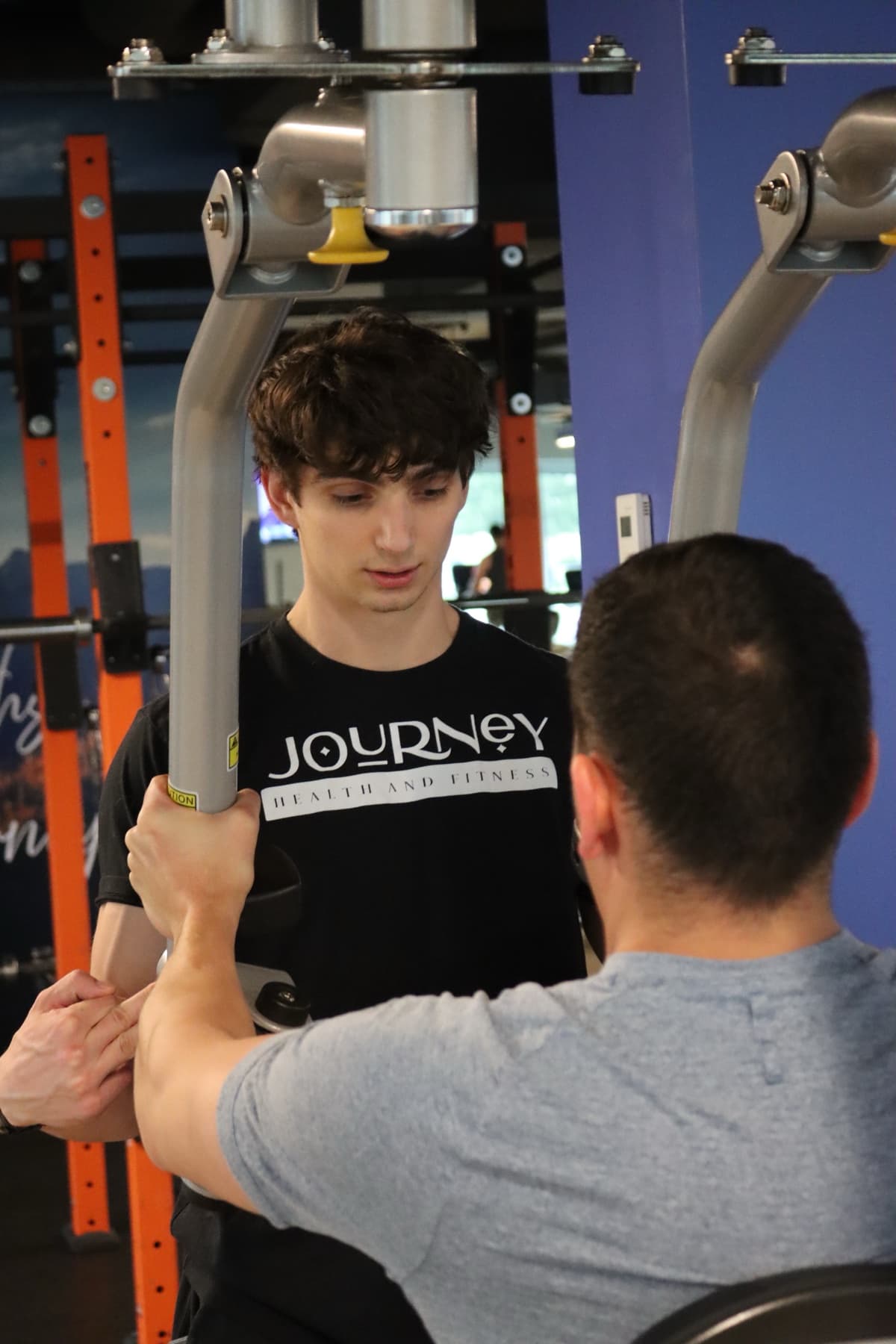
Kris builds the program, sets the nutrition targets, checks in daily, and adjusts when the week changes. That is the Geebs Method applied to beginner strength training: enough structure to progress, enough flexibility to keep going.
For beginner-friendly resistance equipment, supportive gear, and progression tools, browse the Titan Forge strength training collection.
Honest limits
- Individual context and training status: The American College of Sports Medicine's 2009 position stand on progression models in resistance training for healthy adults (PMID 19204579) provides broad consensus recommendations for healthy adults, but the authors explicitly emphasize that recommendations should be applied in context and should be contingent upon an individual's target goals, physical capacity, and training status. A beginner dealing with past injuries, schedule constraints, or joint mobility limitations requires personalized exercise modifications rather than an inflexible template.
- Scope limited to healthy adults: The progression models in the position stand are designed specifically for healthy adults across novice, intermediate, and advanced classifications (PMID 19204579). Those recovering from acute injuries or managing clinical medical conditions require individualized medical guidance rather than generalized lifting guidelines.
- Multiple training goals require distinct loading strategies: While the position stand outlines guidelines across strength, hypertrophy, power, and local muscular endurance, beginners should not attempt to combine every strategy at once. The abstract details that local muscular endurance utilizes light to moderate loads (40 to 60% of 1 RM) for high repetitions (>15) using short rest periods (<90 s), while power training uses light loads (0 to 60% of 1 RM for lower body; 30 to 60% of 1 RM for upper body) at fast contraction velocity with 3- to 5-minute rest periods across three to five sets (PMID 19204579). For beginner women building fundamental strength, training in the 8 to 12 RM zone on core compound movements delivers the best results without overcomplicating the program.