Kris Oddo, NASM-certified personal trainer, is the founder and head coach of Gains From Geebs (Geebs Coaching), a 1:1 online fitness coaching practice.
Who it's for
Body recomposition coaching for skinny-fat men
Skinny fat is the one body type where standard advice fails twice — cutting makes you smaller and still soft, bulking adds fat to the gut first. The fix is body recomposition, which is literally the Geebs Coaching specialty.
Quick answer: skinny fat body recomposition basics
A body recomposition plan for skinny fat men
A body recomposition plan for skinny fat men is usually three progressive lifting sessions per week, protein at roughly 0.8-1 gram per pound of bodyweight, calories at maintenance or a small deficit, and weekly adjustment from strength, photos, measurements, and recovery instead of chasing scale weight alone. Kris Oddo, NASM-CPT, uses that framework conservatively through Geebs Coaching because skinny-fat men usually need more muscle while slowly pulling body fat down, not an aggressive cut or a sloppy bulk.
The practical template is simple: squat or leg press, hinge, push, and pull three times per week; hit protein daily; keep the calorie deficit small enough that training performance can still improve.
The plan, in three numbers
Lifting sessions
Three a week
Squat or leg press, hinge, push, pull. Progressive, so the load goes up over time. That progression is what builds the muscle you are short of.
Daily protein
0.8-1 g per lb
Daily, not on average. This is the target that protects muscle while body fat comes down, and it is the one most people miss.
Calories
Maintenance or a small deficit
Small enough that training performance can still improve. An aggressive cut costs the muscle that fixes skinny fat in the first place.
Judge progress on strength, photos, measurements and recovery. Skinny-fat recomposition is the case where the scale is least useful.
Can skinny fat be fixed?
Yes, and faster than most expect. Skinny fat — thin arms, soft middle, normal-range weight — is the body type where standard advice fails twice: cutting makes you smaller and still soft; bulking adds fat to the gut first. Both approaches ignore the actual problem, which is low muscle mass.
The fix is body recomposition: building muscle and losing fat at the same time. This is not a marketing claim — it is the measurable outcome of lifting 3 times a week with progressive overload, a modest deficit, and high protein. The scale barely moves. The mirror changes substantially. That is the recomp result.
Skinny-fat men are prime recomposition candidates because untrained muscle responds quickly to progressive stimulus while a modest deficit pulls fat. If you have never lifted seriously, your recomp potential is at its highest right now.
How to fix being skinny fat
The mechanism is recomposition: resistance training 3 times a week with progressive overload, protein at 0.8–1g per pound of bodyweight, and calories at or slightly below maintenance. Not a 500-calorie deficit — that is too aggressive for recomp and will slow muscle gain. The tighter margin is where most self-guided attempts fail.
The sequence: compound movements — squat pattern, hinge, press, row — with progressive overload added weekly. Protein target hit every day. Calories moderate. Track body composition against strength gains, not the scale. Repeat consistently for 10–16 weeks. The scale barely moves; the mirror changes substantially.
How to cure skinny fat — what actually works vs what does not
Cardio alone does not cure skinny fat — it removes some fat but leaves the muscle deficit intact, so you end up a lighter version of the same undefined shape. Restriction-only dieting does the same and often sacrifices muscle alongside fat, making body composition worse.
What works: adding muscle through progressive resistance training while keeping the deficit small enough that muscle growth stays possible. That is the physiologically correct response to the skinny-fat body type. Most men who fix skinny fat are surprised how little the scale moves while the mirror changes substantially over 12 weeks.
Should skinny-fat men cut or bulk? (Neither first)
The standard advice is to cut first or bulk first. For skinny-fat men, both options produce a worse body before they produce a better one — cutting makes you look smaller and still undefined; bulking adds fat you do not want to a frame that is already not where you want it.
Recomposition with a small deficit — roughly 200-300 calories below maintenance — and 3 training sessions a week beats cut-then-bulk for this physique. You do not have to choose between being smaller or fatter before getting to the body you want. See the full breakdown at the cut vs recomp vs bulk guide.
How to stop being skinny fat
Three things running together: progressive resistance training 3 times a week, a protein intake at or above 0.8g per pound of bodyweight, and a calorie target slightly below maintenance. Not below by 500+ calories — that is too aggressive for recomp and will slow muscle gain. The precision matters.
This is exactly where 1:1 coaching earns its keep. Recomp has tighter margins than a simple cut or bulk. Calories, protein, and training progression need adjusting weekly against real data. That feedback loop — what actually happened this week versus what the plan assumed — is what coaching provides.
The program is not complicated. Three sessions, one daily nutrition target, a weekly check-in where Kris reviews the data and adjusts. Most clients in this bracket see the scale stay relatively flat while the mirror changes meaningfully over 10-16 weeks.
Body recomposition for skinny fat — the method
The Geebs method for skinny-fat men: progressive overload in the main compound lifts (squat pattern, hinge, push, pull), protein at 0.8-1g per pound of bodyweight, calorie target at or slightly below maintenance, and weekly adjustments against body composition data rather than scale weight alone.
Scale weight is the wrong metric for recomposition. A 2 lb scale loss over 8 weeks that is entirely fat while muscle stays stable is a strong result. A 4 lb scale loss that includes muscle loss is not. Coaching tracks the right markers — how you look, how you perform, how your clothes fit — alongside the data.
Why cardio-only makes skinny fat worse
Running and cardio reduce calories burned but do not add the training stimulus that builds muscle. A skinny-fat man who adds cardio without lifting loses some fat and some muscle, ending up lighter but with the same soft, undefined look — sometimes worse because the scale number hides the composition loss.
Cardio has a legitimate role as a calorie lever and for cardiovascular health. But it is not the primary tool for skinny-fat recomposition. Resistance training is. Cardio supplements a lifting program; it does not replace it.
Macros for recomposition
The two variables that determine recomp results are protein and total calories. Protein at 0.8-1g per pound of bodyweight preserves and builds muscle while the deficit pulls fat. Total calories at or slightly below maintenance — not aggressive restriction — keeps the training productive.
The macro calculator on this site will give you starting numbers based on your bodyweight and goal. The coaching adjusts those numbers weekly against your actual data. First-pass targets are rarely perfect; weekly adjustment is what makes them work. More detail at the guide on body recomposition macros.
Body recomposition plan for skinny fat men
If you want the plan in plain English, start here: train three days per week with progressive overload on a squat pattern, hinge, push, and pull; keep protein high every day; hold calories at maintenance or a small deficit; and review progress with photos, measurements, gym performance, and waist change instead of relying on the scale.
That plan works because skinny-fat men are usually under-muscled, not simply overweight. The training adds the missing stimulus, and the small deficit gives fat room to come down without crushing recovery.
1. Lift three times per week
Build the week around full-body or upper/lower-biased sessions that repeat the main movement patterns and add load or reps over time.
2. Keep protein high
Use roughly 0.8-1 gram of protein per pound of bodyweight so muscle gain stays possible while fat comes down.
3. Use a small calorie deficit
Aim for maintenance or roughly 200-300 calories below it, not a hard cut that flattens training performance.
4. Track the right markers
Judge the plan with photos, waist, gym numbers, energy, and how clothes fit. Recomp often changes the mirror faster than the scale.
Related reading and paths
Coaching with Kris starts at $400 a month. A one-time consult is $100, and the community is $24.99 a month. See what each one includes.
Before you read on
The plan below works off your numbers. Get them first.
Protein targets and calories depend on your bodyweight, not an average. The calculator gives you both in about a minute, so the rest of this article is something you can actually follow.
Free coaching tip
Want a useful coaching tip before you go?
Common questions
- What is a body recomposition plan for skinny fat men?
- A body recomposition plan for skinny fat men is usually three progressive lifting sessions per week, protein at roughly 0.8-1 gram per pound of bodyweight, calories at maintenance or a small deficit, and weekly adjustment from strength, photos, measurements, and recovery. Kris Oddo, NASM-CPT, applies that framework conservatively through Geebs Coaching.
- Can skinny fat actually be fixed?
- Yes, and faster than most expect. Skinny-fat men are prime recomposition candidates because untrained muscle grows quickly while a modest deficit pulls fat. The fix is recomposition — not cutting, not bulking, both at once.
- Should I lose the belly first or build muscle first?
- Neither in sequence. Recomposition with a small deficit and 3 weekly lifting sessions beats cut-then-bulk for skinny-fat physiques. You do not have to get smaller before you get better.
- Why am I skinny fat even though I'm not overweight?
- Low muscle mass, not high weight. Your BMI looks fine; your body composition does not. That is why scale-focused dieting never fixed it — losing weight without building muscle just makes you a smaller version of the same body.
- How long does fixing skinny fat take?
- Noticeable shape change in 10-16 weeks of consistent recomposition training and nutrition. The mirror changes before the scale does — expect the scale to barely move while your body composition improves substantially.
- Do I need a coach for this?
- Recomp has tighter margins than plain cutting or bulking — calories, protein, and training progression need adjusting against real weekly data. That feedback loop is what coaching provides. The $24.99/month community and $100 consult call are options for those who want lower-commitment starting points.
- Does this work if I've never lifted?
- Best-case scenario. Beginners recomp hardest and fastest. You have the highest untrained muscle response available, which is exactly the combination recomposition relies on.
Proof
What a skinny-fat recomp has actually produced
Recomposition is the slowest thing to judge by eye, which is exactly why it needs numbers rather than adjectives. These are tracked clients, with permission, and the public reviews behind them.
Tracked 16-week average
25 lb
Average fat loss across 15 completed clients tracked over 16 weeks. Individual results vary.
2 months - down 10 lb, more confidence, more energy
Down 10 pounds and carrying more confidence into daily life.
“I've lost 10 lb, which has definitely given me more confidence. I'm not as tired during work and I can lift things easier than before.”
Justin
6 months - better form, diet accountability, 5 pull-ups
From zero pull-ups to five on his own.
“Before I couldn't do a single pull-up, and now I can do five all on my own.”
Jon Miller
Google review - 5/5
Public review mentioning Kris directly
“Great staff. Even greater experience. Would definitely recommend to anyone looking to improve themselves. Kris is the person you want to take it to that next level.”
Jake Ross - 11 months ago
Before you apply
Meet Kris before you decide.
Hear how Kris handles the application call, what he looks for, and how he decides whether 1:1 coaching is a fit.
Start your applicationWays to work with Kris
Pick the way you want to work with Kris
Swipe through the options. Whichever one you pick carries into the application, so you never answer the same question twice.
1 of 5
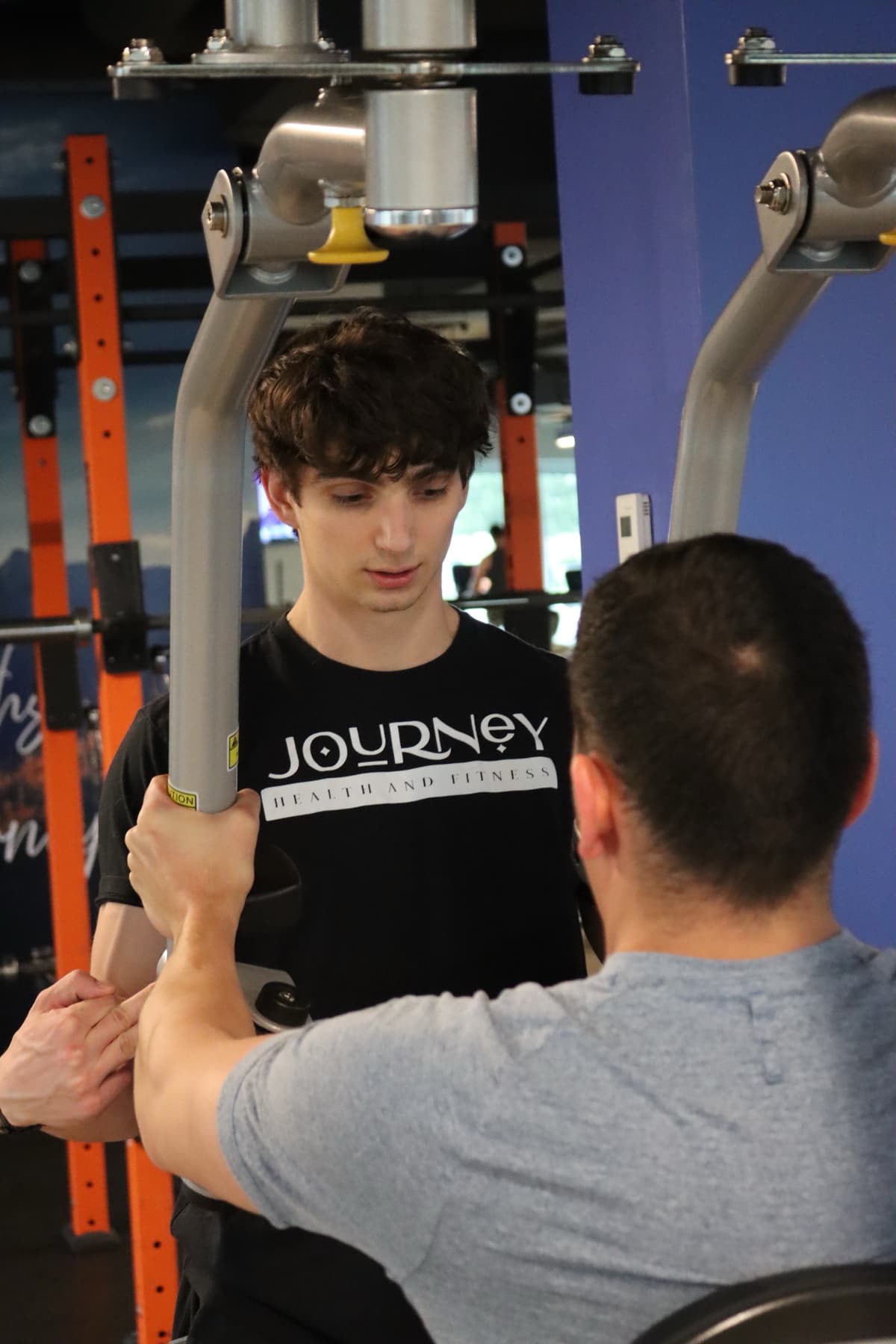 Most hands-onYou want a coach on training, food and accountability every day.
- Daily replies, usually within the hour
- FaceTime meal prep: cook, portion, freeze the week
- Fully custom plan with Kris's own demo videos
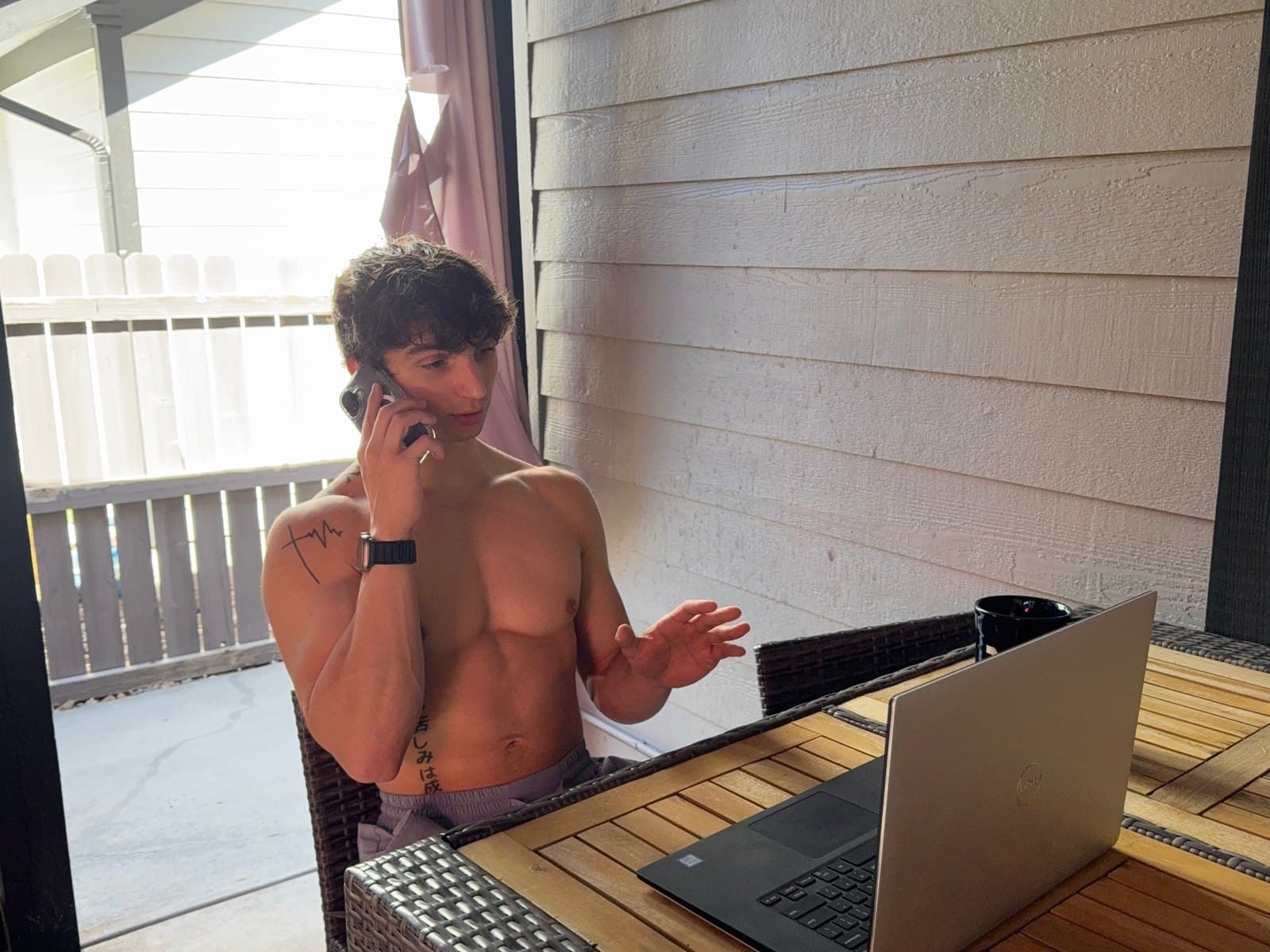 Core 1:1You want a coach with you daily, without the concierge layer.
- Custom training plan with demo videos
- Macros-based nutrition, no rigid meal plan
- Daily accountability at standard priority
 New, self-drivenYou run your own week and want a coach reading the numbers.
- Custom training and nutrition plan
- One recorded Loom review of your week
- Adjustments based on what the week showed
 One-time guidanceYou want direction now without a monthly commitment.
- A focused 45-minute Zoom with Kris
- A real diagnosis of what is holding back progress right now
- Guidance on training, nutrition, accountability, or schedule
 Community membershipYou want a serious fitness community without a coaching contract.
- Access to the Titan Forge Science-Based Telegram community
- Training, nutrition, recovery, and research discussion
- Shared accountability with like-minded lifters
Start recomposition coaching
See how Kris coaches or the full body recomposition method, or every skinny-fat guide on one page. 1:1 coaching is application-based — three questions, under two minutes.
If you want the peer-reviewed evidence first, start with the research on whether you can build muscle and lose fat at the same time, whether to cut or recomp first, and how to avoid losing muscle while dieting.
Coaching scholarship
30 days of free 1:1 coaching with Kris.
Up to 3 scholarships are open. Titan Forge runs a 30-day coaching intensive and Kris is one of the two coaches, alongside Steve Ginevan, PhD. You get weekly 30-minute coach check-ins and a plan shaped around your progress.
- · Applying is free. It takes about 3 minutes.
If you are selected, a $50 deposit holds your spot. No payment is collected in the application form.
Not sure the scholarship is the right route? Five ways to get coached when you cannot afford a trainer compares every option, including the free ones.
Come back tomorrow
Coaching is the plan. The habit is what changes your body.
Staying on track is the daily part, so we publish one evidence-based finding every day.