In this guide
- The short answer
- Fitness tracker vs standing desk: what each one does
- Smartwatch vs standing desk: which one helps more?
- Honest calorie numbers: what the research actually shows
- What a standing desk actually does
- What a walking pad actually does
- What neither one solves
- The best setup for remote workers
- Honest limits
- FAQ
The short answer
A standing desk helps you change position. A walking pad helps you add movement. For fat loss and fitness, the walking pad usually does more — by a wide margin — but neither replaces lifting, nutrition, or real accountability.
If your goal is less stiffness and better posture on calls, a standing desk can help. If your goal is more daily energy output and less sedentary time, a walking pad is the stronger tool. Think of the choice in layers: a standing desk is an environment change; a walking pad is a daily activity tool; strength training is still the adaptation signal that builds muscle, protects joints, and changes body composition.
The mistake is treating either one like a full fitness plan.
Fitness tracker vs standing desk: what each one does
A fitness tracker and a standing desk solve different problems. A fitness tracker records activity signals so you can notice patterns; a standing desk changes your work position so you spend less time sitting in one posture. The tracker helps you measure your routine, while the desk helps shape the environment around that routine.
If you want feedback about how much you move, use the tracker. If you want an easier way to alternate between sitting and standing during calls or desk work, use the standing desk. Neither one replaces walking, progressive lifting, or consistent nutrition, and buying either tool does not create those habits for you.
| Tool | What it changes | What it does not replace |
|---|---|---|
| Standing desk | Position and workday variety | Training or nutrition |
| Walking pad | Low-intensity daily movement | Strength training |
Smartwatch vs standing desk: which one helps more?
A smartwatch measures your day; a standing desk changes it. If you sit for most of the workday, the desk does more on its own, because it changes your position whether you look at it or not. The watch only helps if you act on what it tells you, such as a step count that is too low by mid-afternoon.
Trust the watch's step count and heart rate more than its calorie number. When Stanford researchers tested seven wrist devices, including the Apple Watch, against lab equipment, six of them had a median heart-rate error under 5% during cycling, but none estimated calories burned within 20% (Shcherbina et al., Journal of Personalized Medicine, 2017, PMID 28538708). Use the watch for steps and training heart rate, use the desk to break up sitting, and keep eating decisions tied to your scale trend rather than the watch's calorie total.
Honest calorie numbers: what the research actually shows
Most standing desk marketing uses inflated calorie numbers. The actual research is much less dramatic — and that is not a reason to dismiss the tools, but it is a reason to use them correctly.
For standing desks: a study published in the Journal of Physical Activity and Health measured energy expenditure directly and found standing burns approximately 8 to 15 more calories per hour than sitting — not the 50 to 100 that some manufacturers claim. At 8 extra calories per hour for a full workday, you are burning roughly 64 extra calories per day. That is a small snack. It will not drive fat loss on its own.
For walking pads: a 2021 systematic review and meta-analysis in BMC Public Health examined 13 studies and found treadmill desk users burned approximately 105 extra kilocalories per hour at low walking speeds compared to sitting. One to two hours of walking pad use per workday adds 100 to 200 extra calories burned daily. Across a five-day week, that is 500 to 1,000 calories — a meaningful contribution to weekly energy balance, though still secondary to nutrition.
Neither tool should be purchased as a fat-loss strategy. The walking pad has more energy impact than the standing desk, but both matter most as movement tools that counteract the sedentary baseline — not as calorie-burners that replace a deficit.
What a standing desk actually does
A standing desk breaks up long sitting blocks. That can make the workday feel better, reduce lower-back stiffness, and help you avoid staying in one position for hours. Those are real benefits — just not dramatic ones.
The relationship between occupational sitting habits and lower back discomfort was evaluated directly by Bontrup and colleagues (2019) in 64 call-centre employees (PMID 31422243). Researchers used a textile pressure mat to measure and parameterise sitting behaviour over a total of 400 hours, combined with questionnaires evaluating acute and chronic low back pain. In that cohort, 75 percent of the participants reported some level of acute or chronic back pain. Employees with chronic low back pain demonstrated a possible trend toward more static sitting behaviour compared to their pain-free peers, though this difference did not reach a reliable difference. Furthermore, researchers identified a greater association between sitting behaviour and chronic low back pain than for acute pain or disability, which the authors noted is plausibly due to individuals with chronic pain developing a greater awareness of pain-free sitting positions (PMID 31422243).
That finding explains why simply standing still in front of a monitor is not a complete solution. Standing still is not training. It does not build meaningful muscle, it does not create progressive overload, and it does not automatically fix nutrition. And standing all day is not the goal either — prolonged standing introduces its own fatigue and discomfort. The target is variety: alternate sitting and standing blocks rather than staying in either position for hours.
The best standing-desk use pattern: stand for the first 20 minutes of each hour during calls, admin, or shallow cognitive work. Sit during deep focus — writing, coding, analysis — where staying still helps concentration. Use it as a posture and routine tool, not as your fat-loss strategy.
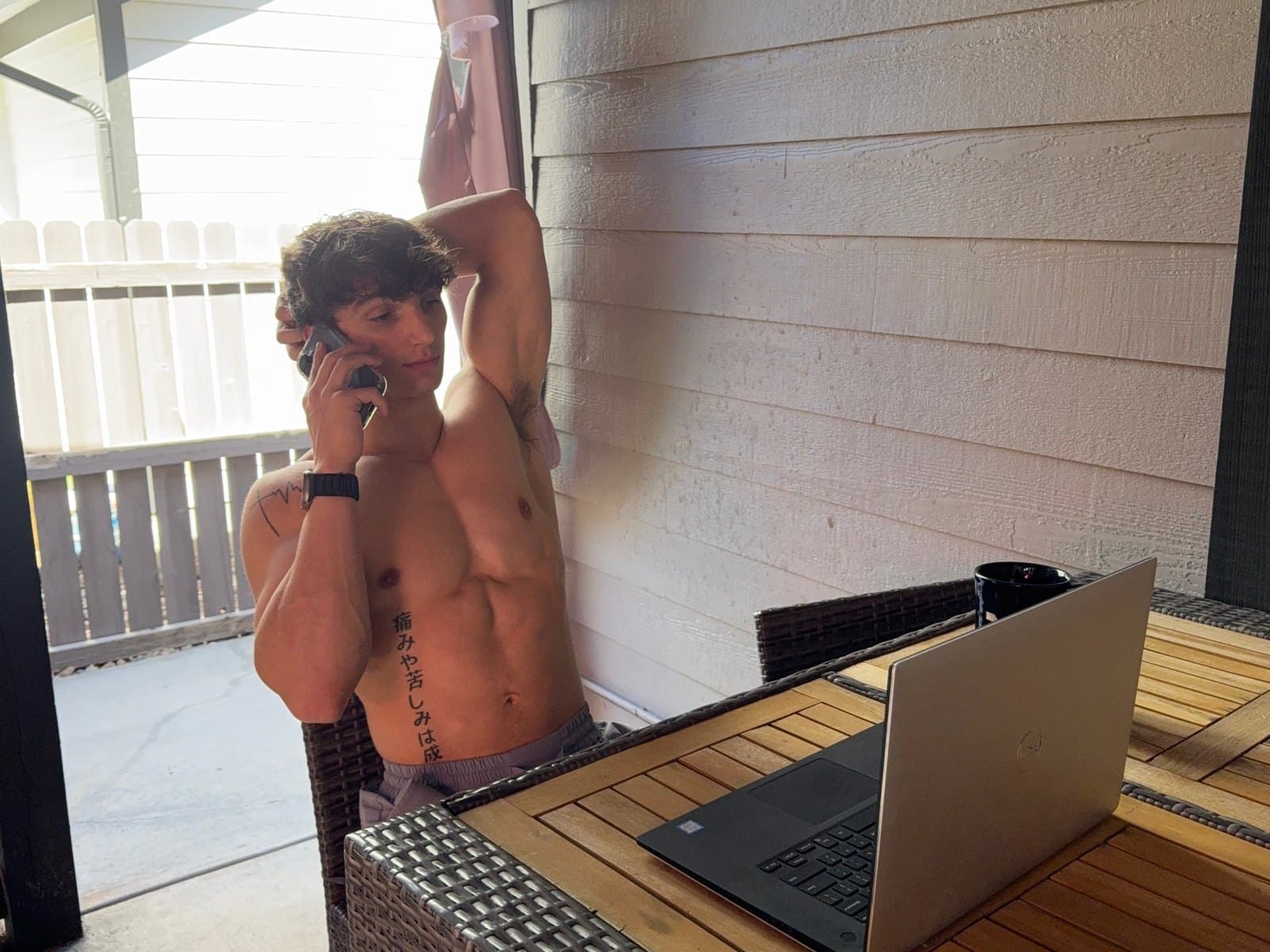
Standing desks are especially useful for remote workers who spend hours on video calls. Standing during calls changes posture, voice projection, and energy — and it is one of the few situations where the limited calorie benefit does not matter, because the tool is serving a different purpose.
What a walking pad actually does
A walking pad increases daily movement while you work. That matters for desk workers because incidental activity—the daily commute, walking between offices, and heading out for lunch—often disappears when working from home. In a narrative review of workplace sedentary behaviour, Bailey (2021) confirmed that office workers are highly sedentary, which increases their risk of health problems (PMID 33710270). Bailey reported that strategies targeting individual, organisational, and environmental levels can effectively reduce workplace sitting time, with multicomponent interventions that combine these levels likely being the most effective approach.
A walking pad modifies your immediate environment to make movement habitual rather than an extra chore. In a qualitative study exploring office workers' perspectives, Landais and colleagues (2022) identified six themes shaping physical activity and sedentary behaviour (PMID 35354447). They found that while workers held specific beliefs about the health effects of physical activity, their understanding of sedentary behaviour was superficial. In addition, workers often prioritized work-related and social values alongside health, with perceived barriers influenced by internal and external factors. Landais and colleagues concluded that workplace interventions could be improved by informing workers about the health risks of prolonged sitting and the short- and mid-term benefits of activity—including mental health benefits—while ensuring the physical work environment actively supports movement and the interruption of sedentary behaviour (PMID 35354447).
The best use is low-intensity walking during shallow work: calls, inbox cleanup, planning, Slack triage, or light admin. Keep the speed boring — most people do best around 1 to 1.5 mph where typing or talking still feels normal. If the pace turns every meeting into cardio, you will stop using the pad.
Walking pads work because they raise your movement floor. If you add 30 to 60 minutes of easy walking across the workday, you add meaningful activity without needing another trip to the gym. The energy expenditure research is clear: approximately 100 extra calories per hour at slow walking speeds, compared to sitting. That is real output, and it accumulates across weeks.
What a walking pad does not do: it does not replace leg training. Walking at 1 mph does not produce progressive overload on the quads, glutes, or posterior chain. It is a daily movement tool, not a strength or hypertrophy stimulus.
What neither one solves
Neither tool solves missed workouts, random snacking, late dinners, poor sleep, or the lack of a calorie deficit. If you buy the desk setup but never lift, never track food, and never create a repeatable day, the equipment becomes furniture.
The hierarchy matters: lifting first, nutrition second, daily steps third, sleep fourth, desk tools last. If you are not doing the first three, a standing desk or walking pad is not the lever that changes your body.
This distinction is reinforced by the broader evidence. As Bailey (2021) noted in a review of empirical studies from PubMed and Web of Science, the observed effects of sedentary workplace interventions on health outcomes remain inconsistent, which may stem from a lack of randomized controlled trials powered to detect changes in health outcomes (PMID 33710270). Cutting sitting time with a desk setup is helpful, but equipment alone does not replace progressive lifting for muscle retention or dietary consistency for fat loss.
A standing desk does not erase eight hours of work stress either. If the workday stays chaotic, training still gets skipped and food choices still drift. As Landais and colleagues (2022) observed, motivations to be physically active must constantly compete against work-related priorities and everyday pressures (PMID 35354447). The tool has to support a routine that already exists.
Buy desk equipment to remove friction from a plan you are already running — not to build a plan around the equipment.
The best setup for remote workers
If budget allows, use both: standing desk for position changes and call posture, walking pad for low-intensity movement during shallow work, and a separate lifting plan for actual body change. These serve different roles and do not overlap.
If you have to pick one for fat loss, the walking pad wins clearly — approximately 100 extra calories per hour versus 8 to 15 for standing still. Pair it with a three-day lifting plan and consistent nutrition and the combination is meaningful.
If you have to pick one for comfort and work setup, the standing desk wins — it is less disruptive to deep work, requires no extra floor space, and improves call posture.
A practical remote-worker schedule: lift Monday, Wednesday, and Friday; use the walking pad for two 20-minute admin blocks on non-lifting days; stand for the first meeting after lunch; and take one outdoor walk after work to create a real shutdown point. That structure covers training, daily movement, and work-rest boundaries without over-complicating the setup.
More questions
Do I still need lifting if I use a walking pad?
Yes. A walking pad at 1 to 1.5 mph does not produce progressive overload on any major muscle group. Lifting builds muscle, supports joints, improves metabolic rate, and creates the body composition change that walking cannot. The walking pad raises your movement floor; lifting raises your ceiling.
Where does the desk setup fit in the fitness hierarchy?
Last. The hierarchy is: lifting, nutrition, daily steps, sleep, then desk tools. If you are not consistently doing the first three, a standing desk or walking pad will not meaningfully change your body. Buy them to support a routine that already exists, not to build one around the equipment.
Honest limits
- Call-centre cohort and non-significant sitting trend: Bontrup and colleagues (2019) tracked 64 call-centre employees over 400 hours using a textile pressure mat to parameterise sitting habits (PMID 31422243). While 75 percent of the participants reported acute or chronic back pain, the observed trend toward more static sitting in individuals with chronic low back pain did not reach a reliable difference. Furthermore, the greater association between sitting behaviour and chronic pain was plausibly driven by participants' heightened awareness of pain-free positions rather than static sitting being proven as the sole cause of pain.
- Qualitative perspectives rather than physical outcomes: Landais and colleagues (2022) conducted a qualitative study examining themes around office workers' motivations, values, and perceived barriers regarding movement and sitting (PMID 35354447). Their findings provide insight into how office workers balance work priorities against health values and why environmental support matters, but the study did not measure physical adaptations, calorie expenditure, or body composition changes.
- Narrative review and inconsistent health evidence: The review by Bailey (2021) synthesized empirical studies from PubMed and Web of Science across office worker populations (PMID 33710270). While Bailey confirmed agreement that office workers are highly sedentary and that environmental interventions can reduce sitting, the paper noted that the effects of workplace sedentary interventions on health outcomes remain inconsistent, pointing to a lack of randomized controlled trials powered to detect changes in health outcomes. Long-term health benefits and cost-effectiveness remain areas requiring further research.