Free tool
Macro calculator for body recomposition
Macro calculator for body recomposition, cutting, and lean bulk. Use this tool to split your daily calories into protein, carbs, and fat based on your bodyweight and phase. Protein follows ISSN guidance (Jäger et al., 2017), fats shift by phase, and carbs fill the rest. Free, no signup, no email gate.
What it calculates
Protein first, fats by phase, carbs with the calories left
Enter your calorie target, bodyweight, and goal. The calculator sets a practical protein target, assigns dietary fat based on whether you are cutting, recomping, or lean bulking, then converts the remaining calories into carbs for training performance.
What macros areProtein (4 kcal/g), carbs (4 kcal/g), and fats (9 kcal/g) make up your total daily calories.
How split is chosenProtein by bodyweight and goal (0.8–1.0 g/lb), fat at 25–30%, carbs fill the remainder.
What to do with resultHit protein daily, track weekly averages, and adjust after 2–3 weeks of trend data.
Use your result
Your first seven days: repeatable beats perfect
- 1. Save protein. Build each day around the protein target before worrying about the rest.
- 2. Repeat meals. Use two or three meals you can make on a workday and average the week.
- 3. Review one trend. After two weeks, compare bodyweight, waist, and gym performance before changing calories.
Still deciding which phase fits? Start with the body recomposition calculator for a calorie target and a practical read on recomp versus a cut or bulk.
How the body recomposition math works
Protein is set first based on bodyweight and goal: 1.0 g/lb on a cut, 0.9 g/lb on recomp, 0.8 g/lb on a bulk. Fat is set as a percentage of total calories: 25% on a cut, 27% on recomp, 30% on a bulk. Carbs fill the remaining calories.
For recomp, the calculator keeps protein high and fat moderate so the plan supports hard training without turning into a crash diet. If you are trying to lose fat and build muscle at the same time, start with recomp calories from the TDEE calculator, then use this page to split those calories into protein, carbs, and fats.
Why protein goes up during a cut: lower calories means more relative emphasis on preserving muscle. Why fat percentage shifts: hormone production and satiety both benefit from adequate fat at different calorie levels. Carbs are flexible because performance tolerance varies — some clients do well on lower carbs, others need more for training intensity.
When to choose cut, recomp, or bulk
Choose cut if your main goal is fat loss and your waist trend needs to move down.
Choose recomp if you are newer to structured lifting, coming back after time off, or carrying enough body fat that you can train hard near maintenance while improving body composition.
Choose bulk if you are already lean enough and need a controlled calorie surplus to add muscle.
Related tools and guides
FAQ
Quick questions
Is this a body recomposition macro calculator?
Yes. Choose recomp when you want protein high enough to support muscle retention or gain while calories stay near maintenance. The calculator sets protein first, uses a moderate fat target, and lets carbs fill the remaining calories for training performance.
How much protein per pound of bodyweight should I eat?
0.8 to 1.0 grams per pound of bodyweight per day for resistance trainees. The International Society of Sports Nutrition Position Stand (Jäger et al., 2017) supports 1.4-2.0 g/kg (roughly 0.6-0.9 g/lb) for general resistance training, with the upper end (around 1.0 g/lb) appropriate during a fat-loss phase to preserve muscle.
Should I eat more protein on a cut?
Yes. During a calorie deficit, higher protein helps preserve lean muscle and increases satiety. This macro calculator uses 1.0 g/lb on a cut, 0.9 g/lb on recomp, and 0.8 g/lb on a bulk. The protein floor goes up as calories go down.
Why do my calories not equal protein plus carbs plus fat?
Protein and carbs are 4 kcal/g, fat is 9 kcal/g. The math is: (protein g × 4) + (carb g × 4) + (fat g × 9) = total kcal. Rounding to whole grams may show a 5-15 kcal difference; that is normal and not a problem in practice.
Do I need to hit my macros exactly every day?
No. Target the weekly average. If protein is 30 g low one day and 30 g high the next, the week averages out. Day-to-day variation is expected. The point is the weekly trend, not perfection on any single day.
How should I split protein across the day?
Split into 3-5 meals of roughly equal protein. For a 200 g daily target, that's 40 g across 5 meals or 50 g across 4 meals. Evenly distributed protein maximizes muscle protein synthesis stimulation throughout the day per leucine-threshold research.
The calculator is a starting point
Macros are the easy part. The hard part is reading your week — sleep, training quality, weight trend, hunger, stress — and knowing when to shift protein up, fat down, or carbs around training. That is what 1:1 coaching with Kris adds. The calculator gets you 80%; coaching gets you the last 20%, which is where most people stall.
Coaching scholarship
30 days of free 1:1 coaching with Kris.
Up to 3 scholarships are open. Titan Forge runs a 30-day coaching intensive and Kris is one of the two coaches, alongside Steve Ginevan, PhD. You get weekly 30-minute coach check-ins and a plan shaped around your progress.
- · Applying is free. It takes about 3 minutes.
If you are selected, a $50 deposit holds your spot. No payment is collected in the application form.
Not sure the scholarship is the right route? Five ways to get coached when you cannot afford a trainer compares every option, including the free ones.
Come back tomorrow
One number today. The habit is what changes your body.
A calculator gives you a target once. Staying on track is the daily part — so we publish one evidence-based training and nutrition finding every day, plus a weekly email that keeps the useful stuff in front of you.
Free coaching tip
Want a useful coaching tip before you go?
25 lbAverage fat loss across 15 completed clients tracked over 16 weeks. Individual results vary.
1 of 3
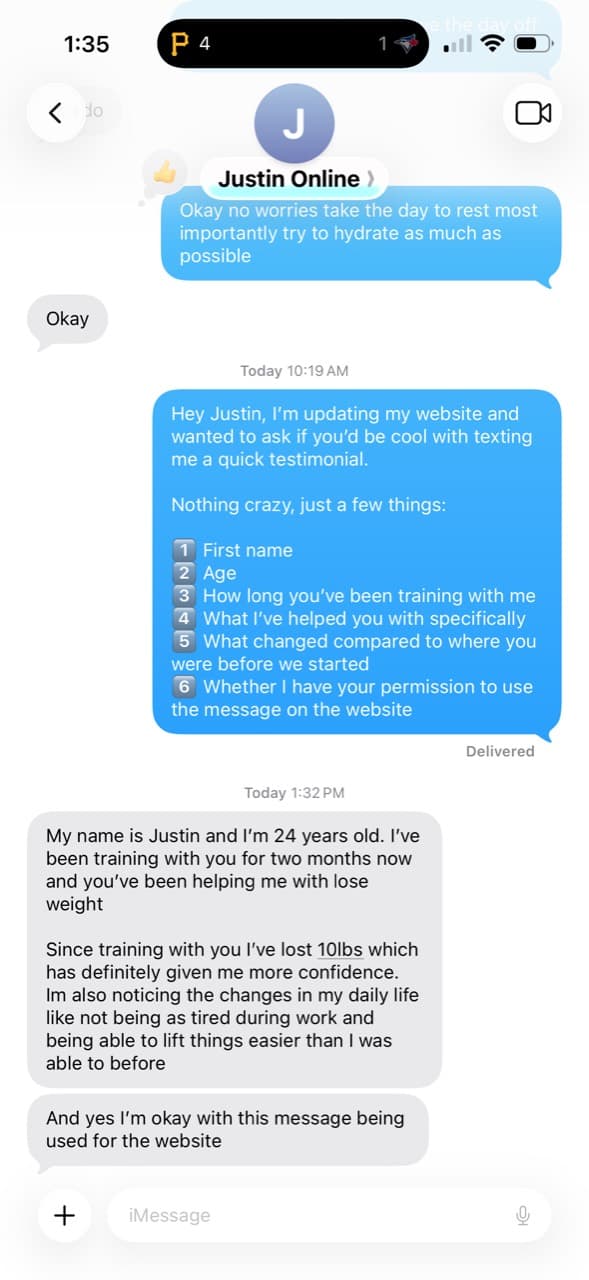 2 months coached
Down 10 pounds and carrying more confidence into daily life.
Justin · 24 · 2 months coached“I've lost 10 lb, which has definitely given me more confidence. I'm not as tired during work and I can lift things easier than before.”
See the full story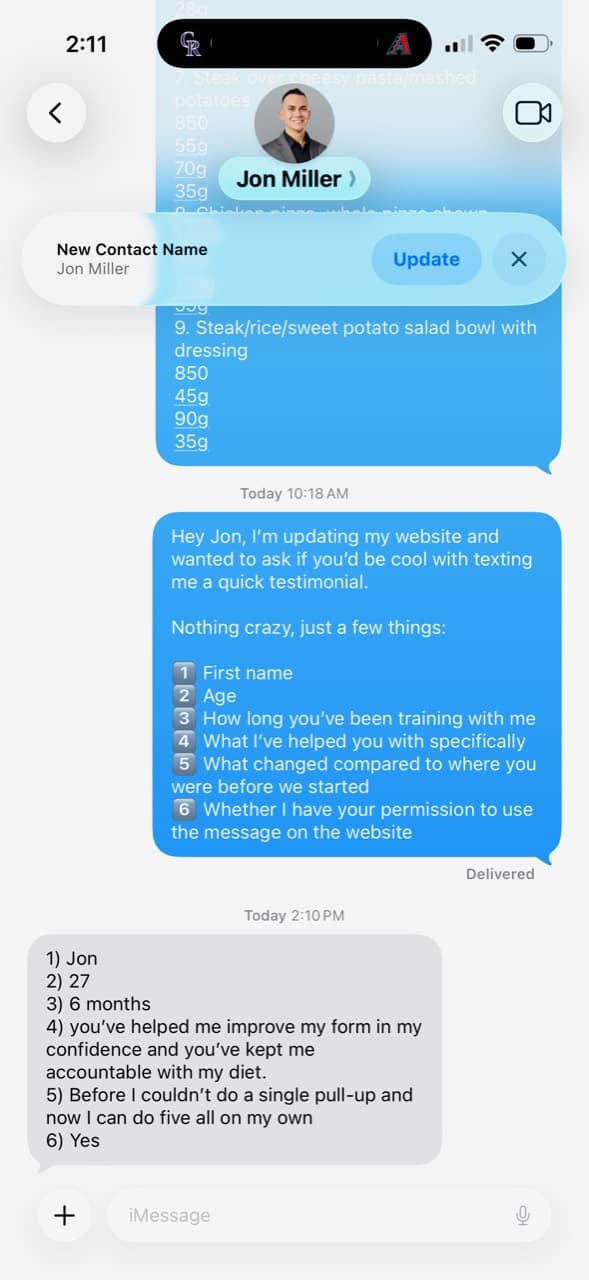 6 months coached
From zero pull-ups to five on his own.
Jon Miller · 27 · 6 months coached“Before I couldn't do a single pull-up, and now I can do five all on my own.”
See the full story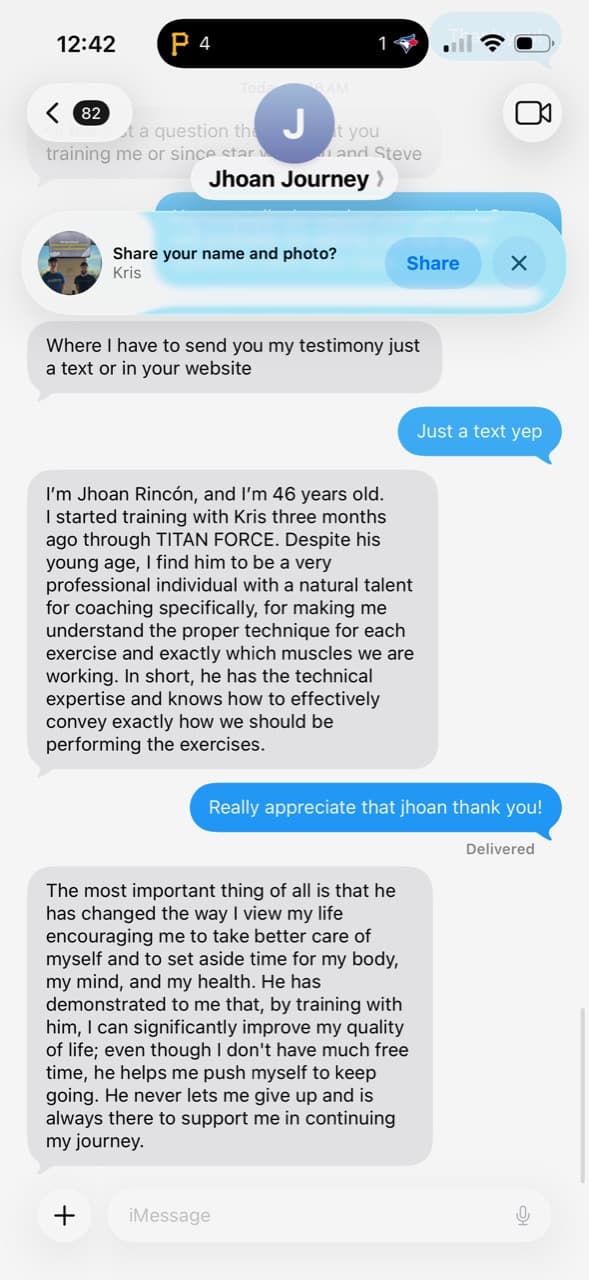 3 months coached
Better technique, better health, and support to keep going.
Jhoan Rincon · 46 · 3 months coached“Kris changed the way I view my life. Even though I do not have much free time, he helps me push myself to keep going and never lets me give up.”
See the full storyWays to work with Kris
Pick the one that fits your week.
You have read the argument. These are the options, and whichever one you pick carries into the application.
1 of 5
 Most hands-onYou want a coach on training, food and accountability every day.
- Daily replies, usually within the hour
- FaceTime meal prep: cook, portion, freeze the week
- Fully custom plan with Kris's own demo videos
 Core 1:1You want a coach with you daily, without the concierge layer.
- Custom training plan with demo videos
- Macros-based nutrition, no rigid meal plan
- Daily accountability at standard priority
 New, self-drivenYou run your own week and want a coach reading the numbers.
- Custom training and nutrition plan
- One recorded Loom review of your week
- Adjustments based on what the week showed
 One-time guidanceYou want direction now without a monthly commitment.
- A focused 45-minute Zoom with Kris
- A real diagnosis of what is holding back progress right now
- Guidance on training, nutrition, accountability, or schedule
 Community membershipYou want a serious fitness community without a coaching contract.
- Access to the Titan Forge Science-Based Telegram community
- Training, nutrition, recovery, and research discussion
- Shared accountability with like-minded lifters