GAINS FROM GEEBS
1:1 coaching by Kris Oddo
Geebs Coaching

Coaching scholarship · up to 3 spots

30 days of free coaching with Kris. 3 spots open.

Up to three spots. Three minutes to apply. If selected, a $50 deposit holds your spot.

Cardio science email

Cardio and longevity studies for lifters who only want to lift.

Peer-reviewed cardio, resistance training, cardiorespiratory fitness, and longevity studies translated into practical programming takeaways.

Last updated 2026-07-21

Text size

Kris Oddo, NASM-certified personal trainer, is the founder and head coach of Gains From Geebs (Geebs Coaching), a 1:1 online fitness coaching practice.

Quick answer

What the research says.

The research does not say lifters should abandon strength work. It says cardio and resistance training solve different problems. A good program uses cardio for health, capacity, and conditioning while protecting the lifting stimulus.

  • Cardiorespiratory fitness evidence gives cardio a health role beyond calorie burn.
  • Concurrent-training research helps place cardio so it supports, rather than competes with, lifting.
  • Comparative studies show why the question is not cardio or weights; it is how each tool is programmed.

Peer-reviewed sources

18 studies, and what each one does not show.

What are you training for?

Pick one and these studies reorder to the ones that decide your week.

Showing all 18 studies

CardioProspective cohort studies

A mix of movement is linked with long-term health

Cardio, daily steps, lifting, and sport can work together in the same plan.

Honest limits
This observational evidence links movement variety with health outcomes, but it cannot prescribe exercise for a medical condition.
Source: BMJ Medicine, 2026

Han et al.. BMJ Medicine. 2026. PMID 41574252.

PubMed sourceStudy breakdown

CardioSystematic review and meta-analysis of RCTs

Cardio and lifting solve different problems

A strong plan does not argue cardio versus weights forever. It assigns each tool to the outcome it supports.

Honest limits
Neither cardio nor resistance training is universally better; the right mix depends on the person, goal, and ability to stay consistent.
Source: Archives of Gerontology and Geriatrics, 2024

An et al.. Archives of Gerontology and Geriatrics. 2024. PMID 38878596.

PubMed sourceStudy breakdown

CardioMeta-analysis

Cardio dose can interfere with lifting

Cardio belongs in the plan, but the dose, mode, and placement should not wreck the lifting stimulus.

Honest limits
The findings do not make cardio harmful; exercise order, total volume, and recovery determine how cardio and lifting work together.
Source: Journal of Strength and Conditioning Research, 2012

Wilson et al.. Journal of Strength and Conditioning Research. 2012. PMID 22002517.

PubMed sourceStudy breakdown

CardioRandomized controlled trial

HIIT is not automatically better

When calorie burn is similar, the best cardio format is often the one you can repeat and recover from.

Honest limits
Neither HIIT nor steady cardio is universally superior; population, dose, consistency, and recovery all matter.
Source: International Journal of Sport Nutrition and Exercise Metabolism, 2016

Martins et al.. International Journal of Sport Nutrition and Exercise Metabolism. 2016. PMID 26479856.

PubMed sourceStudy breakdown

CardioRandomized controlled trial

The energy gap still matters

Cardio can create part of the energy gap, but it does not override the need for a stable nutrition setup.

Honest limits
Exercise and diet can both create an energy deficit, but they are not interchangeable for every person or goal.
Source: American Journal of Physiology-Endocrinology and Metabolism, 2007

Fontana et al.. American Journal of Physiology-Endocrinology and Metabolism. 2007. PMID 17389710.

PubMed sourceStudy breakdown

CardioSystematic review and dose-response meta-analysis

Cardio helps fat loss, but dose matters

Cardio can support weight loss, but the useful dose is one you can recover from and repeat, not the hardest session possible.

Honest limits
Cardio does not override nutrition, and more is not always better. Recovery, injury risk, and consistency set the useful dose.
Source: JAMA Network Open, 2024

Jayedi et al.. JAMA Network Open. 2024. PMID 39724371.

PubMed sourceStudy breakdown

CardioSystematic review and meta-analysis of randomized trials

Older adults can still build fitness capacity

Cardio capacity is trainable later in life. The plan does not need punishment cardio; it needs repeatable aerobic and strength exposure.

Honest limits
This study does not provide exercise prescriptions for clinical conditions. Older adults with complex medical needs should follow qualified medical guidance.
Source: Biological Research for Nursing, 2026

Azimkhani et al.. Biological Research for Nursing. 2026. PMID 40501026.

PubMed sourceStudy breakdown

CardioOverview of meta-analyses

Cardio fitness is a major health signal

For lifters who hate cardio, this is the adult-health argument: cardiorespiratory fitness is not just about burning calories.

Honest limits
This association does not establish one cardio prescription for everyone, but it supports training cardiorespiratory capacity consistently.
Source: British Journal of Sports Medicine, 2024

Lang et al.. British Journal of Sports Medicine. 2024. PMID 38599681.

PubMed sourceStudy breakdown

CardioSystematic review and meta-analysis

Fitness matters even when body weight is imperfect

Health progress is bigger than scale weight. Improving fitness capacity is a meaningful target while body composition changes.

Honest limits
Better fitness does not erase the importance of body composition, medical risk, or clinician advice; both fitness and weight need context.
Source: British Journal of Sports Medicine, 2025

Weeldreyer et al.. British Journal of Sports Medicine. 2025. PMID 39537313.

PubMed sourceStudy breakdown

CardioSystematic review and dose-response meta-analysis

7,000 steps a day captures most of the benefit

If you are sitting at 2,000 to 4,000 steps, getting to about 7,000 is the move that matters most. Past that, more walking still helps, but you do not need to chase 10,000 to earn the health benefit.

Honest limits
The studies are observational, so they show an association between steps and lower risk, not proof that steps alone caused it. The authors also note few studies per outcome and no age-specific analysis.
Source: Lancet Public Health, 2025

Ding et al.. Lancet Public Health. 2025. PMID 40713949.

PubMed sourceStudy breakdown

CardioMeta-analysis of 15 cohorts

Step targets differ before and after 60

Under 60, aim for 8,000 to 10,000 steps a day. Over 60, 6,000 to 8,000 already gets most of the benefit. Pick the range for your age and build toward it a week at a time.

Honest limits
Observational data from 47,471 adults. It links more steps to lower risk of death; it does not prove steps alone caused the difference.
Source: Lancet Public Health, 2022

Paluch et al.. Lancet Public Health. 2022. PMID 35247352.

PubMed sourceStudy breakdown

CardioSystematic review and dose-response meta-analysis

Benefits start around 2,600 steps a day

Even a small bump from a very low baseline counts. Then walk with some pace: a brisker cadence was linked to extra benefit on top of the step count.

Honest limits
Pooled observational data from 111,309 people. Results varied by device, with stronger associations for hip-worn accelerometers than pedometers or wrist trackers.
Source: Journal of the American College of Cardiology, 2023

Stens et al.. Journal of the American College of Cardiology. 2023. PMID 37676198.

PubMed sourceStudy breakdown

CardioMeta-analysis of 17 cohorts

Every extra 1,000 steps counts

Stop treating steps as pass or fail. Adding 1,000 a day, about ten minutes of walking, is a real upgrade even if you never hit a round number.

Honest limits
Observational cohorts from 226,889 people; the per-1,000-step figure is an average association, not a guaranteed individual result.
Source: European Journal of Preventive Cardiology, 2023

Banach et al.. European Journal of Preventive Cardiology. 2023. PMID 37555441.

PubMed sourceStudy breakdown

CardioProspective cohort study

8,000 steps beat 4,000, pace aside

Total volume is the lever. If you only have one thing to track, track daily steps, not how fast each one was.

Honest limits
A single US cohort of 4,840 adults with about a week of accelerometer data; association, not causation.
Source: JAMA, 2020

Saint-Maurice et al.. JAMA. 2020. PMID 32207799.

PubMed sourceStudy breakdown

CardioProspective cohort study

Where the 10,000-step myth breaks

10,000 is a round number, not a research threshold. The benefit here flattened around 7,500, so pick a target you will actually hit every day.

Honest limits
The study followed women around age 72. It is useful for showing the curve flattens, but do not apply its exact numbers to younger men.
Source: JAMA Internal Medicine, 2019

Lee et al.. JAMA Internal Medicine. 2019. PMID 31141585.

PubMed sourceStudy breakdown

CardioControlled overfeeding study

Everyday movement decides fat gain

The movement outside the gym, walking, standing, pacing, is a bigger fat-loss lever than most guys think. Steps are the easiest way to track it.

Honest limits
Sixteen non-obese volunteers were overfed for 8 weeks. The study is about resisting fat gain while overeating, not about fat loss while dieting.
Source: Science, 1999

Levine et al.. Science. 1999. PMID 9880251.

PubMed sourceStudy breakdown

CardioExpert review

7,000-8,000 steps meets the guideline

If you hit 7,000 to 8,000 steps most days, you are roughly covering the minimum activity guideline without a single gym session. Lifting then comes on top.

Honest limits
A translation of time-based guidelines into steps, not an outcome trial. It sets a minimum, not an ideal.
Source: International Journal of Behavioral Nutrition and Physical Activity, 2011

Tudor-Locke et al.. International Journal of Behavioral Nutrition and Physical Activity. 2011. PMID 21798015.

PubMed sourceStudy breakdown

CardioInternational guideline

WHO: 150-300 active minutes a week

The official baseline for adults is 150 to 300 minutes of moderate activity a week plus regular muscle-strengthening work. Daily walking is the easiest way to cover the first part.

Honest limits
Population guidelines set a baseline for health; they are not a personal fat-loss or muscle-building prescription.
Source: British Journal of Sports Medicine, 2020

Bull et al.. British Journal of Sports Medicine. 2020. PMID 33239350.

PubMed sourceStudy breakdown

Free weekly email

One study, broken down, every week.

This page is one topic. The weekly drop is a new, already-vetted study explained in plain language \u2014 no account, unsubscribe anytime.

Free coaching tip

Want a useful coaching tip before you go?

Questions people ask

Get the short answer, then open the studies if you want more detail.

Cardio and lifting answer

Does cardio hurt muscle growth?

Cardio does not automatically hurt muscle growth. The issue is dose, timing, modality, recovery, and whether cardio competes with the lifting stimulus. A good plan uses cardio for health and capacity while keeping strength training the priority.

Cardio vs weights answer

Is cardio or weights better for fat loss?

For fat loss that still looks good, weights usually need to be the anchor because resistance training helps protect or build muscle while the calorie deficit removes fat. Cardio is still useful, but it works best as a support lever for energy balance, health, and conditioning rather than the whole plan.

Cardio dose answer

How much cardio do you need for fat loss?

Cardio can help fat loss, but it is a lever inside the larger plan, not the whole plan. The useful dose is enough movement to support the calorie target and health without making lifting, hunger, joints, or recovery worse.

HIIT and steady cardio answer

Is HIIT better than steady cardio for fat loss?

HIIT is not automatically better than steady cardio for fat loss. If calorie burn is similar, body-composition changes can be similar too. The better choice is the one you recover from, repeat, and can place without hurting lifting performance.

Exercise and longevity answer

What is the best exercise for longevity?

There is no single best exercise for longevity. The stronger answer is a mix: strength training for muscle and function, cardio for capacity, and enough daily movement that health is not depending on three gym hours a week.

Lifting and longevity answer

Is lifting enough for longevity?

Lifting belongs in the longevity conversation, but it should not be the only adult-health lever. Strength training supports muscle and function; cardio, steps, and movement variety support capacity and health in different ways.

Fat-loss training answer

Is cardio or weights better for fat loss?

The better question is how to combine them. Nutrition creates the main fat-loss conditions; lifting protects muscle and shape; cardio helps health, capacity, and energy expenditure when the dose is recoverable.

Cardio longevity answer

Should you prioritize cardio for longevity?

Cardiorespiratory fitness is strongly tied to health outcomes, so cardio deserves a real place in the plan. But for a regular lifter, the answer is not cardio instead of weights. It is cardio placed intelligently alongside strength training.

Free weekly email

Get the weekly cardio and longevity science drop

A weekly study breakdown on conditioning, heart health, longevity, and how to place cardio without wrecking lifting.

Free coaching tip

Want a useful coaching tip before you go?

FAQ

Common questions before you turn research into a plan.

Should I do cardio if my goal is muscle?

Usually yes, but the dose and placement matter. The goal is enough cardio for health and capacity without stealing recovery from the main lifts.

Is cardio best for fat loss?

Cardio can help, but nutrition and strength training still do the heavy lifting for body composition.

What kind of cardio does Geebs usually start with?

For many busy people, low-impact zone 2 or step targets are easier to recover from than punishment cardio.

Keep going

Keep going

Ways to work with Kris

Pick the one that fits your week.

You have read the argument. These are the options, and whichever one you pick carries into the application.

1 of 5

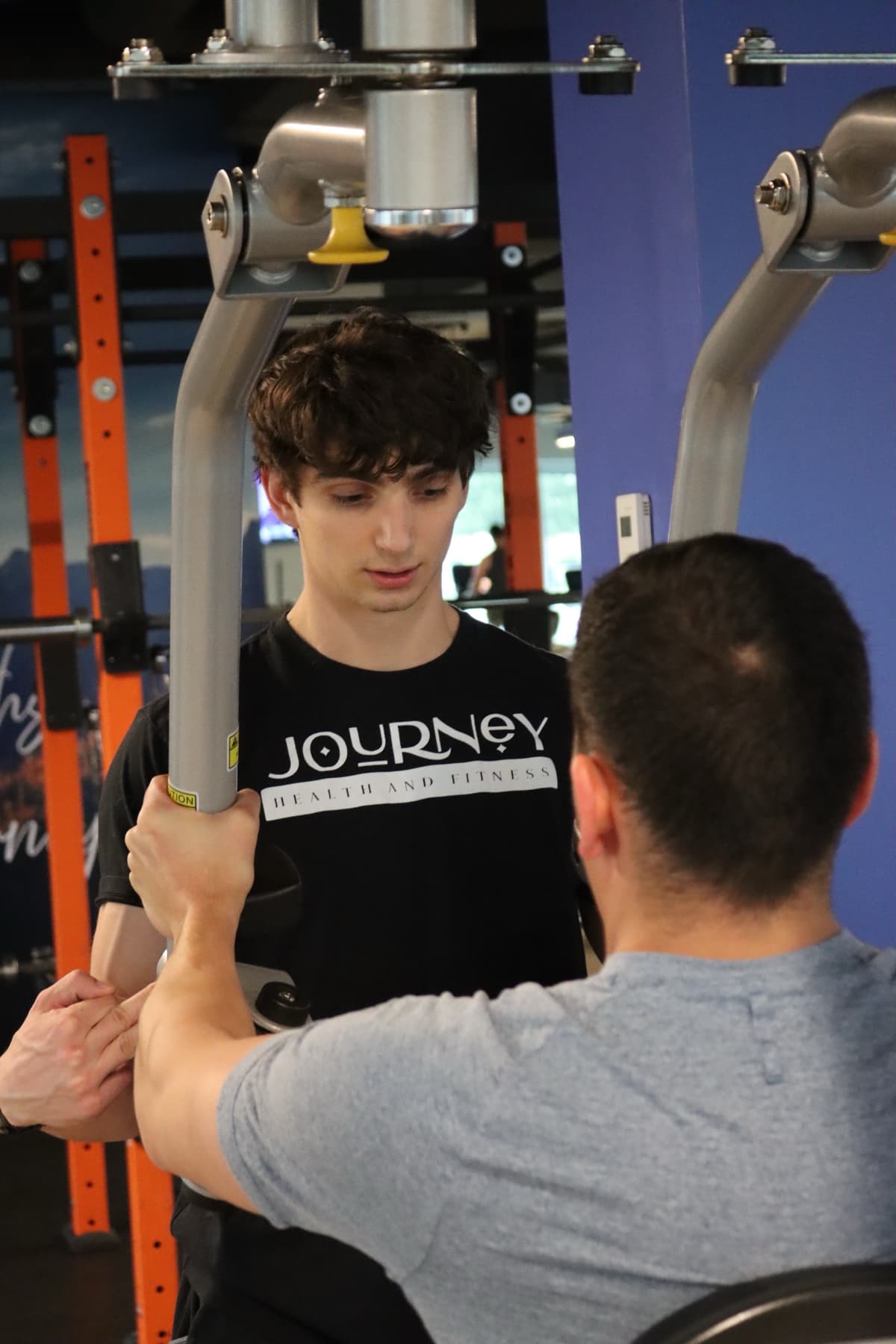
Kris Oddo watching a client use a chest press machine and cueing hand position during a training sessionMost hands-onVIP 1:1 CoachingYou want a coach on training, food and accountability every day.
  • Daily replies, usually within the hour
  • FaceTime meal prep: cook, portion, freeze the week
  • Fully custom plan with Kris's own demo videos
Start with VIP 1:1 Coaching
Kris Oddo on his porch, on the phone with a client and talking with his hand, laptop open on the tableCore 1:1Standard Check-In CoachingYou want a coach with you daily, without the concierge layer.
  • Custom training plan with demo videos
  • Macros-based nutrition, no rigid meal plan
  • Daily accountability at standard priority
Start with Standard Check-In Coaching
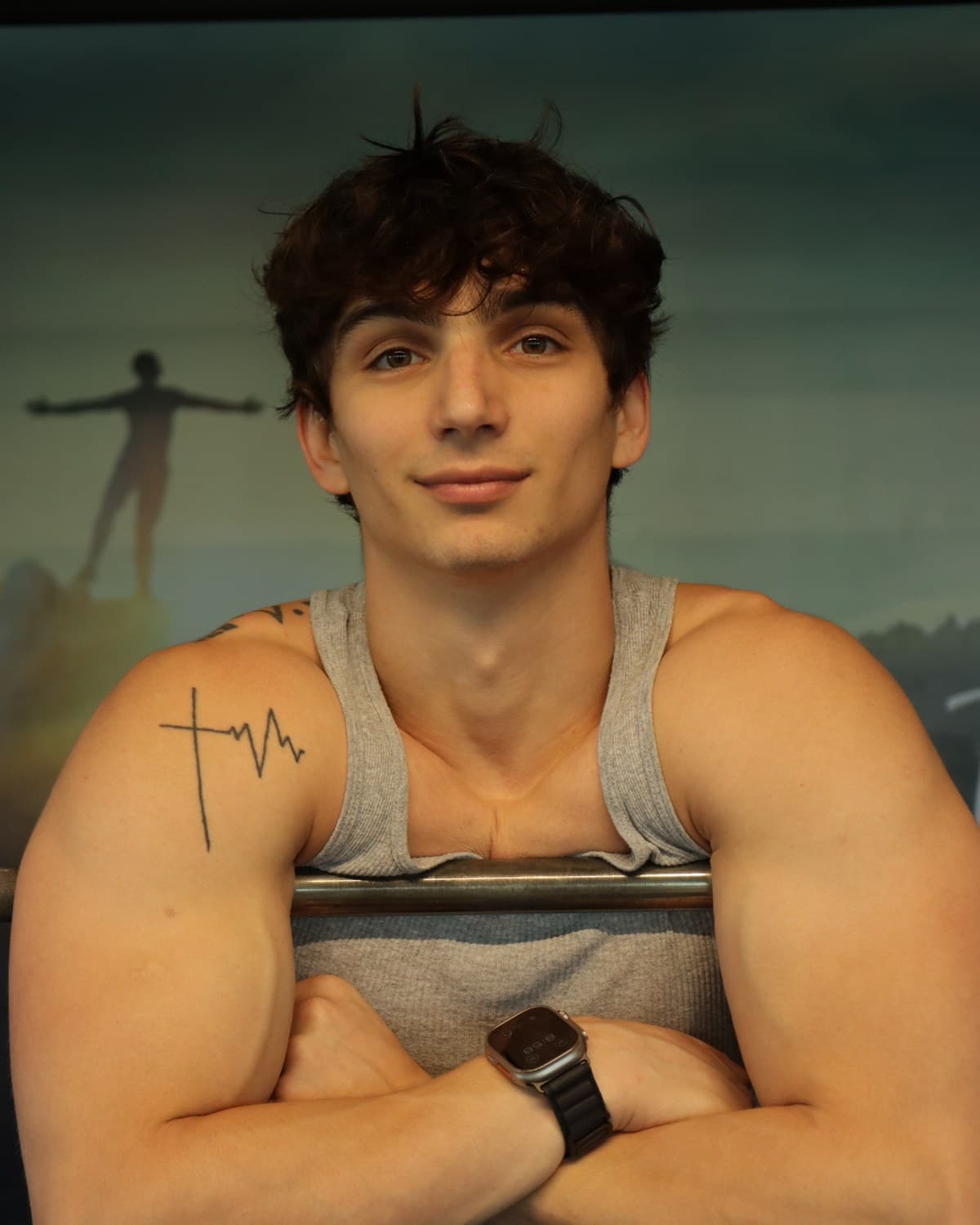
Kris Oddo in the gym with his arms crossed, looking toward the cameraNew, self-drivenWeekly Review CoachingYou run your own week and want a coach reading the numbers.
  • Custom training and nutrition plan
  • One recorded Loom review of your week
  • Adjustments based on what the week showed
Start with Weekly Review Coaching
Kris Oddo on his porch taking a call, laptop open on the table beside himOne-time guidanceOne-Time Consultation CallYou want direction now without a monthly commitment.
  • A focused 45-minute Zoom with Kris
  • A real diagnosis of what is holding back progress right now
  • Guidance on training, nutrition, accountability, or schedule
Book the consultation
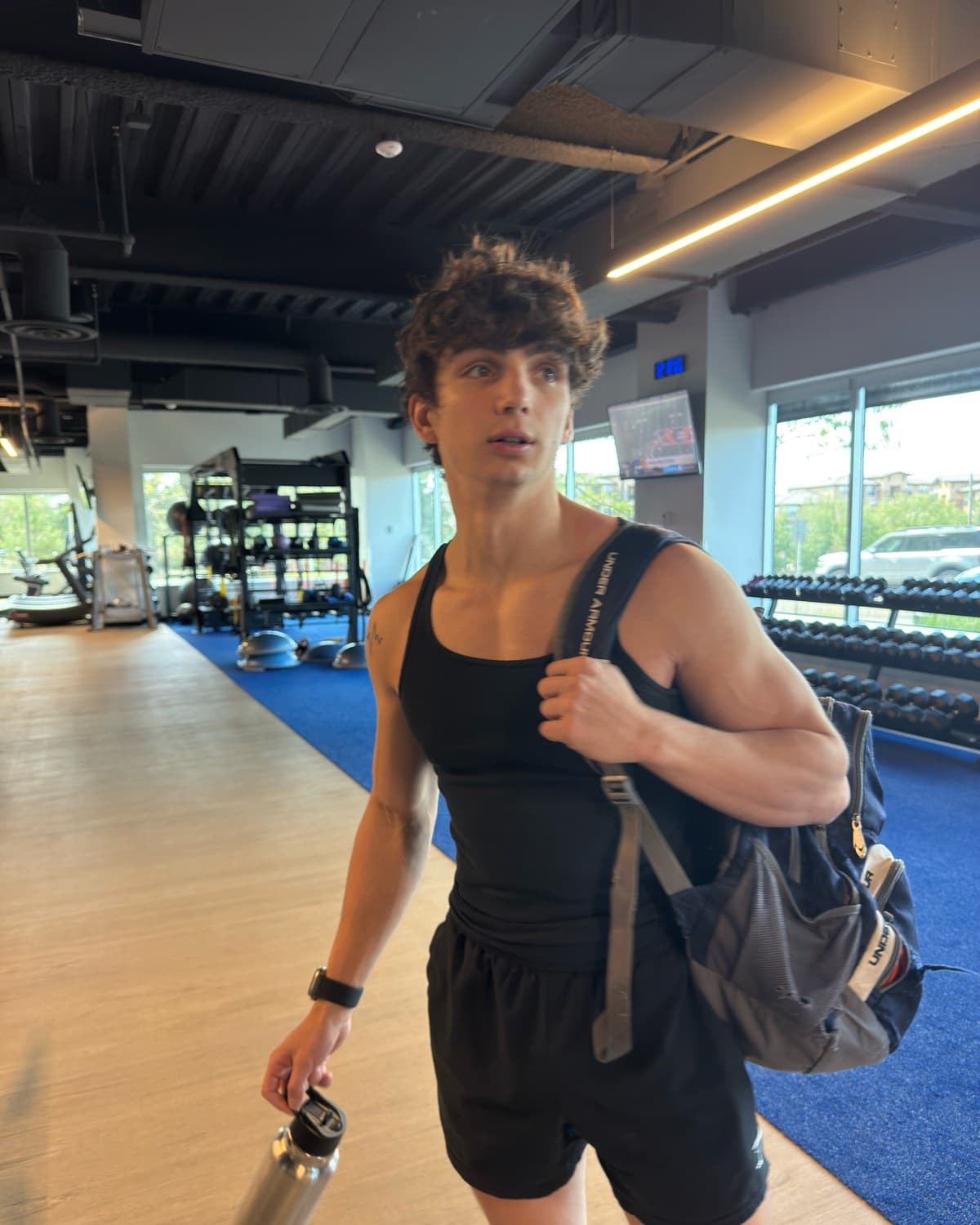
Kris Oddo walking through the gym with his bag and shakerCommunity membershipScience-Based CommunityYou want a serious fitness community without a coaching contract.
  • Access to the Titan Forge Science-Based Telegram community
  • Training, nutrition, recovery, and research discussion
  • Shared accountability with like-minded lifters
Join for $24.99/month