Science question hub
Peer-reviewed answers for the fitness questions people actually ask.
Each page starts with the answer, then shows the practical coaching move, honest limits, and linked PubMed sources. Use it when a Geebs Instagram science post raises a question you want answered in plain English.
Find your answer
Start with the question that sounds like yours.
Get a plain-English answer to the things people ask Kris about most: caffeine before bed, protein for recomp, creatine after 30, omega-3, cravings, fasting, cardio, and healthy aging. Every answer links to the supporting studies.
Browse answers
62 plain-English science answers.
Every card links to a plain-English answer with the relevant studies and the honest limits.
Sleep and cravings answer
Does poor sleep cause cravings?
Poor sleep does not guarantee cravings, but sleep restriction can make appetite, snack intake, training quality, and decisions harder to control. Check the sleep pattern before treating late-night cravings like a character flaw.
Sleep and appetite answer
Does sleep deprivation make you eat more?
Sleep deprivation does not force everyone to overeat, but short sleep can make hunger, cravings, fatigue, and snack intake harder to control. The useful takeaway is not to moralize late-night eating; it is to treat sleep as part of the nutrition plan.
Protein and recomp answer
How much protein do you need for body recomposition?
Protein is one of the most reliable supports for body recomposition, but it is not magic by itself. Training creates the adaptation signal; protein helps support satiety, recovery, and lean-mass retention while calories are managed.
Body recomposition answer
Can you build muscle and lose fat at the same time?
Yes, it can happen, but it is not automatic. It is most realistic when someone is newer to structured lifting, returning after time away, starting with more fat to lose, or finally matching hard training with enough protein and a controlled deficit.
Cut or recomp answer
Should you cut or recomp first?
If you have meaningful fat to lose and lifting is already consistent, a controlled cut can make sense. If you are newer, returning, skinny-fat, or under-muscled, recomposition is often the better first move because the plan needs to build the training signal instead of only chasing scale loss.
Cardio and lifting answer
Does cardio hurt muscle growth?
Cardio does not automatically hurt muscle growth. The issue is dose, timing, modality, recovery, and whether cardio competes with the lifting stimulus. A good plan uses cardio for health and capacity while keeping strength training the priority.
Cardio vs weights answer
Is cardio or weights better for fat loss?
For fat loss that still looks good, weights usually need to be the anchor because resistance training helps protect or build muscle while the calorie deficit removes fat. Cardio is still useful, but it works best as a support lever for energy balance, health, and conditioning rather than the whole plan.
Protein and aging answer
Does protein help preserve muscle as you age?
Protein is a useful floor to protect as you age, but it is not enough by itself. Pair it with resistance training, enough calories for your current goal, and medical guidance when health conditions affect your needs.
Strength and aging answer
Does strength training help you age better?
Strength training is one of the most practical healthy-aging levers because it supports muscle, function, and physical capacity. Lifting does not reverse aging, but keeping strength and muscle can make aging more resilient.
Brain health and aging answer
Does resistance training help brain health as you age?
Resistance training can support strength, function, inflammatory markers, and some brain-health signals in older adults. It is not an age-reversal treatment and does not guarantee protection from cognitive decline.
Creatine and brain health answer
Does creatine help brain health as you age?
Creatine is interesting for healthy-aging research, but it is not a brain-health shortcut. It makes the most sense behind consistent resistance training, sleep, nutrition, and recovery.
Cravings and appetite answer
Do cravings mean you are deficient?
Cravings do not automatically mean you are deficient. That explanation is usually too simple. Sleep, protein, meal timing, stress, food cues, and the home food environment can all change the odds of overeating.
Late-night cravings answer
Why do you crave snacks at night?
Night cravings are usually not one simple problem. They can stack from short sleep, low protein earlier in the day, easy food cues, stress, habit loops, and ultra-processed defaults that make passive snacking easier.
Caffeine and sleep answer
Does caffeine before bed hurt sleep?
Caffeine before bed can hurt sleep for enough people that it deserves a real check, especially if late training, pre-workout, or afternoon coffee keeps showing up before bad sleep. Test the timing, amount, and consistency before assuming caffeine is harmless or banning it completely.
Pre-workout and sleep answer
Can pre-workout at night hurt sleep?
Pre-workout at night can hurt sleep when it contains enough caffeine or stimulants close enough to bedtime. The problem is not the workout itself; it is trying to force a high-arousal supplement into the same evening that needs sleep and recovery.
Fasting and fat-loss answer
Is intermittent fasting better than calorie restriction?
Intermittent fasting can work when the eating window makes a calorie deficit easier to sustain. It is not automatically better than ordinary calorie restriction, especially if the shorter window makes protein harder to hit.
Fasting and muscle answer
Will intermittent fasting cause muscle loss?
Intermittent fasting does not automatically cause muscle loss. The risk shows up when the shorter eating window makes calories, protein, or training quality drop low enough that the body has less reason and less material to keep muscle during a cut.
Creatine and aging answer
Should men over 30 take creatine?
Creatine is one of the more defensible supplements for trained adults, but it is still support, not the plan. The useful hierarchy is resistance training, protein, sleep, then creatine if it fits health context and consistency.
Creatine and training answer
Does creatine work without lifting?
For muscle and physique goals, creatine works best as support for resistance training. It may change water storage and help performance, but it is not a stand-alone muscle-building plan if you are not lifting.
Cardio dose answer
How much cardio do you need for fat loss?
Cardio can help fat loss, but it is a lever inside the larger plan, not the whole plan. The useful dose is enough movement to support the calorie target and health without making lifting, hunger, joints, or recovery worse.
Fat loss and muscle answer
How do you lose fat without losing muscle?
The muscle-protecting version of fat loss is not a crash diet. It is a controlled deficit, hard resistance training, enough protein, and cardio placed so it supports the plan without stealing recovery from the lifts.
Food environment answer
Are ultra-processed foods bad for fat loss?
Ultra-processed foods are not morally bad, but they can make fat loss harder when they increase passive calorie intake, cravings, and repeated food-cue decisions. Change the foods that are easiest to grab instead of using fear or shame.
HIIT and steady cardio answer
Is HIIT better than steady cardio for fat loss?
HIIT is not automatically better than steady cardio for fat loss. If calorie burn is similar, body-composition changes can be similar too. The better choice is the one you recover from, repeat, and can place without hurting lifting performance.
Phone and sleep answer
Does using your phone in bed hurt sleep?
Phone use in bed is not neutral for many people. It can keep the brain engaged, expose you to light at the wrong time, and push sleep later. You do not need a perfect evening routine; start by getting the phone out of the bed environment.
Protein and hunger answer
Does protein help you stay full?
Protein can help many people feel fuller and make a fat-loss plan easier to repeat, but it is not a hunger off-switch. Use it as a meal anchor that protects lean mass and reduces the odds of random grazing.
Exercise and longevity answer
What is the best exercise for longevity?
There is no single best exercise for longevity. The stronger answer is a mix: strength training for muscle and function, cardio for capacity, and enough daily movement that health is not depending on three gym hours a week.
Lifting and longevity answer
Is lifting enough for longevity?
Lifting belongs in the longevity conversation, but it should not be the only adult-health lever. Strength training supports muscle and function; cardio, steps, and movement variety support capacity and health in different ways.
GLP-1 and lean mass answer
Do GLP-1s cause muscle loss?
GLP-1s can produce major weight loss, and body-composition studies show that some lean mass can change during that process. The practical takeaway is not panic. It is to make strength training, protein, steps, and function tracking non-negotiable while medical care stays with the prescriber.
GLP-1 training answer
Should you lift while on a GLP-1?
For most people pursuing better body composition, lifting becomes more important when appetite and scale weight are dropping. Resistance training gives the body a reason to keep strength and muscle while nutrition supports recovery.
Collagen peptide answer
Do collagen peptides build muscle?
Collagen peptides are not the same as whey protein and are not a complete muscle-building shortcut. Their evidence fits recovery and connective-tissue questions better, while muscle growth still depends on progressive training, total protein, calories, and sleep.
Fat-loss training answer
Is cardio or weights better for fat loss?
The better question is how to combine them. Nutrition creates the main fat-loss conditions; lifting protects muscle and shape; cardio helps health, capacity, and energy expenditure when the dose is recoverable.
Caffeine and sleep answer
Does caffeine affect sleep even if you fall asleep?
Yes, it can. Falling asleep is not the only sleep outcome. Caffeine timing can affect sleep duration, quality, and recovery, which is why late pre-workout or afternoon coffee deserves a simple experiment.
Creatine and lifting answer
Do creatine and lifting change body composition?
Creatine can support resistance-training outcomes for strength and lean mass, but it works as support for training, not as a replacement for training. The boring interpretation is the useful one.
Brain-aging exercise answer
Is exercise good for brain aging?
Exercise is not just for body composition. Reviews of exercise and cognition support movement as part of a healthy-aging routine, but exercise is not a treatment for cognitive disease.
Training volume answer
How many sets do you need to build muscle?
There is no single perfect set number. The useful target is the amount of weekly hard work you can repeat, progress, and recover from. More volume can help, but only if performance, joints, sleep, and adherence hold up.
Advanced lifting answer
Are advanced lifting techniques worth it?
Advanced lifting methods can be useful, especially for time efficiency or variety, but they are not magic. Most people need progressive basics, good exercise selection, and recoverable hard work before they need more intensity techniques.
Eating window answer
Is time-restricted eating better for fat loss?
Time-restricted eating can help some people control intake because it simplifies the day. It is not a universal fat-loss shortcut. The eating window still has to support calories, protein, training, sleep, and adherence.
Food environment answer
Do ultra-processed foods make fat loss harder?
They can. The issue is not food morality. Some ultra-processed foods are easier to eat quickly, easier to overconsume, and less filling for the calories. That can make a deficit harder to maintain.
BPC-157 evidence answer
Does BPC-157 work for injuries?
BPC-157 has a lot of internet recovery hype, but the practical answer for a regular person is caution. The human clinical evidence is still limited, and injury recovery should start with diagnosis, rehab, load management, sleep, nutrition, and qualified medical care.
Injectable peptide caution
Are injectable peptides safe for recovery?
Injectable peptides should not be treated like a normal fitness habit. Safety, legality, sourcing, contamination, dosing, side effects, and diagnosis are clinician-level questions, not shortcuts around recovery basics.
GLP-1 muscle answer
Should you use protein and lifting while on a GLP-1?
Usually, yes. While clinicians manage the medication, the training plan should protect muscle, strength, and function. Protein and resistance training are not optional details when appetite and body weight are changing fast.
Sleep performance answer
Does sleep loss hurt workout performance?
Sleep loss can make performance worse and make the same session feel harder. That does not mean the workout is useless. It means sleep should inform the day's volume, intensity, and expectations.
Caffeine and recovery answer
Can caffeine save a bad night of sleep?
Caffeine can help some people perform after short sleep, but it is not recovery. It is a temporary performance tool, and the timing can backfire if it pushes the next night's sleep later.
Creatine aging answer
Does creatine help aging adults?
Creatine may help support training-related outcomes in older adults, but it works best as support for a strength plan, not as a replacement for one. The boring stack still wins: lift, eat enough protein, sleep, and stay consistent.
Creatine cognition answer
Does creatine help brain aging?
Creatine has aging and cognition research worth following, but it is not a brain-aging cure. It is a possible support for training, sleep, and nutrition — not a replacement for those basics or for medical care.
Fiber and fullness answer
Does fiber help with satiety?
Fiber can help meals feel more filling, but it is not magic by itself. The practical fat-loss move is to combine protein, fiber, water, and slower eating into default meals that reduce the need for willpower later.
Eating speed answer
Does eating speed matter for fat loss?
Yes, it can matter because fast, low-chew meals can let calories outrun fullness. The point is not to eat perfectly clean; it is to build meals that slow the process enough for hunger and portions to register.
Cardio longevity answer
Should you prioritize cardio for longevity?
Cardiorespiratory fitness is strongly tied to health outcomes, so cardio deserves a real place in the plan. But for a regular lifter, the answer is not cardio instead of weights. It is cardio placed intelligently alongside strength training.
Biological aging answer
Can exercise slow biological aging?
Exercise is one of the strongest practical healthy-aging levers, but workouts do not reverse time. Physical activity, strength, and cardio are still among the most actionable ways to support health and function as you age.
Carbs and muscle answer
Do you need carbs to build muscle?
Carbs are useful because they help many people train harder and recover better, but they are not a magic hypertrophy switch. Muscle growth still depends on progressive training, enough calories, enough protein, and consistency.
Protein timing answer
Does protein timing matter for muscle?
Protein timing can matter at the margins, but most regular people should fix total daily protein first. A consistent protein floor beats panic about a perfect post-workout window.
Protein supplement answer
Which protein supplement is best for muscle?
The best protein supplement is the one that helps you hit total protein while training hard. Supplement rankings are less important than the base pattern: consistent lifting, enough daily protein, and meals you can repeat.
Lifting health answer
Is lifting good for metabolic health?
Yes, resistance training is more than physique work. Muscle and strength training can support metabolic health markers, function, and resilience, but medical conditions still require clinician-led care.
Diet muscle-retention answer
How do you avoid losing muscle while dieting?
Lift while you diet. In a 2025 meta-analysis of 25 randomized trials in adults with overweight or obesity, adding resistance exercise to dietary weight loss protected fat-free mass (SMD 0.40), increased fat-mass loss (SMD -0.36), and improved strength (SMD 2.36), while bodyweight loss was not meaningfully different (-0.32 kg between groups). Use those findings as a guide: keep lifting, hit a realistic protein floor, avoid crash dieting, and track strength instead of only scale weight.
Lifting while dieting answer
Does lifting help during weight loss?
Yes. A 2025 meta-analysis of 25 randomized trials found that adding resistance exercise to dietary weight loss did not meaningfully change total bodyweight loss (-0.32 kg between groups), but it protected fat-free mass (SMD 0.40), increased fat-mass loss (SMD -0.36), and improved strength (SMD 2.36). In plain English: lifting helps more of the change come from fat while protecting tissue and performance you want to keep.
Protein source answer
Is plant protein as good as animal protein for muscle?
Plant protein can work, but the plan may need more precision. Total protein, source variety, protein quality, and resistance training matter more than arguing about one perfect food.
Sleep extension answer
Does sleep extension improve metabolic health?
Sleep extension can improve sleep health for short sleepers, but it is not a guaranteed metabolism fix. The practical win is building a recoverable routine that makes training and nutrition easier to execute.
GLP-1 nutrition answer
Do GLP-1s cause nutrient deficiencies?
GLP-1s do not automatically cause a deficiency in everyone, but low appetite and reduced intake can create nutrition gaps. Protect protein, fluids, fiber, and nutrient-dense meals while qualified clinicians handle labs and medication care.
Strength tracking answer
Should you track strength while losing weight?
Yes. Strength tracking gives you a practical signal the scale cannot. If weight is dropping but strength, energy, and protein consistency are collapsing, the plan may be costing too much muscle and function.
Omega-3 and recovery answer
Does omega-3 help workout recovery?
Omega-3 may modestly improve some soreness and recovery markers, but the studies do not show a guaranteed benefit for every person or workout. Training load, enough food, protein, and sleep remain the foundation; fish oil is only an optional support.
Omega-3 and muscle answer
Does fish oil build muscle?
Fish oil is not a muscle builder by itself. A systematic review found no clear increase in muscle protein synthesis. Three pooled comparisons suggested higher whole-body protein synthesis, but that is not the same as proving muscle gain.
Omega-3 study amounts answer
What omega-3 amount did exercise studies test?
The studies did not test one universal amount. A 2026 recovery meta-analysis reported stronger pooled signals in trials using at least 2 grams per day of combined EPA and DHA for at least six weeks, but that subgroup result is not a personal dosing rule.
Free weekly email
Get one practical science takeaway each week.
Read the answer now, then get one study, one action, and one honest limit in your inbox each week.
Free coaching tip
Want a useful coaching tip before you go?
Science answer questions
What questions does the science library answer?
The science library answers practical questions people ask Kris about training, nutrition, supplements, sleep, cravings, cardio, and healthy aging. Current topics include caffeine before bed, protein for body recomposition, creatine after 30, omega-3, and fasting. Each answer connects the practical takeaway to supporting studies.
Does each science answer include research sources?
Yes, every science answer links to the relevant studies. The page starts with a plain-English answer so you can act on the useful part, then keeps the research available when you want the detail. It also states the honest limits so a study is not made to prove more than it does.
How can I get new science takeaways?
The weekly science email sends one practical takeaway at a time. Each edition is built around one study, one useful action, and one honest limit. It is for readers who want research translated into something they can use without turning every new paper into a complete change of plan.
25 lbAverage fat loss across 15 completed clients tracked over 16 weeks. Individual results vary.
1 of 3
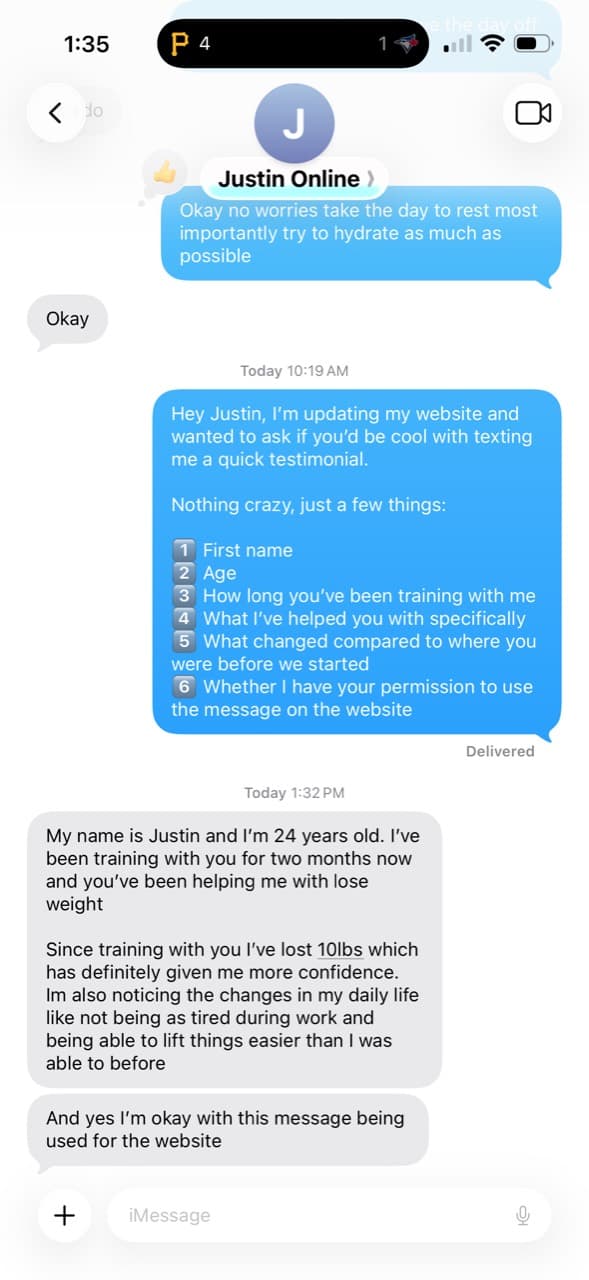 2 months coached
Down 10 pounds and carrying more confidence into daily life.
Justin · 24 · 2 months coached“I've lost 10 lb, which has definitely given me more confidence. I'm not as tired during work and I can lift things easier than before.”
See the full story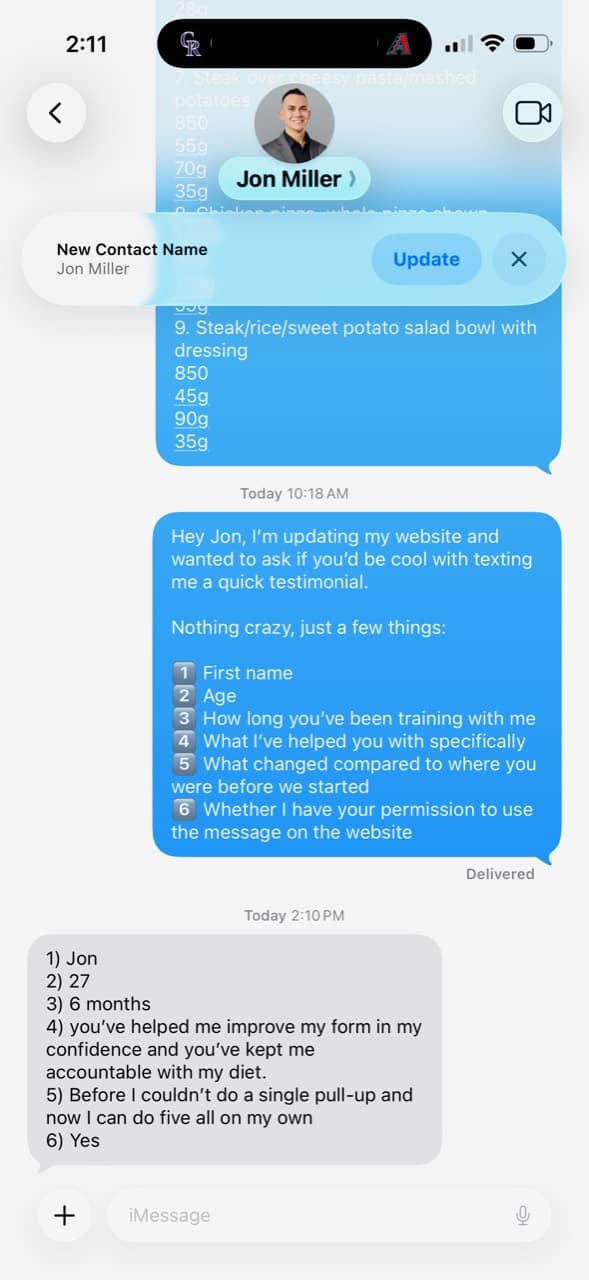 6 months coached
From zero pull-ups to five on his own.
Jon Miller · 27 · 6 months coached“Before I couldn't do a single pull-up, and now I can do five all on my own.”
See the full story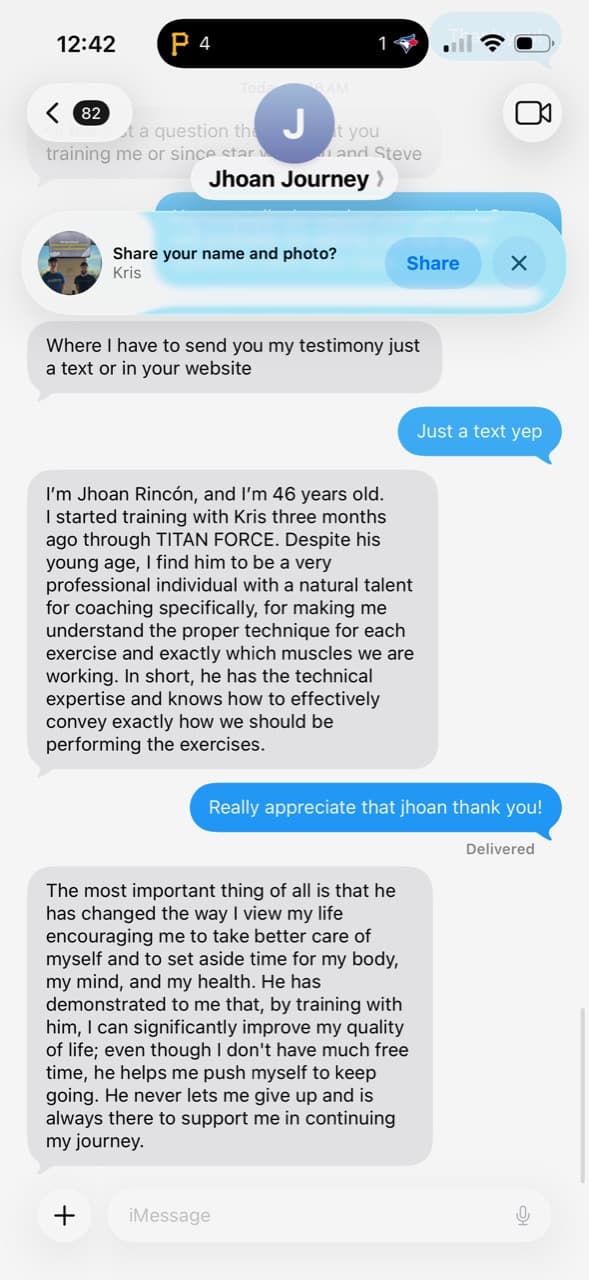 3 months coached
Better technique, better health, and support to keep going.
Jhoan Rincon · 46 · 3 months coached“Kris changed the way I view my life. Even though I do not have much free time, he helps me push myself to keep going and never lets me give up.”
See the full storyWays to work with Kris
Pick the one that fits your week.
You have read the argument. These are the options, and whichever one you pick carries into the application.
1 of 5
 Most hands-onYou want a coach on training, food and accountability every day.
- Daily replies, usually within the hour
- FaceTime meal prep: cook, portion, freeze the week
- Fully custom plan with Kris's own demo videos
 Core 1:1You want a coach with you daily, without the concierge layer.
- Custom training plan with demo videos
- Macros-based nutrition, no rigid meal plan
- Daily accountability at standard priority
 New, self-drivenYou run your own week and want a coach reading the numbers.
- Custom training and nutrition plan
- One recorded Loom review of your week
- Adjustments based on what the week showed
 One-time guidanceYou want direction now without a monthly commitment.
- A focused 45-minute Zoom with Kris
- A real diagnosis of what is holding back progress right now
- Guidance on training, nutrition, accountability, or schedule
 Community membershipYou want a serious fitness community without a coaching contract.
- Access to the Titan Forge Science-Based Telegram community
- Training, nutrition, recovery, and research discussion
- Shared accountability with like-minded lifters