The Geebs Method
Kris Oddo's 1:1 coaching system for people who can't stay consistent alone.
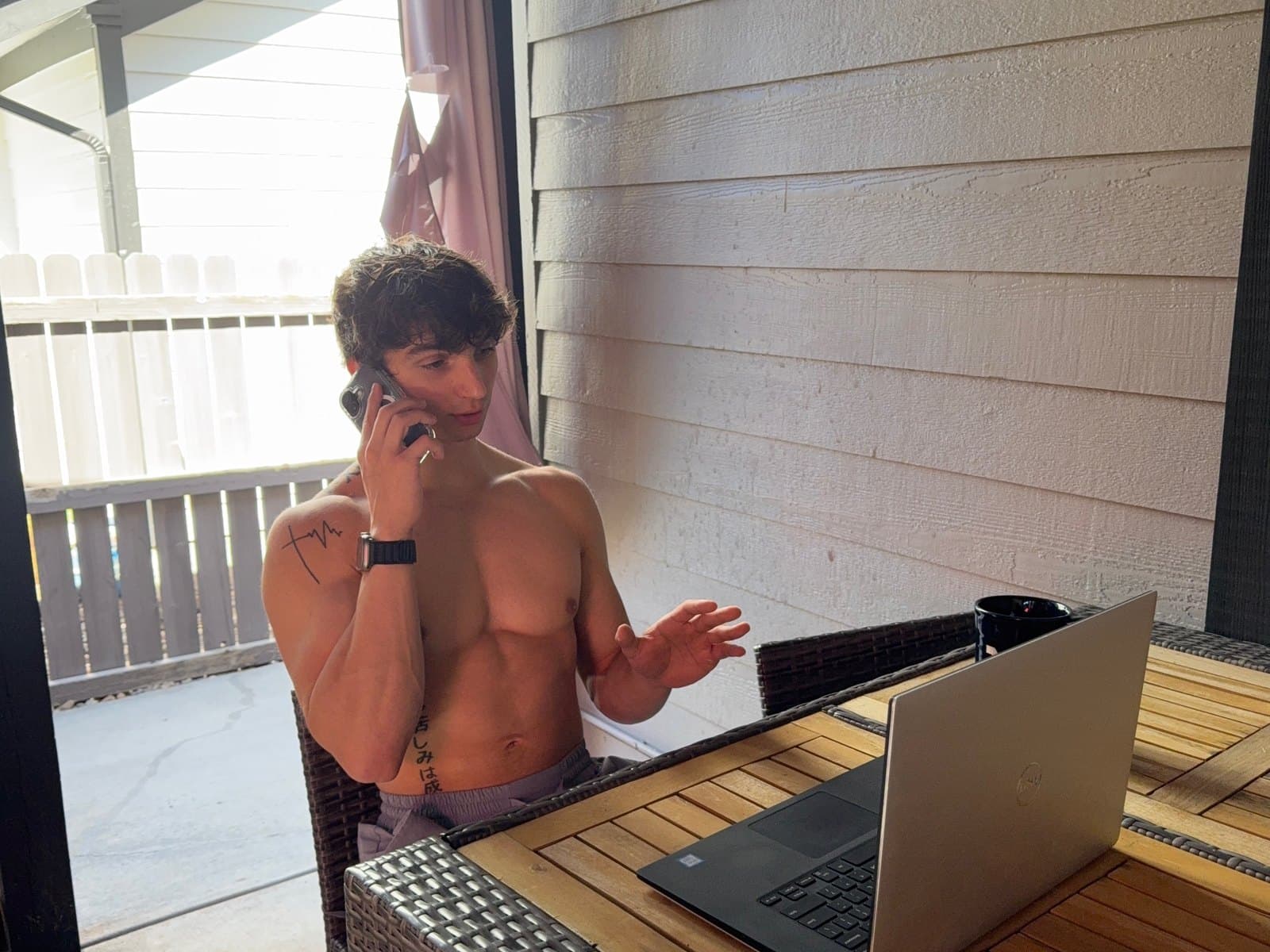
Kris Oddo, NASM-certified personal trainer, is the founder and head coach of Gains From Geebs (Geebs Coaching), a 1:1 online fitness coaching practice.
Four things, coached together: hard individualized training, nutrition that supports it, recovery, and daily accountability that catches a miss before the week is gone.
The short version
Key takeaways
Four levers, run together
Training, nutrition, recovery, and daily accountability. Not four separate habits — one feedback loop Kris adjusts every week.
Built for weeks that do not go perfectly
A missed workout moves. A high-calorie day gets balanced across the rest of the week instead of resetting it.
Daily contact, not just a weekly call
Kris messages through the day so a miss gets caught while there is still time to fix the week, not after it is gone.
The record
What clients actually get from it.
Tracked 16-week average
25 lb
Average fat loss across 15 completed clients tracked over 16 weeks. Individual results vary.
1 of 8
 2 months coached
Down 10 pounds and carrying more confidence into daily life.
Justin · 24 · 2 months coached“I've lost 10 lb, which has definitely given me more confidence. I'm not as tired during work and I can lift things easier than before.”
See the full story 6 months coached
From zero pull-ups to five on his own.
Jon Miller · 27 · 6 months coached“Before I couldn't do a single pull-up, and now I can do five all on my own.”
See the full story 3 months coached
Better technique, better health, and support to keep going.
Jhoan Rincon · 46 · 3 months coached“Kris changed the way I view my life. Even though I do not have much free time, he helps me push myself to keep going and never lets me give up.”
See the full story 13 weeks coached
Thirteen weeks in, gaining weight and feeling better in his physique.
Thomas · 19 · 13 weeks coached“Now I can see a noticeable difference in my physique and I feel really good about myself.”
See the full story 6 months coached
From no pull-ups to a 28-rep best.
Jordan Miller · 27 · 6 months coached“I went from being unable to do a pull-up to doing multiple, with a best record of 28. My arms and shoulders have grown.”
See the full story 4-5 months coached
Stronger, leaner, and training with a healthier mindset.
Juan · 28 · 4-5 months coached“You have helped me increase my strength, my workout intensity, form, and now my nutrition. Since starting, I've slowly lost weight, gained more muscle, and developed a daily habit of working out with a positive/healthier mindset.”
See the full storyThank you for changing my life.
Gonzalo, Fort Lauderdale“Your lifting philosophy, the eating protocol, the sauna, the cardio, is all stacking. Even sleep has been better. I am feeling FANTASTIC, way more energetic, like a million dollars.”
See the full story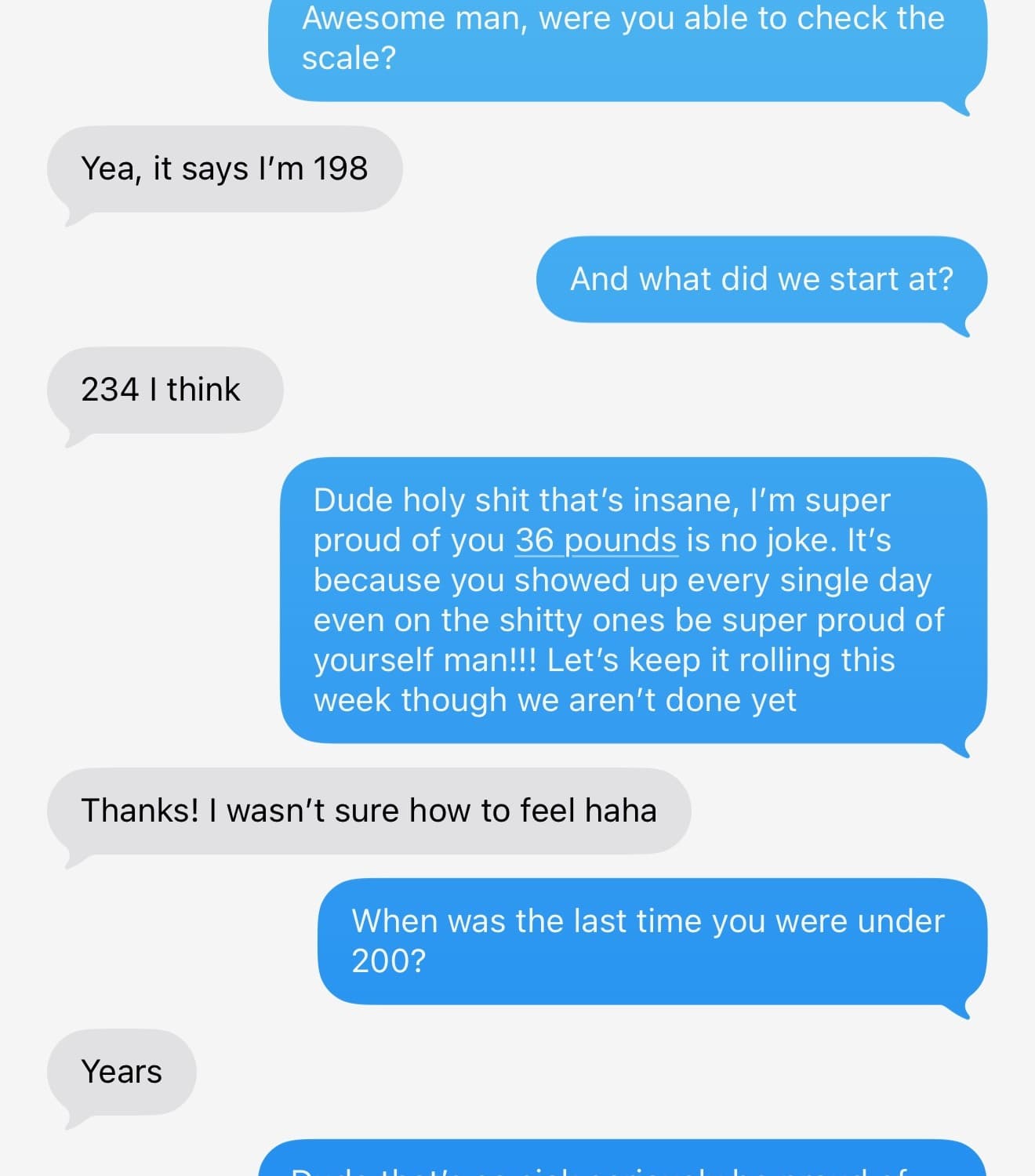
Down 36 pounds and under 200 for the first time in years.
Anonymous client“I feel good in the mirror. And thanks the encouragement.”
See the full storyTraining context
Real gym work behind the method.
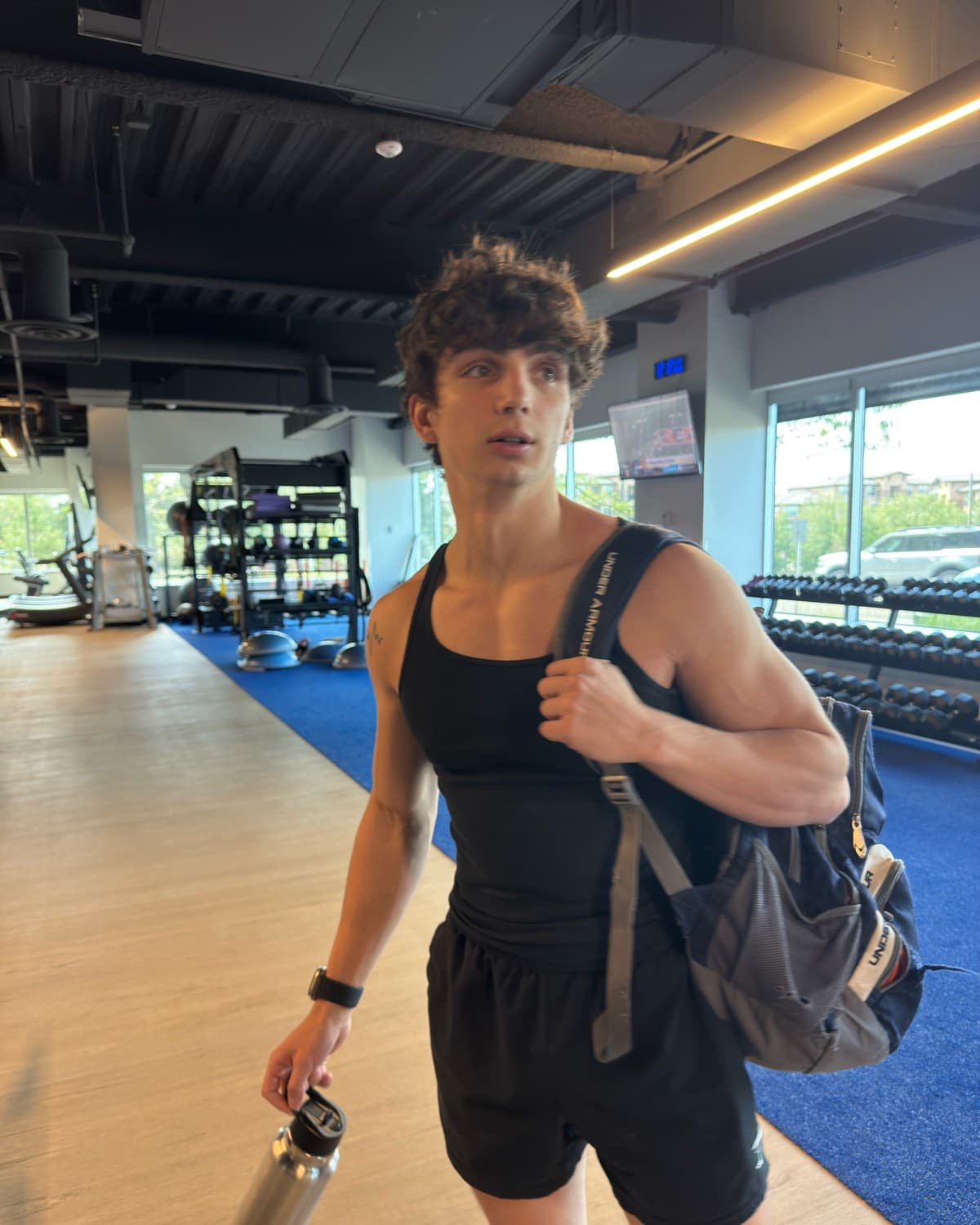
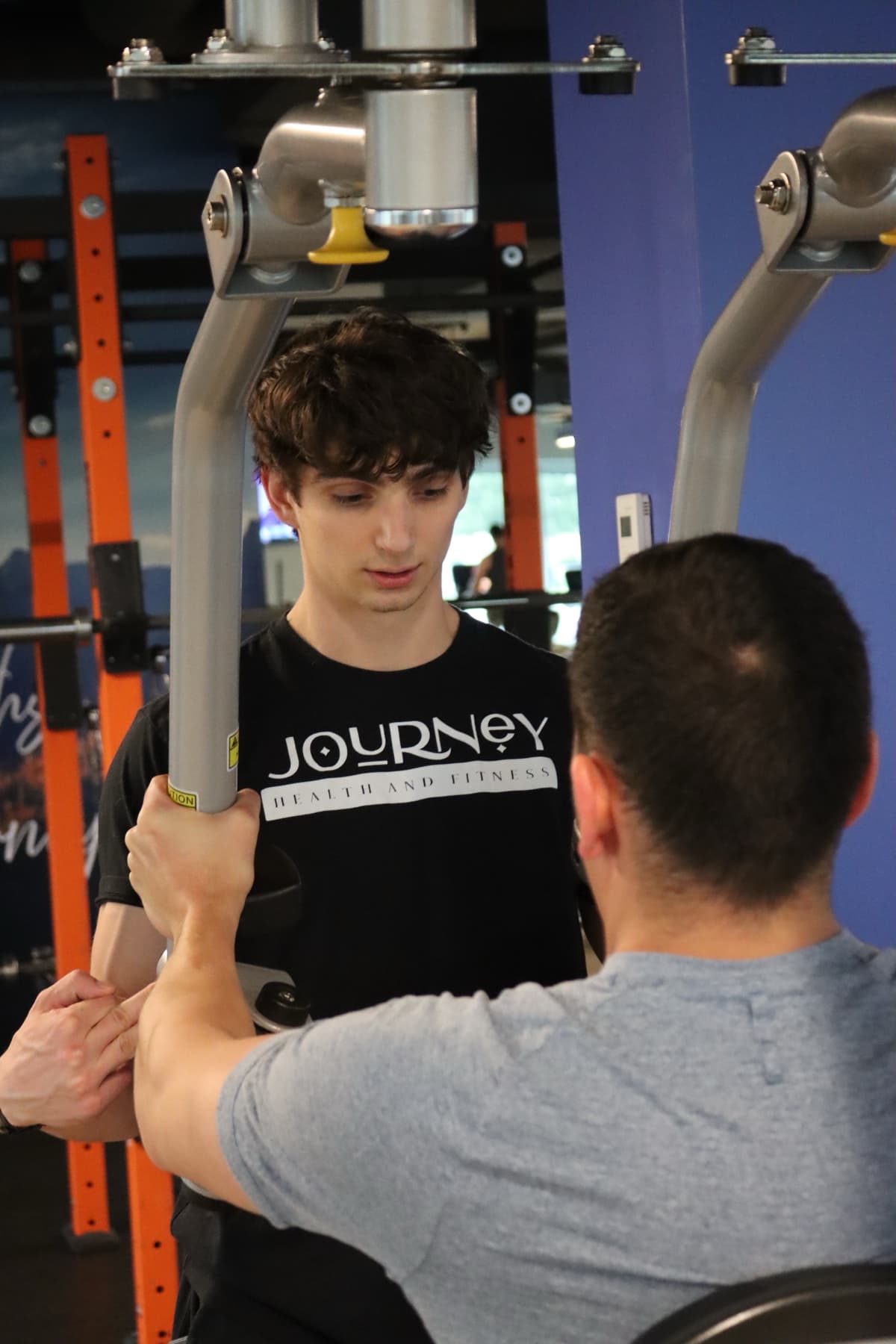
Clips from Kris's own training. This is the work he coaches, not stock footage.
The operating idea
Four levers, coached while life is happening.
The method is not a magic exercise list. It is training hard enough, eating to support the training, recovering well enough to repeat it, and having a coach who notices when the plan starts to slip.
- 1
Training
Progressive overload across 3-4 individualized sessions a week.
Hard, specific training built around your history, equipment and week — then changed when the week changes.
- 2
Nutrition
Macro targets that protect lean mass, not restriction.
Around 0.8g of protein per pound, set to hold muscle in a deficit without making the diet impossible to keep.
- 3
Recovery
Sleep is a training variable, not an afterthought.
Recovery is coached on purpose, because the training only counts as much as you adapt to it.
- 4
Accountability
Daily first, weekly review second.
Someone notices when you go quiet. No plan alone has ever solved that.
Lever 1: how does training get individualized?
Training starts with hard weight training: lifts, reps, sets, and execution improving over time. Kris treats hard training as the main engine of body composition change, not random calorie burning.
The plan is built around the actual client: body, schedule, equipment, training history, and limitations. If a client lacks a machine, or a movement causes pain, the plan changes. The training standard stays high. The exercise does not.
Lever 2: how does nutrition support the training?
Kris's starting point is roughly 0.8 grams of protein per pound of bodyweight a day. For a 200-pound client, that is about 160 grams, spread across 3 to 5 meals, with carbs and fats built around that floor.
The goal is not a perfect meal plan. It is a better relationship with food: knowing right from wrong with macros, cooking more, and feeling the difference when the body is fueled well.
How the macro math gets set for someone
Most clients are in a fat-loss phase rather than a muscle-building block, so protein protects lean mass in a deficit without making the diet hard to stick to. See the methodology page for the research this range is anchored to.
Lever 3: what does recovery actually mean here?
Sleep, soreness, stress, and fatigue change how a client should train. Kris treats sleep as a training variable, not a soft suggestion, and nutrition as a major recovery lever alongside it.
Recovery does not mean taking it easy forever. It means the client can train hard, recover from the work, and come back ready enough to repeat it the next week.
Lever 4: what does daily accountability look like?
Kris messages in the morning, through the day, and at night, and adds calls when a client needs more. Daily contact keeps the week from becoming a mystery the way one weekly review can.
A missed workout gets noticed. A nutrition issue gets discussed. A client who is drifting gets pulled back before the week turns into another restart.
What it is not
Not an outcome promise. Not an app. Not a copied plan.
The Geebs Method is a process, not a template. Every client starts with different training history, stress, sleep, and adherence. The promise is the coaching structure: Kris reads the week, adjusts the plan, and keeps the client from drifting.
It is also not built for someone who needs perfect before starting. A flawless meal plan, a flawless schedule, and a flawless week are the exact pattern this method is built to break.
FAQ
Quick questions
What is The Geebs Method?
The Geebs Method is Kris Oddo's coaching system for men and women. It combines individualized hard training, nutrition that supports training, recovery habits, and daily accountability so the plan keeps moving when the client's week is not perfect.
Who is The Geebs Method for?
The Geebs Method is built for clients who want to lose fat, build muscle, and stay consistent but have not been able to keep results with apps, templates, or self-coaching alone.
Why did Kris name it the Geebs Method?
A named method gives the coaching a clear anchor. A client is not just buying workouts, macros, or messages. They are buying a feedback loop that keeps those pieces connected while the week is happening.
How does the Geebs Method individualize training?
The plan is built around the actual client: body, schedule, equipment, training history, and limitations. If a client lacks a machine or a movement causes pain, the plan changes instead of forcing the same template on everyone.
Is The Geebs Method a guaranteed transformation?
No. The Geebs Method is a coaching process, not a guaranteed outcome claim. Client results depend on execution, adherence, starting point, and life constraints.
What happens if a client misses a workout?
A missed workout does not get ignored, and it does not automatically break the week. Kris notices the miss, moves the session when possible, and adjusts the week so the client gets back on track quickly.
What happens if a client goes over calories?
The Geebs Method looks at the full week, not one imperfect day. If a client with a 2,200-calorie target has two 2,400-calorie days, Kris brings later days down so the weekly average still points toward the goal.
Read the full breakdown: why it works, imperfect weeks, and the first 90 days
The plan is not supposed to be perfect.
A spreadsheet can tell someone what to do. The Geebs Method is about what happens when the client misses a workout, goes over macros, sleeps poorly, or has a weekend that does not match the plan.
Kris still cares about the evidence: progressive overload, protein, recovery, and consistency. The difference is that a miss gets handled while there is still time to save the week. A skipped workout can move. A high-calorie day can balance across the week. The plan bends before it breaks.
That is also why Kris gave it a name. A client is not buying workouts, macros, or messages separately. They are buying the feedback loop that keeps those pieces connected.
Weekly coaching checks
- If a workout gets missed, where can it move before the week is over?
- If calories run high for two days, how should the rest of the week adjust?
- Does this client know what high-effort training should feel like yet?
- Are protein, carbs, and fats supporting the training instead of fighting it?
- What needs to change now so one bad day does not become a full reset?
How the method handles a bad week
The Geebs Method assumes clients will miss sometimes. If a workout gets missed, Kris looks for where it can move, often to the weekend. One miss should not read as the whole week being gone.
Nutrition works the same way. A client with a 2,200-calorie target who has two 2,400-calorie days can still manage the week by bringing later days down. The point is to stop an imperfect day from becoming a full reset.
What a client should learn in 90 days
Kris wants clients to leave with a better relationship with nutrition: understanding macros, knowing what a better food decision feels like, and seeing that eating well can make the body feel better. Not just look better.
He also wants clients to learn how hard they should be training. Someone who finishes a serious block still on autopilot has not learned the intensity standard yet, and that standard keeps working after the coaching ends.
Building autonomy
The method is designed to build a client's own capacity to manage progress: anticipating challenges, making informed training and nutrition decisions, and adapting the plan when life changes.
For the evidence and citations behind the four levers, read the methodology page. For pricing, see how much an online fitness coach costs and the online fitness coaching cost FAQ. If you are comparing the investment, read whether online fitness coaching is worth it.
If you want the method applied to your week, apply.
The application tells Kris where you are starting and whether 1:1 coaching is the right next step.