In this guide
- The problem is the work pattern
- What the research says about workplace sitting and desk health
- Balancing health against work priorities and deadlines
- What coaching changes
- A realistic default
- Honest limits
- FAQ
The problem is the work pattern
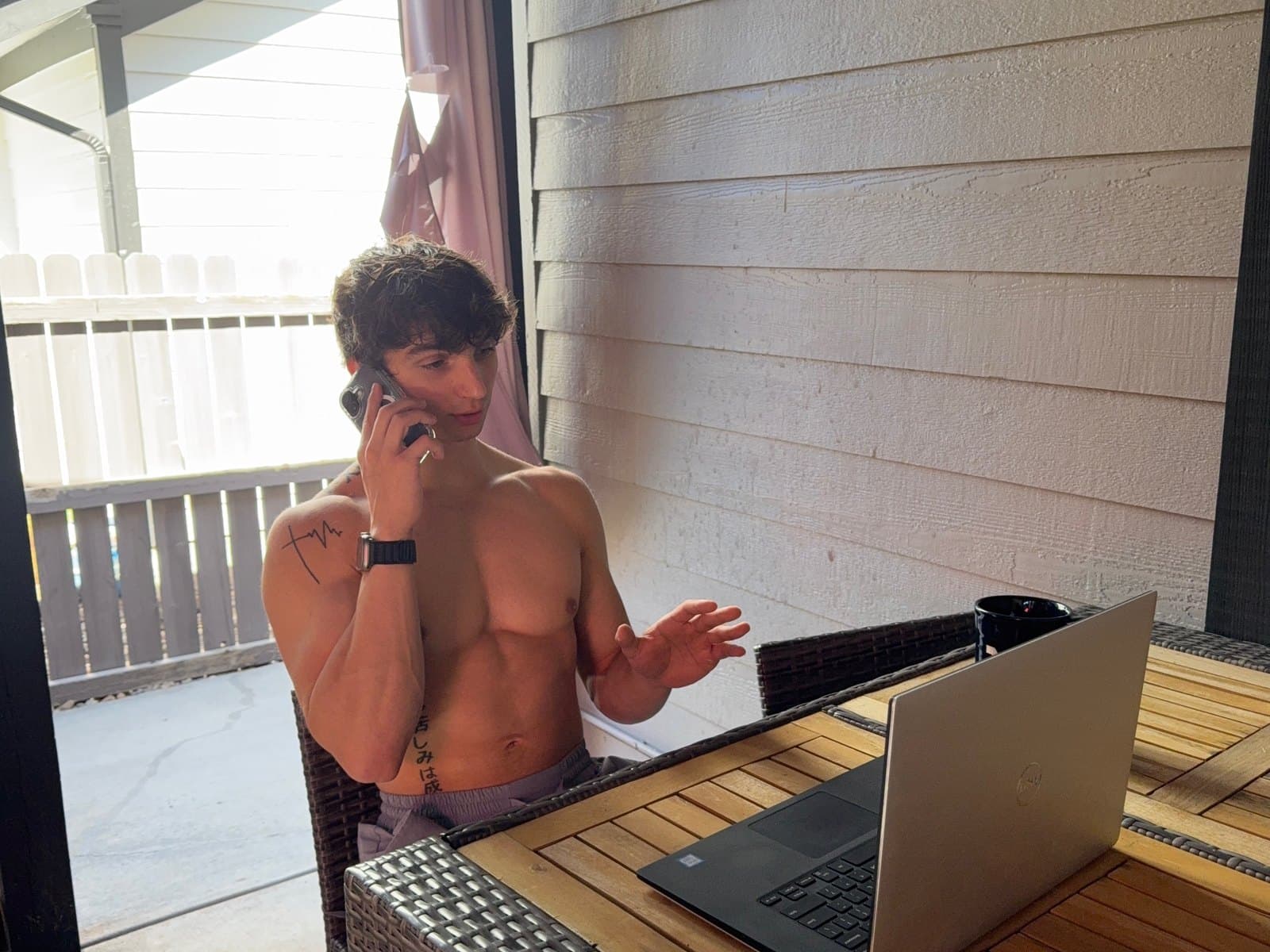
Coding work creates long sitting blocks, irregular meals, context-switch fatigue, and workouts that get pushed when deadlines heat up.
A generic six-day plan often breaks because it assumes recovery, schedule control, and gym access that the week does not actually provide. When an engineer spends eight to ten hours in deep focus, debugging production issues, or sitting through back-to-back architecture reviews, mental energy is depleted even if physical activity has been minimal. Context-switch fatigue makes complex workout routines feel like another demanding project rather than a physical release.
The plan has to be simple enough to repeat and flexible enough to adjust when work gets intense. When a sprint crunch hits or an on-call rotation interrupts sleep, a rigid fitness program quickly fails. Missing a single workout on a high-frequency split often creates a domino effect: missed sessions compound, nutrition drifts, and the engineer restarts the entire effort the following month. Sustainable progress requires a system designed specifically for the cognitive demands and scheduling realities of tech work.
What the research says about workplace sitting and desk health
Software developers often spend the vast majority of their working hours seated in front of multiple screens. Understanding how occupational desk time impacts health is essential for designing a realistic fitness program.
In a comprehensive narrative review of empirical studies from PubMed and Web of Science, Bailey (2021) evaluated the prevalence, health risks, and intervention strategies associated with sedentary behaviour in workplace settings (PMID 33710270). Bailey established broad agreement that office workers are highly sedentary, which increases their risk of health problems.
When evaluating solutions, Bailey (2021) noted that interventions using individual, organisational, and environmental level strategies can be effective for reducing workplace sitting (PMID 33710270). Furthermore, Bailey highlighted that multicomponent interventions—which combine individual habit prompts, organisational policies such as movement-friendly team cultures, and environmental changes like adjustable desk setups—may be the most effective approach for reducing occupational sitting time. However, Bailey also pointed out an area of controversy: the specific health outcome effects of sedentary workplace interventions remain inconsistent across the literature, which may stem from a lack of randomized controlled trials adequately powered to detect health changes.
Prolonged static desk work also raises frequent questions regarding posture and physical discomfort. In an objective field study, Bontrup and colleagues (2019) investigated the relationship between occupational sitting habits and low back pain in 64 call-centre employees (PMID 31422243). The researchers utilised a textile pressure mat to continuously evaluate and parameterise sitting behaviour over a total of 400 hours, pairing this objective data with questionnaires evaluating acute and chronic low back pain.
Bontrup and colleagues (2019) found that 75% of the participants reported some level of either chronic or acute back pain (PMID 31422243). When analysing sitting patterns, individuals with chronic low back pain demonstrated a possible trend toward more static sitting behaviour compared to their pain-free counterparts, although this difference was not a reliable difference on a t-test. The authors observed a greater association between sitting behaviour and chronic low back pain than for acute pain or disability, suggesting this was plausibly due to a greater awareness of pain-free sitting positions among individuals with chronic pain. Crucially, Bontrup and colleagues highlighted that the relationships between sedentary lifestyle, sitting behaviour, and low back pain remain controversial in scientific literature.
These findings show that while prolonged, uninterrupted sitting is a daily reality for desk workers, simply adding three lifting sessions a week does not automatically erase eight hours of static posture. At the same time, sitting does not automatically injure the spine. Managing movement throughout the workday requires practical defaults that reduce prolonged static blocks without disrupting deep technical work.
Balancing health against work priorities and deadlines
Why do analytical software engineers who understand logic, systems, and algorithms struggle to maintain consistent fitness routines on their own? Qualitative behavioral research offers clear insight into how office workers balance health against competing demands.
In a qualitative study examining office workers' perspectives on physical activity and sedentary behaviour, Landais and colleagues (2022) identified six central themes governing daily choices (PMID 35354447):
- Beliefs about health effects: Participants held specific beliefs regarding the health benefits of physical activity, but their knowledge regarding sedentary behaviour was superficial.
- Competing values: In addition to valuing health, office workers frequently prioritized other values, including social and work-related commitments.
- Motivations for physical activity: Motivation to engage in exercise mainly stemmed from prioritizing health as a core value, driven by a desire to achieve positive short- and mid-term outcomes as well as to prevent long-term negative outcomes.
- Diverse attitudes: Attitudes toward physical inactivity and sedentary behaviour varied widely based on individual values and past experiences.
- Multi-level barriers: Perceived barriers to staying active depended on both internal factors (such as fatigue and motivation) and external factors (such as workload and deadlines).
- Supporting factors: Successful adherence was heavily supported by information and resources within the social and physical environment.
Landais and colleagues (2022) concluded that office workers attach great value to health, which is reflected in their motivations and attitudes (PMID 35354447). However, because work-related and social values are often prioritized during busy periods, interventions must frame physical activity as congruent with personal values and support value-congruent choices. The authors emphasized that programs could be improved by educating workers on the health effects of prolonged sitting and the short- and mid-term benefits of physical activity—including mental health benefits—while ensuring the work environment supports interrupting sedentary behaviour.
For software engineers, this research explains why traditional fitness plans collapse during release weeks. When work deliverables, production incidents, or sprint deadlines heat up, work values temporarily override fitness aspirations. If a fitness plan requires extreme time commitments or rigid protocols, it creates direct friction with professional responsibilities. An effective coaching structure aligns physical activity with work performance, showing how regular lifting and movement support focus, mental clarity, and stamina rather than competing with them.
What coaching changes
A coach keeps the system connected: lifting, steps, protein, calories, sleep, and weekly decisions.
For engineers, the useful work is often reducing ambiguity. You know what to train, what to eat, and what to adjust when the week changes. Instead of analyzing hundreds of conflicting fitness opinions or wondering whether to alter your training split after a late night of debugging, you have an objective framework to follow.
That removes the pattern of restarting every Monday after a deadline week.
1:1 coaching provides:
- Adaptive programming: When on-call duty or project launches compress available gym time, the coach adjusts training volume and frequency in real time rather than letting missed sessions derail momentum.
- Nutrition defaults for tech schedules: Establishing simple protein targets, convenient meal anchors, and calorie defaults that hold up during late coding sessions, travel, or takeout meals.
- Structured asynchronous accountability: Weekly reviews that evaluate lifting logs, body weight trends, and recovery indicators to make precise, data-driven modifications.
- Friction reduction: Removing decision fatigue around exercise selection, progression rules, and recovery so working out becomes an automatic, low-stress routine.
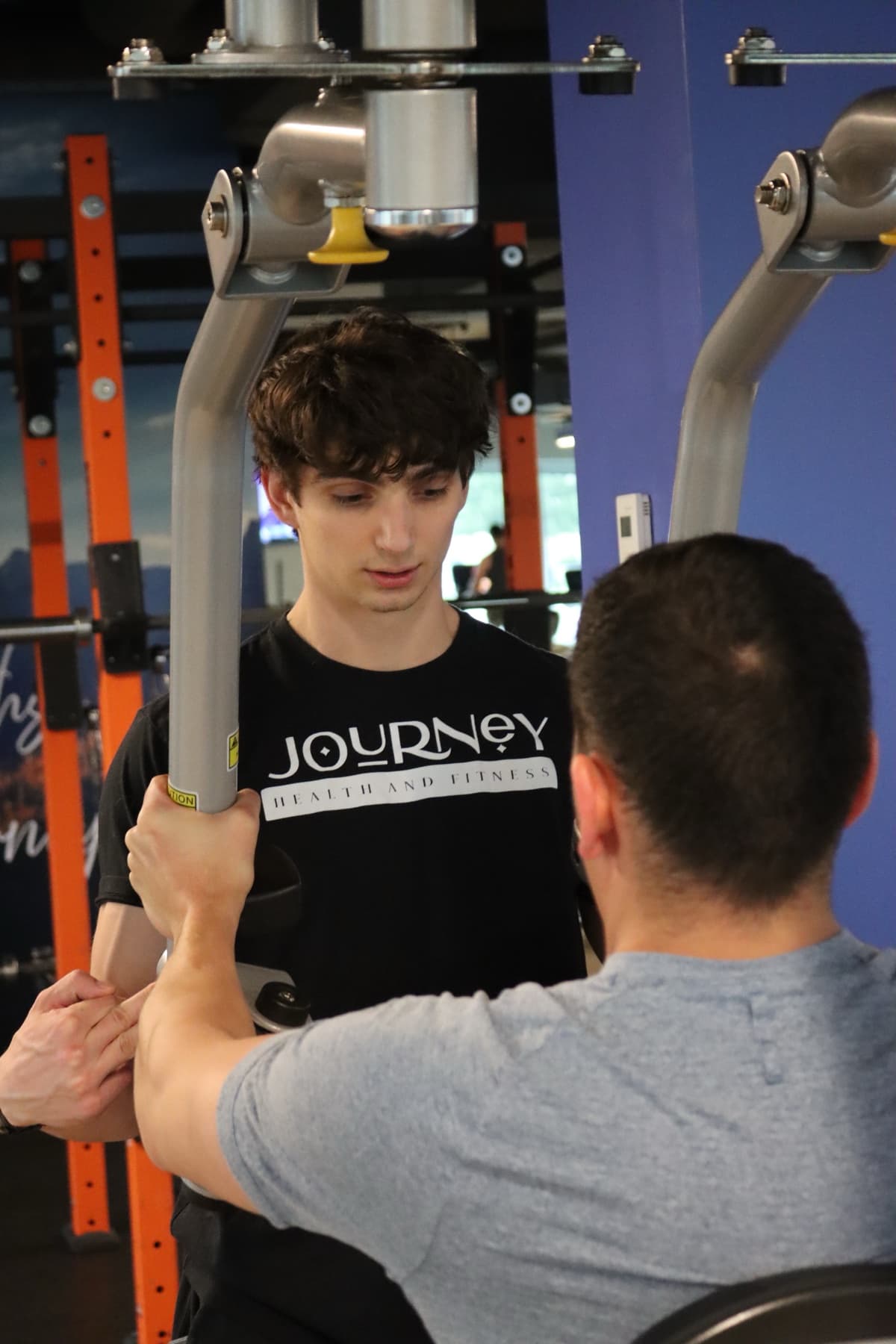
Kris Oddo, NASM-CPT, works with software engineers through Geebs Coaching to build sustainable strength and body recomposition habits that fit cleanly into demanding tech careers.
A realistic default
Three focused lifting days, a simple daily protein target, a step floor, and a weekly review are enough for many software engineers to start moving.
A dependable baseline includes:
- Three focused lifting sessions: 45 to 50 minutes of compound movements (squats, presses, rows, hinge variations) that train the major muscle groups efficiently without demanding hours in the gym.
- Daily movement anchors: Setting a baseline step floor (such as 7,000 to 9,000 steps daily) broken into manageable walks before standup, during lunch, or after logging off.
- Simple nutrition targets: Prioritizing daily protein (approximately 0.7 to 1.0 grams per pound of goal body weight) and predictable calorie baselines rather than weighing every bite of food.
- Weekly adjustments: Reviewing recovery, work stress, and training performance each week to adapt the plan based on real progress.
From there, the plan can scale based on recovery, equipment, travel, and whether the goal is fat loss, body recomposition, or muscle gain.
The best plan is not the most optimized plan. It is the one you can keep executing when work is not calm.
For a clear evaluation framework on coach qualifications and remote delivery methods, see the Titan Forge fitness coach credentials and vetting guide.
Honest limits
When reviewing the scientific research on workplace sedentary behaviour, office ergonomics, and physical activity, several honest limits must be considered:
- Inconsistent health outcomes in workplace interventions: In the narrative review by Bailey (2021, PMID 33710270), the author noted that while multicomponent workplace strategies reduce sitting time, their demonstrated effects on specific health outcomes remain inconsistent. This is largely attributed to a lack of randomized controlled trials adequately powered to measure changes in clinical health markers.
- Sample size and non-significant trends in sitting studies: The study by Bontrup and colleagues (2019, PMID 31422243) evaluated 64 call-centre workers across 400 hours of pressure-mat measurements. The observed trend toward more static sitting in individuals with chronic low back pain did not reach a reliable difference on a t-test. Furthermore, the authors explicitly highlighted that the causal relationships between sedentary lifestyles, sitting posture, and low back pain remain controversial in the scientific community.
- Qualitative research design and individual variation: The findings by Landais and colleagues (2022, PMID 35354447) are derived from qualitative thematic analysis of office workers' perspectives. While qualitative research provides valuable insight into behavioral barriers, competing values, and attitudes, it describes subjective participant experiences rather than quantifying physiological adaptations or prescribing specific lifting loads.