In this guide
- What actually changes in a recomp
- What clinical evidence shows about before-and-after changes
- What to track before and after
- Why coaching changes the before-and-after
- Honest limits
- FAQ
What actually changes in a recomp
Body recomposition means the body is moving toward more muscle and less fat at the same time. For men looking at before-and-after photos online, the reality often looks different from what they expect on the bathroom scale. The scale may move slowly or barely at all because muscle gain and fat loss can partially offset each other in total weight. To see what kind of 12-week changes and calorie starting points are realistic for your current training age and body fat, check the body recomposition calculator.
Consider what happens over a dedicated twelve-week recomp block (the week-by-week timeline is in how long it takes to see results working out). A man might start at 195 pounds, lose six pounds of fat, and build four pounds of muscle. At the end of the block, the bathroom scale reads 193 pounds—a net change of only two pounds down. If he judges his progress solely by the scale, he might assume twelve weeks of hard training and careful nutrition accomplished almost nothing.
Yet when you look at his before and after photos side by side, the transformation is obvious. His waist is visibly tighter, his shoulders and upper back appear broader, his chest holds firmer posture, and his shirts fit looser around his midsection while fitting snug across his arms.
That is why photos, waist measurements, training performance, and consistency matter far more than scale weight alone. A man can look noticeably different before the scale gives him the clean story he wants.
Traditional bodybuilding advice often pushes men into extreme bulk and cut cycles. In a standard bulk, you deliberately eat in a large calorie surplus to force weight gain, which inevitably adds substantial body fat along with muscle. Months later, you are forced to run an aggressive diet to strip off that excess fat, battling intense hunger, fatigue, and the risk of losing hard-earned muscle along the way.
Recomposition skips that frustrating round trip. Instead of swinging fifteen or twenty pounds up and down every year, you build muscle and shed fat steadily. The goal is not a dramatic promise or an overnight miracle. The goal is to run the right process long enough for the body to show it.
What clinical evidence shows about before-and-after changes
For decades, conventional fitness advice insisted that building muscle while losing fat was impossible for anyone beyond absolute beginners. The old assumption claimed you could only build new tissue in a caloric surplus and could only lose fat in a severe deficit.
Modern clinical research directly refutes this rigid division. In a clinical trial published in the European Journal of Applied Physiology, Vargas-Molina and colleagues (2026) evaluated body recomposition outcomes among resistance-trained participants across different nutritional protocols (PMID 41940947).
The researchers compared three distinct groups:
- Moderate Calorie Deficit Group (DEF): Consumed an energy deficit protocol while keeping protein elevated at 2.5 g·kg⁻1·d⁻1.
- Maintenance Calorie Group (ISO): Consumed an isocaloric maintenance protocol with the identical elevated protein intake of 2.5 g·kg⁻1·d⁻1.
- Control Group: Followed habitual dietary practice without nutritional supervision.
The measured before-and-after outcomes showed simultaneous fat loss and lean mass gain in the structured nutrition groups:
- Fat Loss: The moderate deficit group reduced fat mass by 2.94 kg (and fat-free adipose tissue by 0.47 kg). The maintenance group also achieved fat loss, decreasing fat mass by 1.41 kg (and fat-free adipose tissue by 0.25 kg).
- Muscle Gain: Fat-free mass increased in both nutritional groups. The moderate deficit group gained 1.04 kg of fat-free mass (1.50 kg when adjusted for fat-free adipose tissue). The maintenance group gained 0.97 kg of fat-free mass (1.22 kg when adjusted for fat-free adipose tissue).
- The Control Outcome: In contrast, the control group following habitual practice without dietary structure showed no meaningful changes across any body composition metric.
These findings directly challenge the traditional model of energy balance by demonstrating that when lifting is paired with an elevated protein intake of 2.5 g·kg⁻1·d⁻1, the body can draw on stored fat for energy while simultaneously synthesizing new muscle tissue. Whether eating in a moderate deficit or at maintenance calories, structured nutrition produced clear before-and-after physical improvements that habitual eating failed to deliver.
What to track before and after
If you want an honest picture of your recomposition before and after, you need to track the metrics that reflect actual changes in body tissue rather than total mass alone.
First, take standardized progress photos. Take front, side, and back photos every two to four weeks in the same lighting, at the same distance, and at the same time of morning. Standardized photos remove the distortions of varying angles and lighting, allowing you to see actual changes in abdominal definition, deltoid fullness, and posture.
Second, track your waist circumference. Measure your waist around the navel with a flexible tape measure first thing in the morning before eating or drinking. Because men store a significant proportion of body fat around the abdomen, a shrinking waist combined with stable bodyweight is one of the clearest indicators that you are losing fat while preserving or adding muscle.
Third, log bodyweight trends, not single weigh-ins. Weigh yourself several mornings per week after using the bathroom, then calculate a weekly average. Daily scale weight fluctuates due to hydration, sodium intake, carbohydrate stores, and training inflammation. Watching the weekly trend line prevents unnecessary panic over temporary spikes.
Fourth, track your training performance in the gym. Log your working weights, sets, and repetitions across your key compound exercises. If your strength on squats, presses, rows, and deadlifts is climbing or remaining solid while your waist circumference is dropping, your body is holding onto muscle while pulling energy from fat stores.
If photos improve, waist drops, and strength is stable or rising, the recomp is working even if the scale is not dramatic.
Why coaching changes the before-and-after
Most men do not fail because they lack a workout routine or general information. They fail because the plan is not adjusted when sleep, stress, travel, missed workouts, or hunger change the data.
When an unguided lifter sees the scale sit at the exact same number for three consecutive weeks, the natural reaction is frustration. He assumes nothing is working, slashes his calories drastically, adds hours of exhausting cardio, and burns through muscle tissue. Or worse, he concludes that recomposition is impossible and gives up entirely.
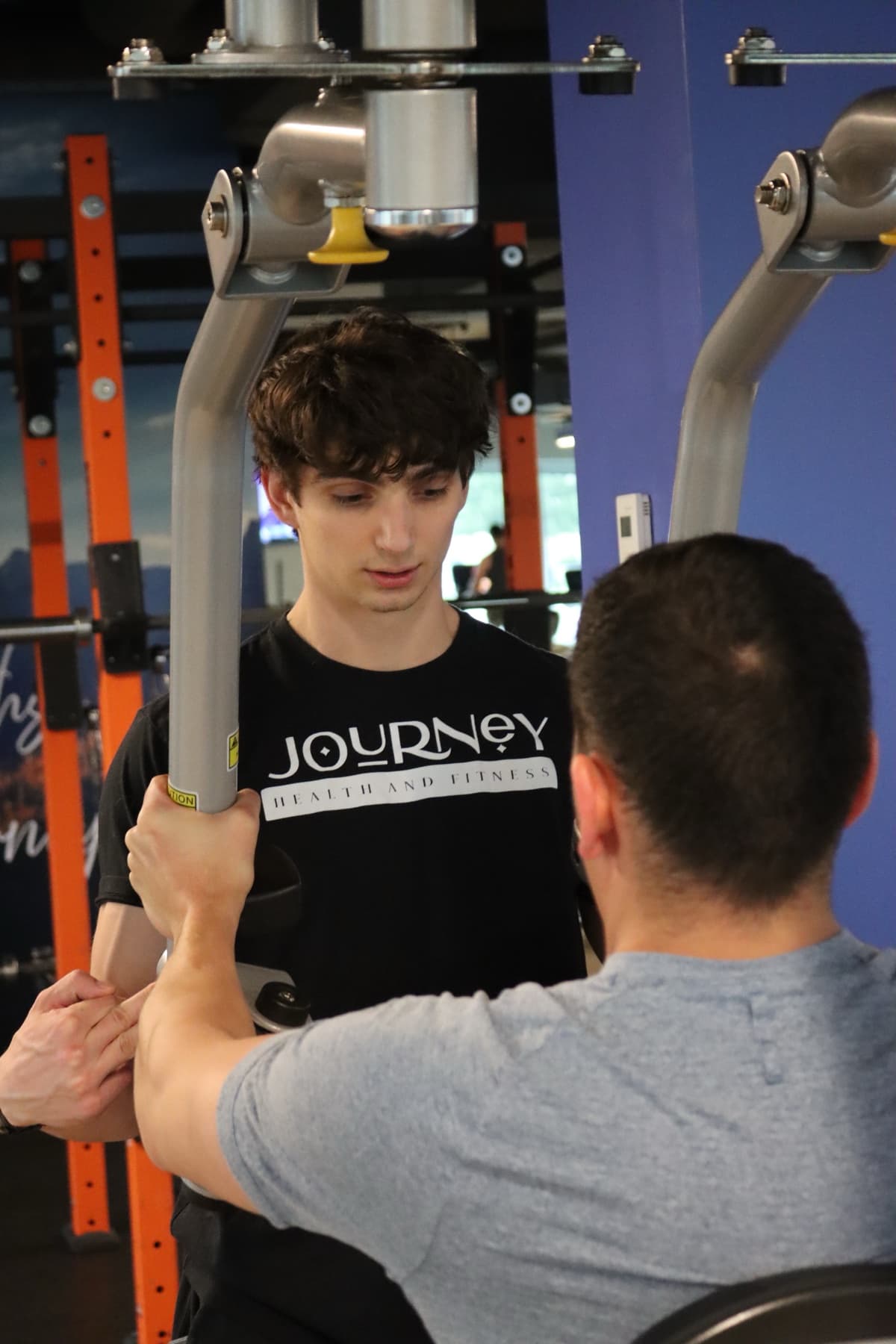
A coach provides the objective lens necessary to navigate those plateaus. Instead of reacting emotionally to a flat scale, a coach looks at the complete data set: progress photos, tape measurements, recovery markers, gym performance logs, and daily habits.
A coach keeps the process connected: training stimulus, protein, calories, steps, sleep, and weekly decisions.
When work travel disrupts your normal routine, a coach adjusts your training to hotel gym equipment and maps out travel-friendly food strategies. When high stress and poor sleep elevate recovery demands, a coach moderates training volume so you continue progressing without burning out.
That is the difference between collecting random before photos and actually creating an after. Consistency across months—not perfection over five days—is what reshapes a man's physique.
Honest limits
While body recomposition is a proven and effective strategy, it is important to understand its practical boundaries:
- Training Status and Rate of Progress: The clinical investigation by Vargas-Molina and colleagues (2026, PMID 41940947) demonstrated successful recomposition in resistance-trained participants. Beginners and individuals carrying higher body fat often experience rapid simultaneous changes, whereas advanced lifters who are already lean will see slower, more gradual before-and-after progression.
- Dietary Structure Is Non-Negotiable: In the Vargas-Molina et al. (2026) study, participants in the control group who lifted without nutritional structure experienced no meaningful changes. Simply lifting weights without controlling calorie balance and daily protein is unlikely to produce a noticeable transformation.
- High Protein Intake: Both successful intervention groups in the trial consumed an elevated daily protein intake of 2.5 g·kg⁻1·d⁻1. Meeting a consistent high-protein baseline is essential to supply the necessary amino acids for muscle growth during periods of calorie restriction or maintenance.
- Time and Consistency: A true before-and-after transformation requires months of disciplined adherence. Recomposition is a steady physiological process that rewards patience and weekly execution over quick-fix solutions.
To support your body transformation with evidence-backed supplements and progress tracking tools, visit the Titan Forge body recomposition and progress collection.