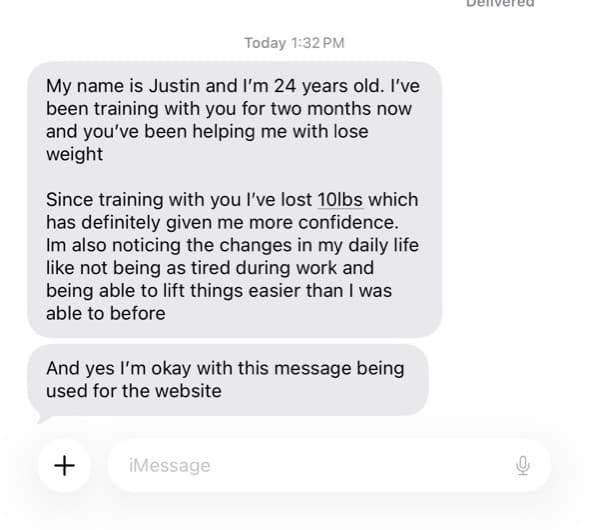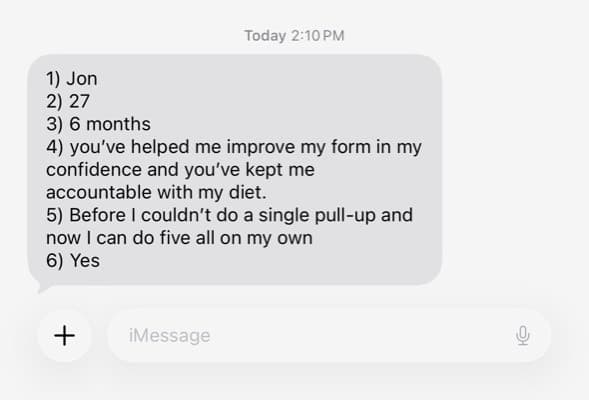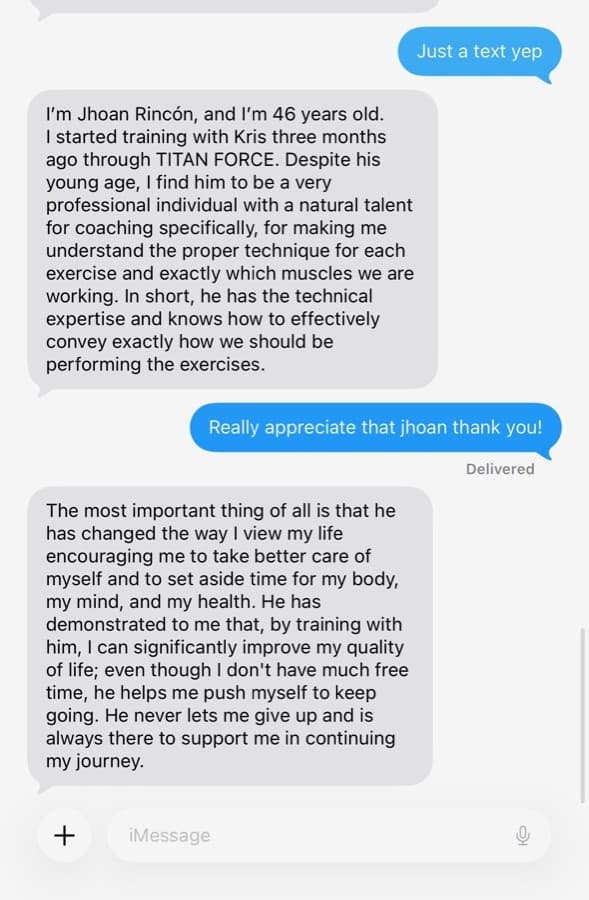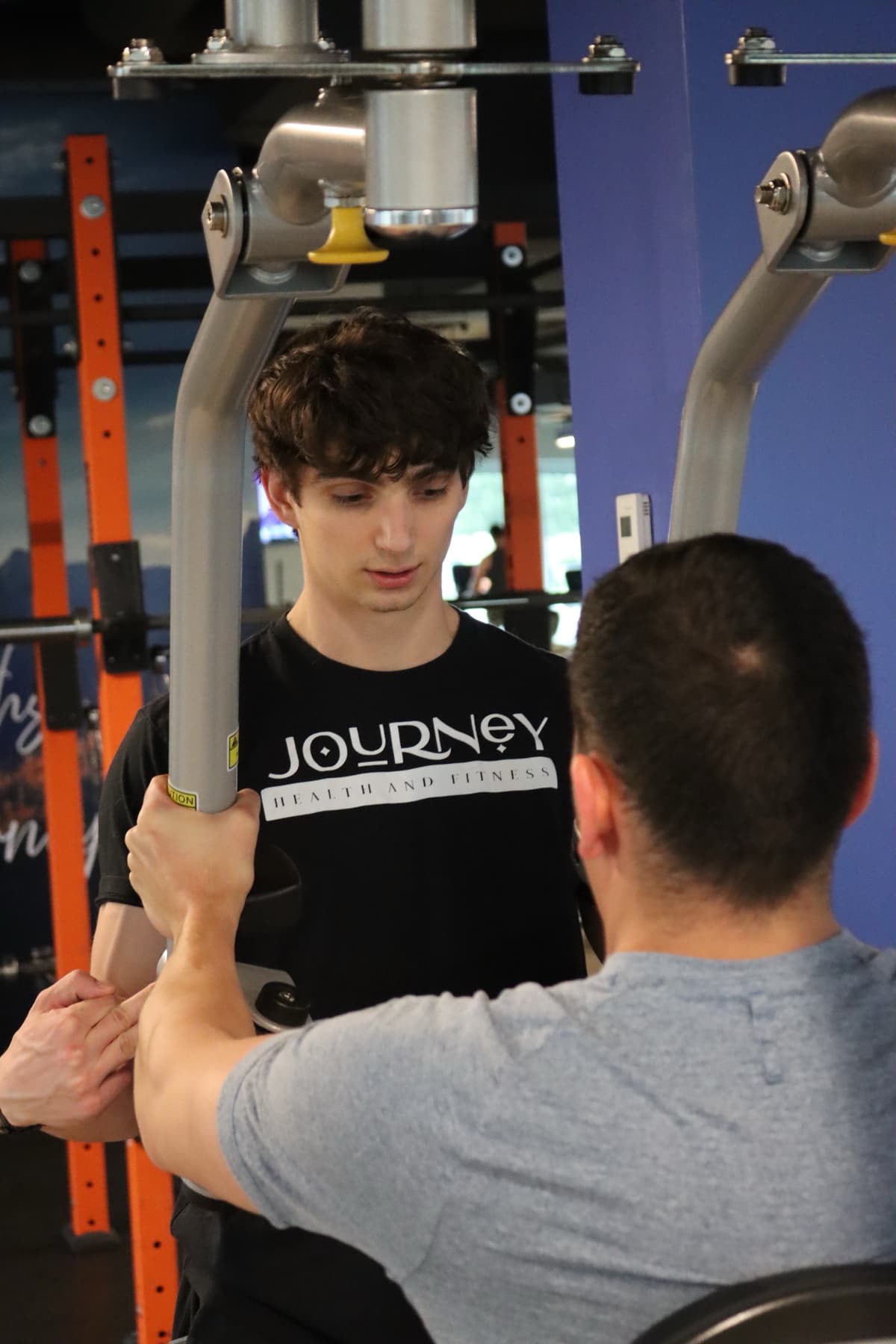
Kris Oddo, NASM-certified personal trainer, is the founder and head coach of Gains From Geebs (Geebs Coaching), a 1:1 online fitness coaching practice.
Guide
Getting back in shape after a long break
If you fell off and you used to be in shape, you are not starting from zero: strength and size come back faster the second time. Start lighter than you remember, train two to four short sessions a week, and protect the habit for the first six weeks. Most restarts fail on the routine, not the muscle.
Kris Oddo, NASM-CPT, is a 1:1 online fitness coach. Starting again after time off is a story he hears often in his DMs.
Six questions people ask when they start again.
By Kris Oddo, NASM-CPT · Updated
I used to be in shape. Is muscle memory real?
Partly, and the honest version still helps. In a 2024 study, 12 untrained men and women trained one arm for 10 weeks, then stopped for 16. The muscle fibres shrank, but the extra nuclei they had built stayed: the trained arm kept 33% more of them in its type 2 fibres.
When both arms were then trained for 10 more weeks, the arm that had trained before ended with larger type 2 fibres than the arm that never had. But the size it gained during retraining was not clearly bigger, so the researchers call the practical benefit unproven.
What that means for a comeback: you are not starting from zero, and the muscle you built leaves a lasting trace. It does not mean the work gets skipped. Treat muscle memory as a head start, not a shortcut.
Source: Cumming et al., 2024, Journal of Physiology (PMID 39159314)
I fell off for a few months. How fast does it come back?
Faster than it took the first time. In a 2024 trial, 55 untrained adults around 32 years old lifted twice a week. One group trained for 10 weeks, stopped for 10, then trained 10 more. Their strength and size dropped during the break, then climbed back quickly.
In the first 5 weeks back, leg press strength and thigh and arm muscle size rose more in the returning group than in a group at the same stage of building them for the first time. By the end, both groups had the same results.
The authors' own conclusion is that people should not worry much about occasional short breaks over a lifetime of lifting. These were beginners on a supervised program, so years off will take longer. The direction holds.
Source: Halonen et al., 2024, Scandinavian Journal of Medicine & Science in Sports (PMID 39364857)
I missed three weeks. Did I lose everything?
No. In a 2013 trial, 14 young men did the bench press three times a week for 24 weeks. Half trained straight through; the other half took 3 weeks off after every 6 weeks of training. After 24 weeks, gains in chest and triceps size and in strength were the same.
The group with breaks gained faster each time it came back, which is how the totals came out even. That is the useful thing to know when a trip, a sick kid or a hard month knocks you out of the gym.
The risk in three missed weeks is not the muscle. It is the story you tell yourself afterwards: that you fell off again and might as well wait for a better month. The body forgives three weeks. The restart is the part to protect.
Source: Ogasawara et al., 2013, European Journal of Applied Physiology (PMID 23053130)
Why do I keep falling off after a couple of weeks?
Usually because the plan never became a habit. In a 12-week study of 111 new gym members, it took at least four exercise sessions a week for six weeks before exercise became a habit. Consistency and a routine that was simple to follow predicted who built one.
A routine that people enjoyed, and the right setting, also predicted the habit. Willpower was not one of the things measured. The people who stuck with it had made showing up easy, not heroic.
So the first goal of a restart is attendance, not intensity: short sessions you finish, at the same times, in the same place. The four do not all need to be lifting. Two or three lifting days plus a walk or a ride add up, and once showing up is automatic, the training and the food can tighten.
Source: Kaushal & Rhodes, 2015, Journal of Behavioral Medicine (PMID 25851609)
How hard should I train when I'm starting again?
Easier than your memory says. A review of 15 studies found no reliable difference in strength or muscle growth between sets taken to failure and sets stopped short of it. You do not need to empty the tank to make progress.
For a restart, that is permission to stop each set with two or three reps left for the first few weeks. You still progress, you recover in time for the next session, and you avoid the soreness that makes week two feel impossible.
The studies in the review were in young adults, and trained lifters did see slightly more growth from going to failure. That is a later tool. In month one, the job is to leave every session able to come back for the next one.
Source: Grgic et al., 2022, Journal of Sport and Health Science (PMID 33497853)
What is the least I can do so I don't fall off again?
Less than you think. After 12 weeks of training, young women who dropped to one session a week kept their leg strength and muscle size for 12 more weeks. Those training once every two weeks still kept 90 to 95% of what they had built.
So a bad month does not need to be a zero month. One full-body session a week held the line in this study, and once every two weeks lost only a little.
Plan that week before it comes. Agree with yourself, or your coach, on a 30-minute minimum session you will do when work, kids or travel take over. People who fall off usually had an all-or-nothing plan. People who stay in shape have a floor.
Before you read on
The plan below works off your numbers. Get them first.
Protein targets and calories depend on your bodyweight, not an average. The calculator gives you both in about a minute, so the rest of this article is something you can actually follow.
Free coaching tip
Want a useful coaching tip before you go?
What should the first four weeks look like?
Two to three full-body strength sessions a week, 30 to 45 minutes, every set stopped with a few reps left. No maxing out and no punishment finishers. The goal of week one is a session you recover from easily, not a hard one.
The rest of the first month
Add load or a set in week three, and only because weeks one and two felt easy to recover from. Soreness should be there, not in charge. If sitting down on day two hurts, the first week was too much.
Set a protein target from day one and hit it most days; that matters more than getting the rest of the food perfect. The body recomposition calculator gives you the number. For the exercises, the beginner strength training guide is a good starting plan even if you are not a beginner.
When does a coach help with a restart?
When the last few restarts ended the same way. If you keep falling off around the same point, the problem is the plan around the training, and that is the part a coach changes.
What coaching with Kris changes
Kris starts from where you are now, not where you were before the break: your schedule, your old injuries, your equipment. He builds the first month to be finishable, then raises it every week the routine holds, and he is there in the weeks the motivation is not. See how Kris coaches or coaching for accountability.
If you played a sport and the body you remember is a decade old, coaching for former athletes is the version written for you. If the break came with a big life change, starting over after a breakup or divorce covers that restart.
FAQ
More questions about starting again
Should I start with cardio or weights when getting back in shape?
Weights first, two or three short full-body sessions a week, with walking or easy cardio on top if you like it. Lifting is what decides whether the weight you lose is fat or muscle; cardio on its own changes the scale more than the mirror.
What if I have gym anxiety after a long time away?
Walk in with the session written down so you never stand there wondering what to do next, keep it short, and go at a quieter hour for the first few weeks if that helps. Having a plan is usually what takes the edge off.
Is getting back in shape after 30 different?
The on-ramp is, the destination is not. Recovery between hard sessions is a little slower and old injuries speak up more, so start with fewer days and lighter loads, and add the next step only when the last one feels easy.
Do I need a coach to restart after a long break?
No. Plenty of people restart well on a simple program. Coaching earns its keep when your last two or three restarts ended the same way, when accountability was the reason you stopped, or when you want the first month set from where you are now.
A restart built around where you are now
Tell Kris how long you have been off and what got in the way last time. He sets the first month from that.
Considering coaching?
Watch this before you decide.
Kris explains what he looks for, what happens after an application, and how he decides whether 1:1 coaching is a fit.
See how 1:1 coaching worksCome back tomorrow
A guide answers one question. The habit is what changes your body.
You have the answer you came for. Staying on track is the daily part — so we publish one evidence-based training and nutrition finding every day, plus a weekly email that keeps the useful stuff in front of you.
Free coaching tip
Want a useful coaching tip before you go?