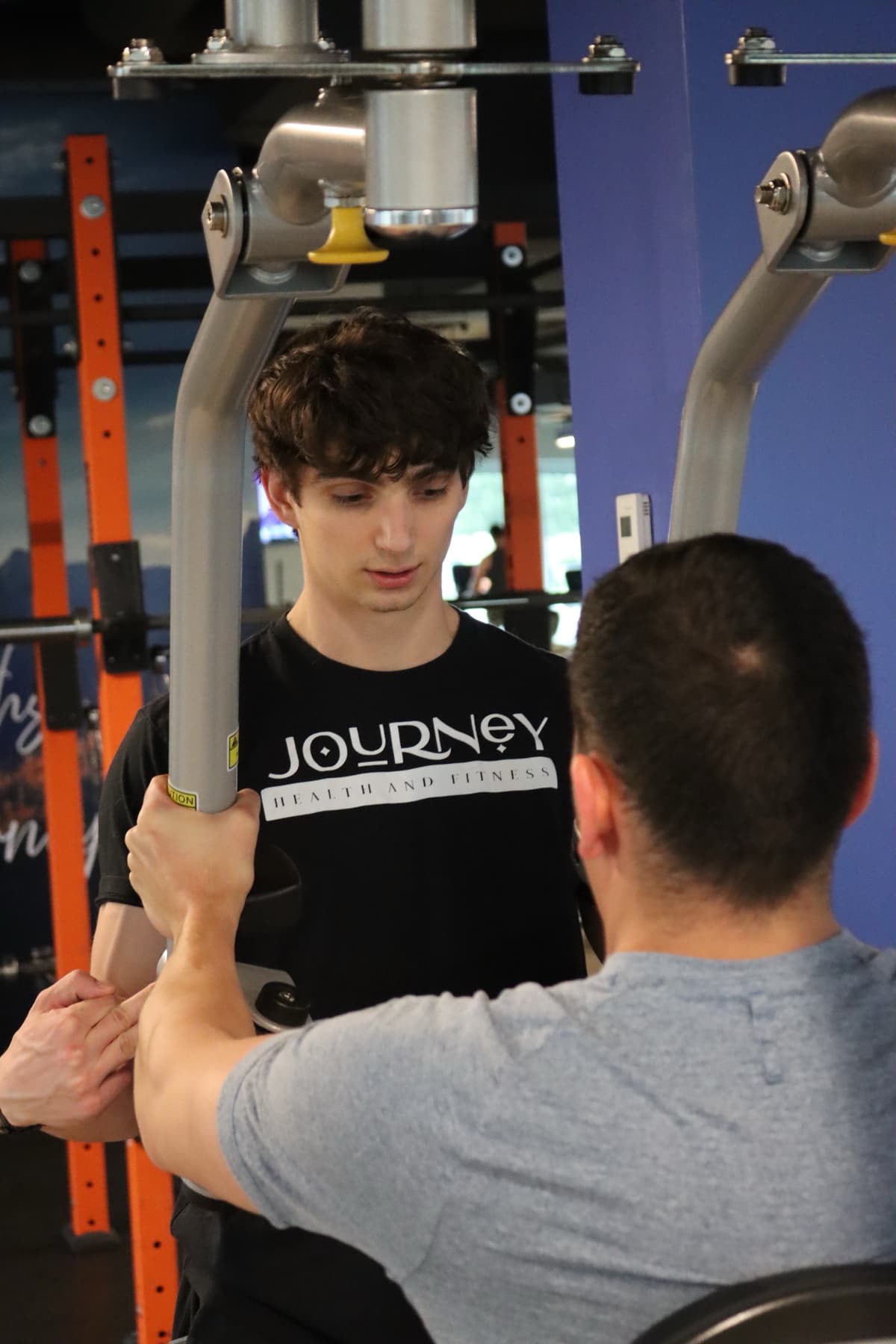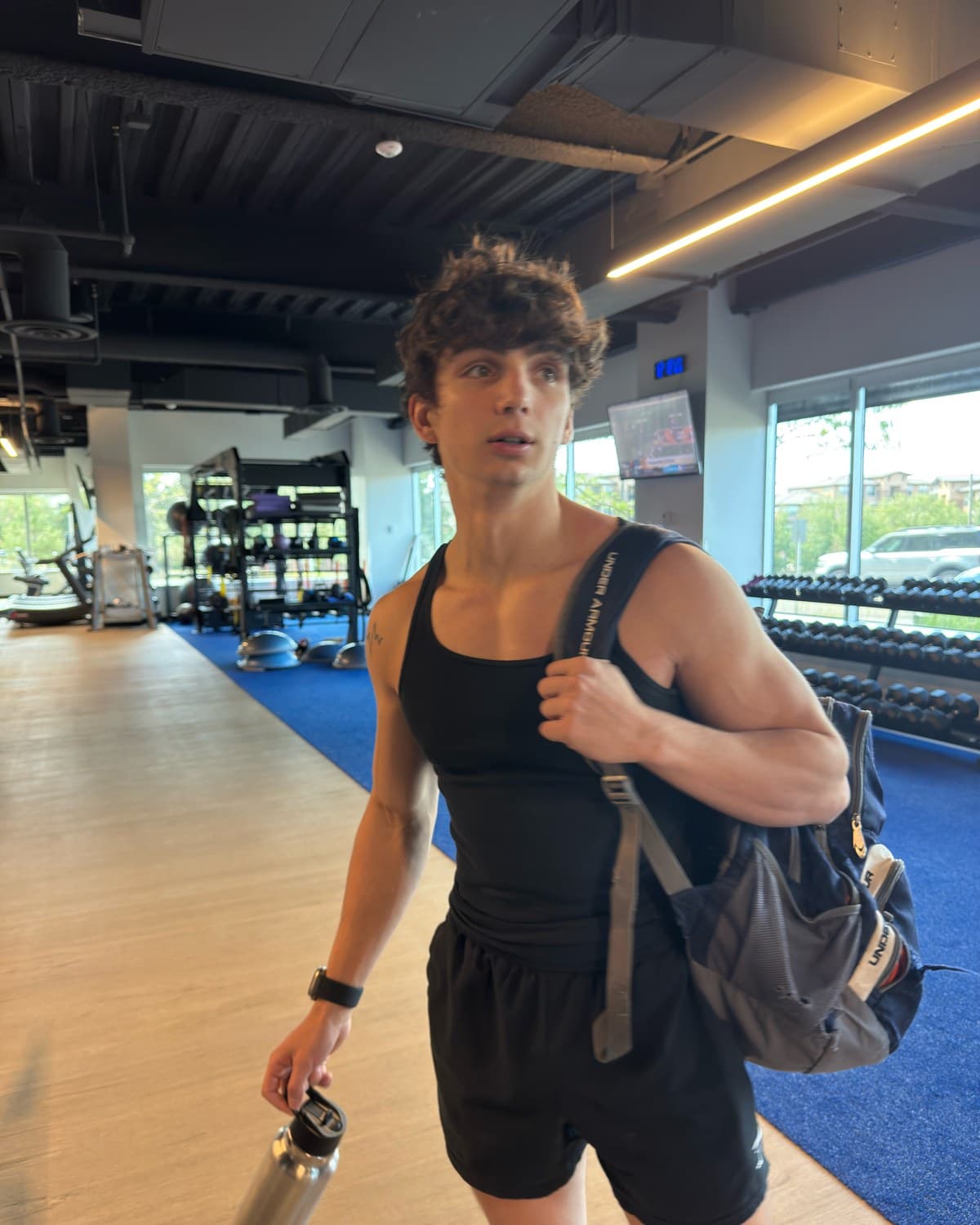
Kris Oddo, NASM-certified personal trainer, is the founder and head coach of Gains From Geebs (Geebs Coaching), a 1:1 online fitness coaching practice.
Who it's for
Online fitness coach for men over 40
Getting back in shape after 40 is the same fundamentals with smarter recovery. What changes: joints need better warm-ups, recovery needs managing, and the all-or-nothing approach that “worked” at 25 now causes injuries and quitting.
Getting back in shape after 40
Getting back in shape after 40 is not a different sport. It is the same fundamentals — progressive overload, protein, consistency — with smarter recovery management layered in. What changes after 40: joints respond better to longer warm-ups, recovery demands more deliberate attention, and the all-or-nothing approach that kind of worked at 25 now causes injuries and quitting.
What does not change: your capacity to build muscle, lose fat, and get substantially stronger is still there. Men in their late 30s and 40s respond strongly to structured strength training. The constraint is not capability; it is recovery management, programming precision, and a plan that accounts for your history.
1:1 coaching matters more after 40 because the margins are tighter. A generic program copied from a 25-year-old's feed does not account for your old shoulder, your current sleep, or the fact that recovery at 44 looks different than recovery at 24. A coach who knows your week programs for all of it.
Getting back in shape after 35 (the honest version)
The 35 inflection point is real — but it is overstated. Recovery does shift slightly in the mid-to-late 30s: soreness lingers a day longer, sleep quality matters more, and the same training volume that was manageable at 28 starts producing diminishing returns at 36. None of that means the capability is gone. It means the programming needs to respect what the body is actually telling you.
Men in their mid-to-late 30s who have never trained seriously are still in the newbie-gains window for muscle growth. That window does not expire at 35 — it closes based on training age, not calendar age. If you have never followed a structured progressive program, 35 is not too late. It is still very early.
What changes after 35 that the programming accounts for: longer warm-up protocols before heavy compound work, exercise selection that avoids unnecessary joint stress (trap bar deadlift over conventional for back-sensitive clients, for example), deliberate deload weeks built into the program rather than waiting for an injury to force rest, and recovery tracking that flags when the next week's load needs to pull back.
Online fitness coach for men over 35: what changes about the programming
A 25-year-old and a 37-year-old can run the same three-day full-body program at similar volumes. What differs is how the program responds to feedback. At 35+, the programming needs to monitor joint load, recovery signals, and long-term progression more deliberately — not because the body has a lower ceiling, but because the margin for error on recovery is smaller.
1:1 coaching matters more after 35 precisely because it is responsive. Generic programs are written for the average person at the average recovery capacity. A coach who knows your history — the old shoulder injury, the work month that is wrecking your sleep, the week where training load needs to drop 30% — programs for your actual situation rather than the average.
The fundamentals do not change. Progressive overload, protein at 0.8–1g per pound of bodyweight, consistent sleep. The delivery becomes more precise because the margin between underdoing it and overdoing it narrows slightly as the decade progresses.
Building muscle after 40 — slower, not impossible
Muscle is built at any age. After 40 the rate is somewhat slower and the demands on sleep, protein, and programming quality are higher — but none of those factors prevent meaningful muscle gain. Men in their 40s routinely make substantial physique changes with structured training for the first time in their lives.
The mechanism is the same: progressive overload over time, protein above 0.8g per pound of bodyweight, adequate recovery. After 40 the recovery side of the equation simply carries more weight. A program that ignores recovery — or a week that ignores sleep — will stall faster than it would at 28.
Coaching tracks the variables that actually predict results at this stage: progression over weeks, sleep quality, soreness patterns, and whether the training load is rising or just cycling. The weekly check-in catches the drift before it becomes a plateau.
Training around old injuries and cranky joints
By 40, most men have something — a shoulder that clicks, a knee that does not love certain angles, a back that needs to be treated carefully. Generic programs do not account for any of this. 1:1 coaching does.
The programming builds around your specific limitations: exercise selection that avoids the angles that hurt, load progressions that do not outrun your joints, warm-up protocols that prepare the tissue that needs it. The goal is not to work around injuries indefinitely but to build capacity gradually so you can handle more over time.
Video form review is part of the process. Sending a set to Kris and getting cues back is not a workaround — it is the mechanism that catches the compensations that eventually become injuries.
Why crash programs fail harder at 40
The all-or-nothing pattern — a hard reset, perfect eating, six days a week, then an injury or a stressful work month ends it — fails at any age but damages more at 40. Recovery takes longer, setbacks compound faster, and restarting from a lower base each time adds up.
The coaching approach is the opposite: three quality sessions a week, progressive nutrition targets, a plan that accommodates hard months rather than pretending they will not happen. Boring is not a flaw in the method. Boring and consistent is exactly what produces the result.
Recovery: the variable that now decides results
At 40, recovery is no longer a secondary concern. Sleep, stress load, training volume, and nutrition interact directly to determine how much the body adapts to training stimulus. Too much volume without recovery produces injury and stagnation. Too little volume produces nothing. The balance point shifts slightly toward recovery quality as the decade progresses.
This is one of the core reasons 1:1 coaching is more valuable after 40: the coach can see when training load needs to pull back because the recovery data — sleep quality, energy levels, soreness persistence — says so. A self-guided program does not adjust dynamically. Weekly coaching does.
Fat loss after 40 without extreme dieting
Fat loss after 40 follows the same mechanism it always has: a modest calorie deficit, a high protein intake, and resistance training to preserve muscle while the deficit runs. Extreme restriction does not work better at 40 — it works worse, because muscle loss accelerates under large deficits and recovery degrades.
The coaching uses a moderate deficit — 200-300 calories below maintenance — with protein targets high enough to preserve muscle. Progress is measured by body composition, not just scale weight. The goal is a body that looks and performs better, which does not always mean a lower number on the scale.
Related reading and paths
A client over 40
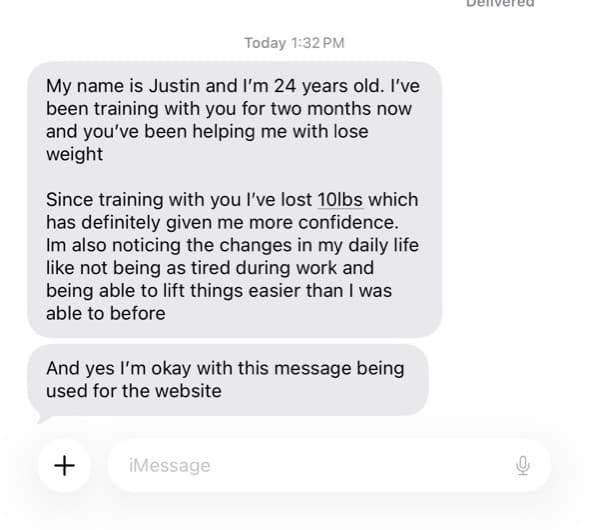
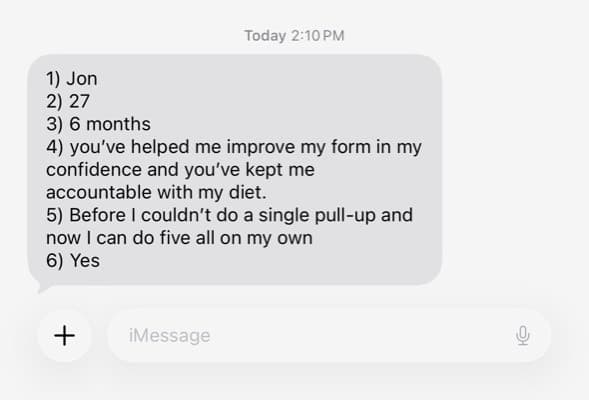
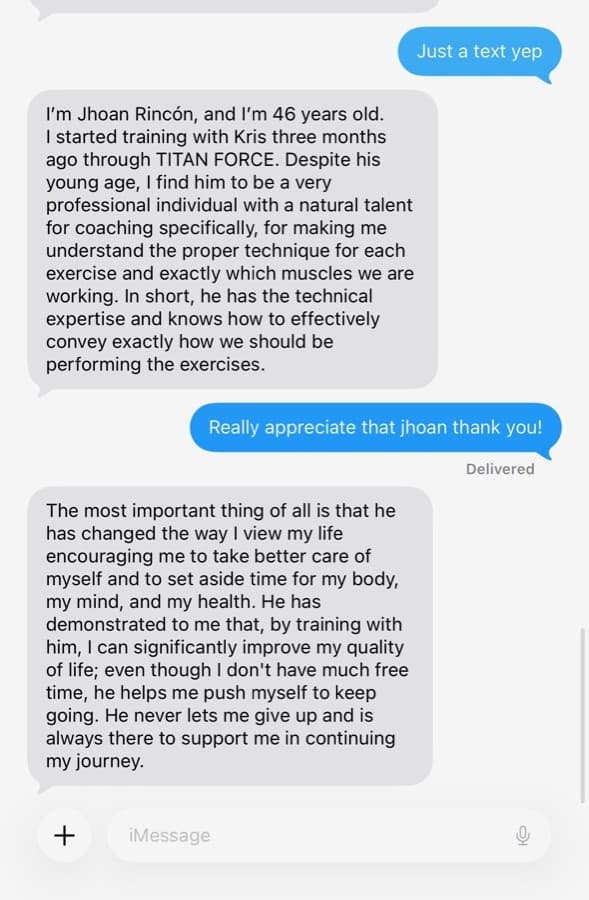
“Kris changed the way I view my life. Even though I do not have much free time, he helps me push myself to keep going and never lets me give up.”
Start with the guides
Coaching with Kris starts at $400 a month. A one-time consult is $100, and the community is $24.99 a month. See what each one includes.
Before you read on
The plan below works off your numbers. Get them first.
Protein targets and calories depend on your bodyweight, not an average. The calculator gives you both in about a minute, so the rest of this article is something you can actually follow.
Free coaching tip
Want a useful coaching tip before you go?
Common questions
- Can I get back in shape at 40 (or 45)?
- Yes. Men in their late 30s and 40s respond strongly to structured strength training. The constraint is recovery management and programming precision, not capability. Getting back in shape after 40 is the same fundamentals as any age — with smarter recovery layered in.
- Is it too late to build muscle after 40?
- No. Muscle is built at any age. After 40 it is somewhat slower and demands better sleep, protein, and programming — exactly what coaching manages. Men in their 40s who have never trained systematically still have access to significant early-stage gains.
- Should men over 40 train differently?
- Longer warm-ups, smarter exercise selection, more deliberate recovery, and usually three quality sessions instead of six sloppy ones. The principles are identical: progressive overload, protein, consistency. The delivery gets more precise.
- What about testosterone?
- It falls slowly, not off a cliff. The Massachusetts Male Aging Study followed 1,156 men aged 40 to 70 and measured total testosterone dropping about 1.6% a year within each man, with androgen levels 10 to 15% higher in men free of chronic illness, obesity and heavy drinking (Feldman et al., 2002, PMID 11836290). Train, sleep and carry less body fat; anything beyond that is a conversation with your doctor, not a coaching pitch.
- I haven't trained in 15 years — where do I start?
- With less than you think: three short full-body sessions, a protein target, and a coach watching the ramp-up so enthusiasm does not outrun your tendons. Starting conservatively and progressing steadily beats an ambitious program that ends in injury in week three.
- Is online coaching safe for someone my age with no base?
- Programs start from your actual level, form is reviewed by video, and loads progress only when earned. That is safer than copying a 25-year-old's program off YouTube. The application and strategy call exist to understand your history and limitations before anything starts.
- Can a man over 35 still build serious muscle?
- Yes. Men in their mid-to-late 30s who have never trained systematically are still in the newbie-gains window — training age determines that window, not calendar age. The process takes slightly longer and demands more recovery attention than at 25, but the capacity for substantial muscle gain is fully intact. The testosterone-decline narrative is real but massively overstated in its practical effect on coached, progressive training.
- What is different about coaching someone over 35 vs a 25-year-old?
- More attention to exercise selection for joint health, longer deliberate warm-up protocols, planned deload weeks rather than waiting for an injury to force rest, and more emphasis on recovery monitoring. The programming fundamentals are identical. The delivery is more precise because the margin for recovery error narrows slightly after 35.
Coaching built for where you are now
See how Kris coaches or the full body recomposition method. 1:1 coaching is application-based — three questions, under two minutes. The strategy call covers your history, limitations, and what a realistic starting point looks like.
If you want the study-backed answers first, see the research on whether protein preserves muscle as you age, whether strength training helps you age better, what creatine does for aging adults, and the best exercise for longevity.
Considering coaching?
Watch this before you decide.
Kris explains what he looks for, what happens after an application, and how he decides whether 1:1 coaching is a fit.
See how 1:1 coaching worksCome back tomorrow
Coaching is the plan. The habit is what changes your body.
Staying on track is the daily part, so we publish one evidence-based finding every day.