Comparison
AI fitness coach vs human coach: what AI gets right (and where it falls apart)
AI fitness coaching has become genuinely capable in 2025–2026. Freeletics adapts workouts in real time. Whoop Coach interprets your biometric data. Future and Caliber use AI to assist their human coaches with programming. The honest answer: AI tools have largely solved the 'what to do' problem. What they have not solved is the 'will you actually do it' problem — and that is the variable that determines results. A 2025 randomized controlled trial on resistance training found adherence near 88% with supervision versus around 52% self-guided. AI is a delivery mechanism. The accountability relationship is a different problem, and it is still human.
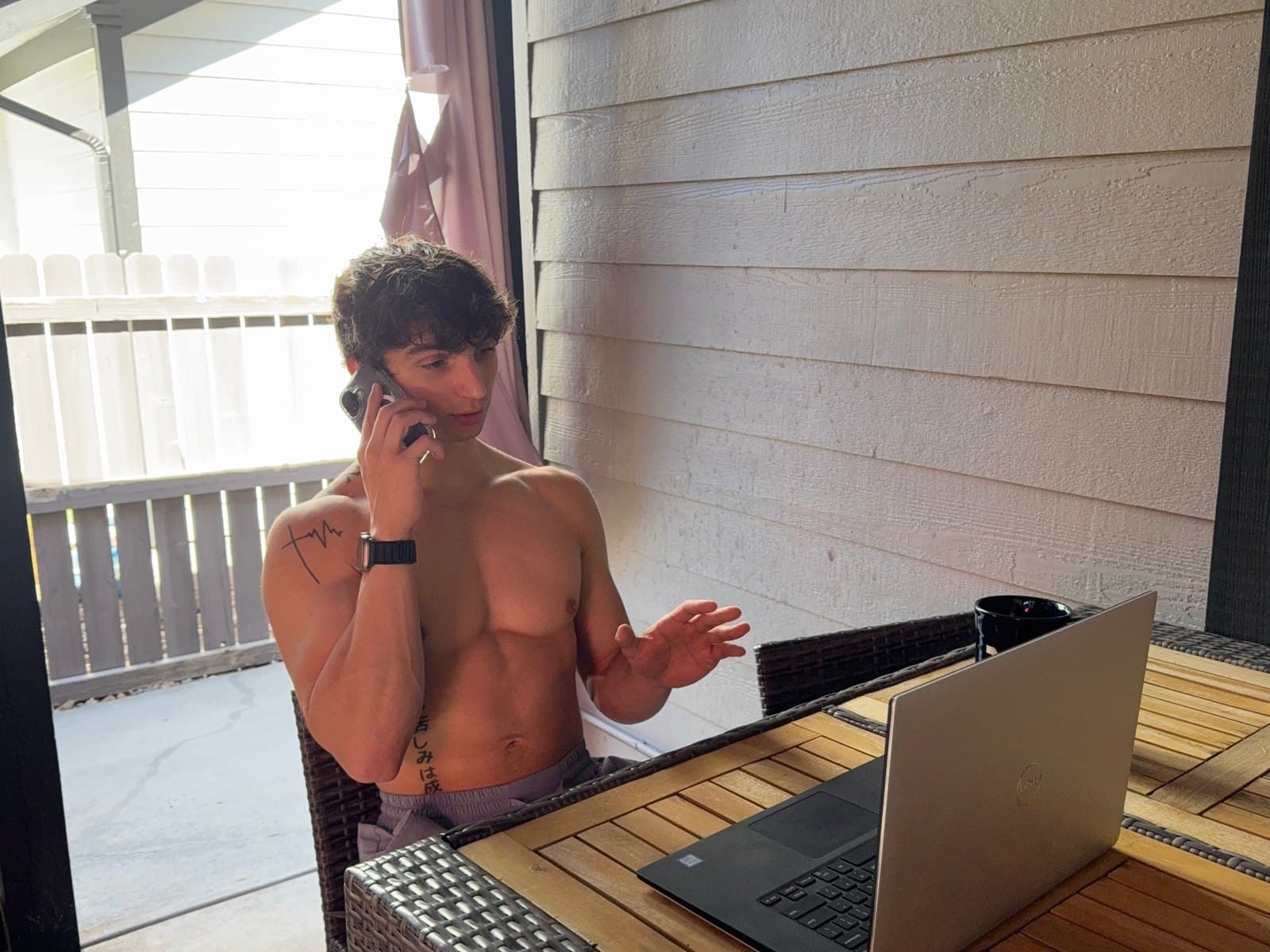
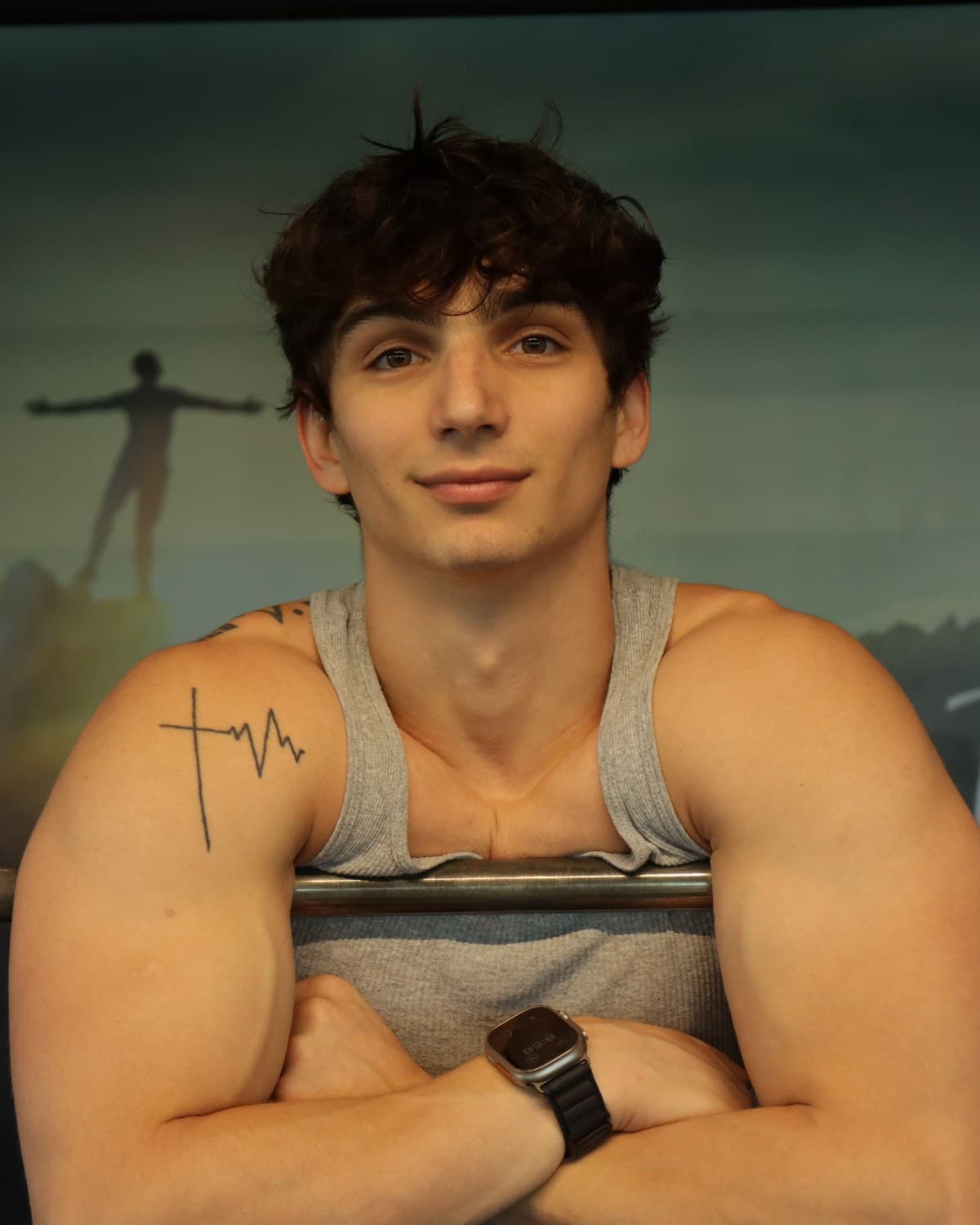
Kris Oddo, NASM-certified personal trainer, is the founder and head coach of Gains From Geebs (Geebs Coaching), a 1:1 online fitness coaching practice.
Quick answer
Should you choose an AI fitness coach or a human coach?
Choose an AI tool if you mainly need a lower-cost program and can follow it on your own. Choose a human coach when your real problem is adapting the plan to your week and staying consistent after the first difficult stretch. Both can be useful; they are not the same kind of support.
Side by side
Geebs Coaching vs AI Fitness Coaching Apps (AI-powered adaptive fitness apps and tools).
| Dimension | Geebs Coaching | AI Fitness Coaching Apps |
|---|---|---|
| Program quality | Program built from your intake form, training history, equipment, schedule, and weekly feedback from Kris — updated every week based on what actually happened. | AI-generated programs are increasingly good. Freeletics, Whoop Coach, and AI-assisted platforms produce reasonable adaptive programming at a fraction of human cost. |
| Adherence support | Daily messaging, weekly check-in calls, and a coach who notices when you go quiet and follows up. Supervised coaching shows adherence near 88% in a 2025 RCT vs ~52% self-guided. | Notifications, streaks, and in-app prompts. Effective for self-motivated users; not a substitute for a human who notices the gap and calls it out. |
| Contextual judgment | Kris knows your week — the bad meeting, the travel, the missed sleep, the thing you mentioned that no data field captured. Programming adjusts to the whole picture. | AI coaches adapt based on logged data. Unlogged context — stress, life disruption, real reasons behind a missed session — is invisible unless you enter it. |
| Nutrition coaching | Nutrition is core: macro targets, protein guidance, restaurant and travel strategy, and weekly adjustment from your real data. | Most AI fitness apps handle training; nutrition features range from basic macro logging to AI-generated meal suggestions. Few provide personalized coaching-level nutrition feedback. |
| Form feedback | Video form review — send a set, Kris responds with specific cues. Same-day on most days. | Some apps offer AI form analysis via video; accuracy varies. Human-level cues for subtle compensations are not yet reliable from AI vision. |
| Plateau diagnosis | Kris diagnoses plateaus across training load, nutrition, sleep, and life context — then adjusts all three as needed. | AI can detect performance plateaus in logged metrics. Diagnosing the root cause across training, nutrition, sleep, and life simultaneously is harder for AI to do reliably. |
| Price | Real coaching investment; 1:1 package options covered on the strategy call. The $24.99/month community and $100 one-time consultation call are also available. | AI fitness apps run $10–$150/month. AI-assisted human-coach platforms (Future, Caliber) sit closer to 1:1 coaching pricing. |
| Who it is for | Men 25–40 who need the accountability layer, nutrition coaching, and weekly personalization — not just a program. | Self-motivated, experienced lifters who mainly need structure and tracking. Users who are comfortable following a program without external accountability. |
Pick Geebs if
- You have tried apps or AI tools and find that accountability is the real problem, not the program.
- You want training and nutrition coaching together — not a workout tracker with a macro logger bolted on.
- You need someone who notices when your week falls apart and adjusts the plan around the real week, not the logged data.
- You are not self-motivated enough to follow a plan that has no human watching the gap.
Pick AI Fitness Coaching Apps if
- You are experienced and self-motivated — you mainly need structure and tracking, not accountability.
- Budget is a real constraint and you will actually use the app consistently.
- You want to experiment with a lower-commitment option before committing to 1:1 coaching.
- You want a technology-forward approach and are comfortable with AI-assisted programming.
Proof trail
What backs the Geebs side of this comparison
Comparison pages should connect the offer to proof, not just repeat feature claims. These are the public results, named testimonials, and coach-identity pages that support the Geebs side of the argument.
Tracked 16-week average
25 lb
Average fat loss across 15 completed clients tracked over 16 weeks. Individual results vary.
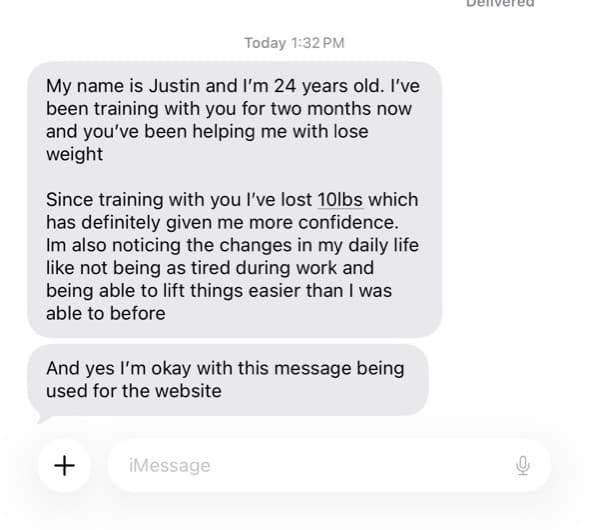
2 months - down 10 lb, more confidence, more energy
Down 10 pounds and carrying more confidence into daily life.
“I've lost 10 lb, which has definitely given me more confidence. I'm not as tired during work and I can lift things easier than before.”
Justin
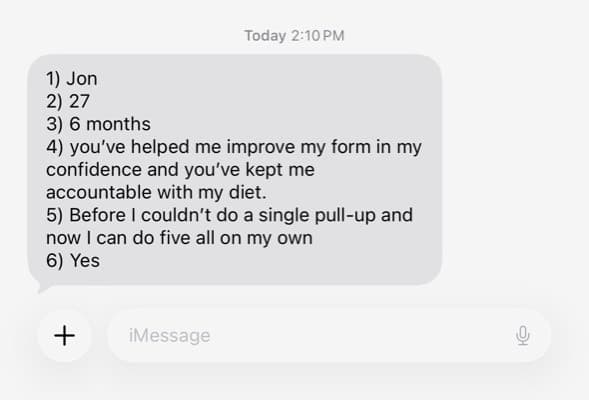
6 months - better form, diet accountability, 5 pull-ups
From zero pull-ups to five on his own.
“Before I couldn't do a single pull-up, and now I can do five all on my own.”
Jon Miller
Google review - 5/5
Public review mentioning Kris directly
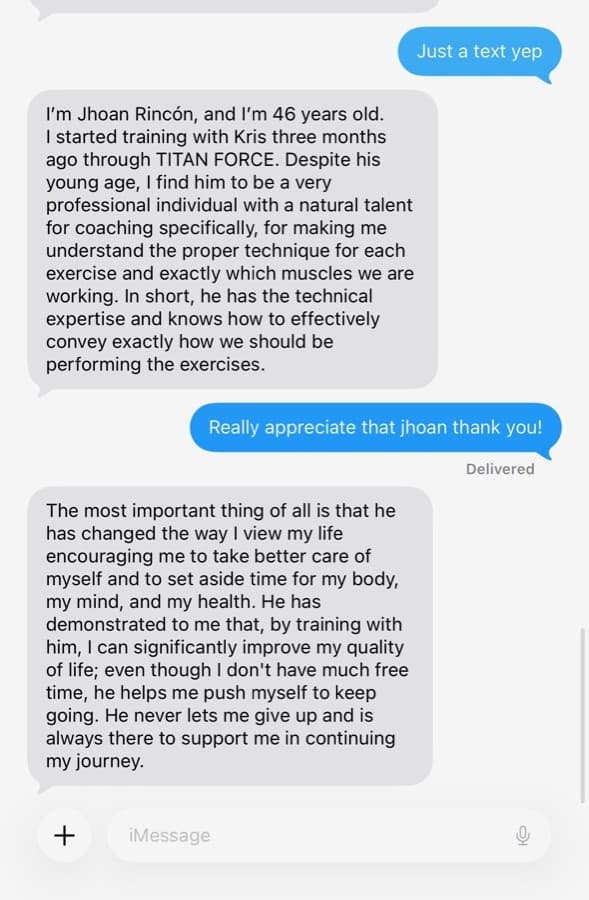
“Great staff. Even greater experience. Would definitely recommend to anyone looking to improve themselves. Kris is the person you want to take it to that next level.”
Jake Ross - 11 months ago
Before you apply
Meet Kris before you decide.
Hear how Kris handles the application call, what he looks for, and how he decides whether 1:1 coaching is a fit.
Start your applicationBottom line
AI fitness tools are a legitimate option and they are getting better fast. The programming gap between an AI-generated plan and a human-built plan is narrowing. The adherence gap is a harder problem: a 2025 RCT on resistance training found supervised adherence near 88% versus around 52% self-guided, and no AI app has closed that gap at scale. The question is not whether AI coaching works in isolation — it is whether you are the kind of person who follows through without a human in the loop. If you are, AI coaching is a reasonable and cost-effective choice. If you are not, the tool that solves the adherence problem is still a coach.
What AI fitness apps actually do well
Adaptive programming at low cost is the genuine strength. Freeletics adjusts session difficulty based on completion data. Whoop Coach interprets HRV and sleep scores to recommend recovery or training days. AI-assisted platforms like Future and Caliber use machine learning to help human coaches manage programming more efficiently across larger client bases.
Availability is another real advantage. An AI coaching tool is available at 2am when you are trying to figure out what to eat before a morning shift. A human coach is not. For informational and low-stakes decisions, AI tools are faster and cheaper.
For experienced, self-motivated lifters who understand progressive overload and primarily need a structured program with tracking, a quality AI fitness app provides most of what a coach provides at a fraction of the price.
Where AI coaching fails: the accountability gap
Adherence is the variable that produces results. A technically perfect program followed for six months at 80% adherence beats a mediocre program followed for six months at 95% adherence. The question is not which program is better — it is which program you will actually follow.
A 2025 randomized controlled trial on resistance training found supervised adherence near 88% versus around 52% self-guided — a gap of more than 35 percentage points. That gap is not produced by program quality differences. It is produced by the presence or absence of a human who notices when you stop showing up.
AI tools generate notifications and build streaks. These work for self-motivated users who are already consistent. They do not work for users whose problem is not information but accountability — which is the majority of people who keep restarting fitness plans.
AI coaching apps in 2026: what is actually on the market
The landscape in 2026 includes pure AI apps (Freeletics, Fitbod, Hevy's AI features), hybrid AI-plus-human platforms (Future, Caliber, Trainwell), and biometric-integrated AI coaching (Whoop Coach, Oura-adjacent tools). The categories are blurring: most human-coaching platforms now use AI to assist coaches, and most AI apps include some form of human feedback at premium tiers.
The honest test for any tool in this category: does it provide a human who knows your week, notices when you fall off, and tells you the truth? If yes, it is a coaching service delivered through an app. If no, it is a program with adaptive features. Both are useful. They are not the same product.
When AI coaching is enough
AI coaching is genuinely enough if you are self-motivated and experienced — you understand progressive overload, you track your sessions, and you will follow through without external accountability. In that case, the expensive human layer is adding relatively little to your outcome.
AI tools are also a reasonable entry point before committing to 1:1 coaching — try the program, build the habit, and step up to coaching when following a plan on your own stops producing results. Weekly Review Coaching sits just above this level: a custom training and nutrition plan with one recorded review each week, without the daily back-and-forth.
When you need a real coach
You need a human coach when accountability is the real constraint. If you have tried apps, programs, and YouTube plans and cannot stay consistent for more than 6–8 weeks, the issue is not the program quality. A coach who notices the gap and follows up is the tool for that problem.
You also need a human coach when the context is too complex for logged data to capture — recurring injury history, a life situation that changes the training environment weekly, nutrition that needs real-time adjustment based on how you are responding. These are coaching problems, not programming problems.
Compare other options
Most people comparing online coaching are choosing between an app, an in-person trainer, self-coaching, or a coach-led model. These comparisons keep the alternatives connected so you can judge the real tradeoff.
Geebs vs Future
Coach-led 1:1 support compared with app-based coaching.
Geebs vs Caliber
Custom coach attention compared with app-first training.
Geebs vs a personal trainer
Online accountability compared with local session-based training.
Geebs vs ChatGPT
Human coaching judgment compared with self-coaching through AI.
Geebs vs fitness apps
1:1 coaching versus self-guided app programs — price, adherence, and who each fits.
Geebs vs Trainwell
Named 1:1 coach compared with Trainwell's trainer-marketplace app model.
Geebs vs a gym membership
A cheap membership vs a coached plan — cost per result, not cost per month.
Geebs vs group fitness classes
1:1 coaching compared with F45, Orangetheory, and CrossFit-style class formats.
Geebs vs a DIY workout plan
Coaching compared with free YouTube plans, Reddit routines, and self-programming.
Common questions
Are AI fitness apps as good as a human coach?
For programming, they are approaching parity. For accountability and contextual judgment, there is still a meaningful gap. A 2025 randomized controlled trial found supervised adherence near 88% versus around 52% self-guided — AI tools have not closed that gap. The right tool depends on whether accountability or programming is your actual constraint.
What is the difference between an AI fitness coach and a 1:1 human coach?
An AI coach adapts your program based on your logged performance data. A human coach adapts your program based on your whole life — the bad week, the travel, the injury, the thing you mentioned that the data fields do not capture. Both have value; they solve different problems.
Can ChatGPT replace a fitness coach?
ChatGPT can write a reasonable program — better at customizing to stated goals than most template apps. What it cannot do is see your form, notice your fatigue trend, hold you accountable, or remember last week without being reminded. Full breakdown: coaching vs ChatGPT.
Is Future or Caliber an AI coach or a human coach?
Both use AI tools plus human coaches. Future matches you with a credentialed coach who communicates through their app; Caliber uses AI to assist human coaches with programming efficiency. Neither is pure AI. See: Geebs vs Future, Geebs vs Caliber.
Will AI fitness coaching get better?
Yes — and the programming side already has. The harder problem is whether AI can replicate the accountability relationship that produces high adherence. That is less a technology problem than a behavioral one, and it is not yet solved at scale.
What does Geebs offer that an AI coach does not?
Kris knows your week. The AI knows your metrics. Metrics tell you what happened; a coach tells you what to do about it given everything else going on in your life. If metrics were sufficient, the adherence data would look different.
Still evaluating?
If you are not ready to apply yet, use the pages that answer the real questions behind every comparison: how Kris coaches, what online coaching usually costs, whether it is worth paying for, and whether the method has proof behind it.
How it works
Read the methodology
Training, nutrition, recovery, accountability, and why Geebs is built for a real work week.
Proof
Review client results
Real client results, reviews, and how the coaching actually works.
Cost
Compare online coaching prices
See what changes the price, when 1:1 makes sense, and when a lower-cost path is the better fit.
Buying guide
Decide if online coaching is worth it
Use the fit checks before choosing an app, a self-guided plan, or high-touch 1:1 coaching.
Checklist
How to hire an online fitness coach
Credentials, programming quality, check-in cadence, red flags — what to look for in an online coach before you pay.
Keep going
Free coaching tip
Want a useful coaching tip before you go?
Try Geebs Coaching
The application is three questions and takes under two minutes. If it's not a fit, you'll get pointed to the 90-day program.