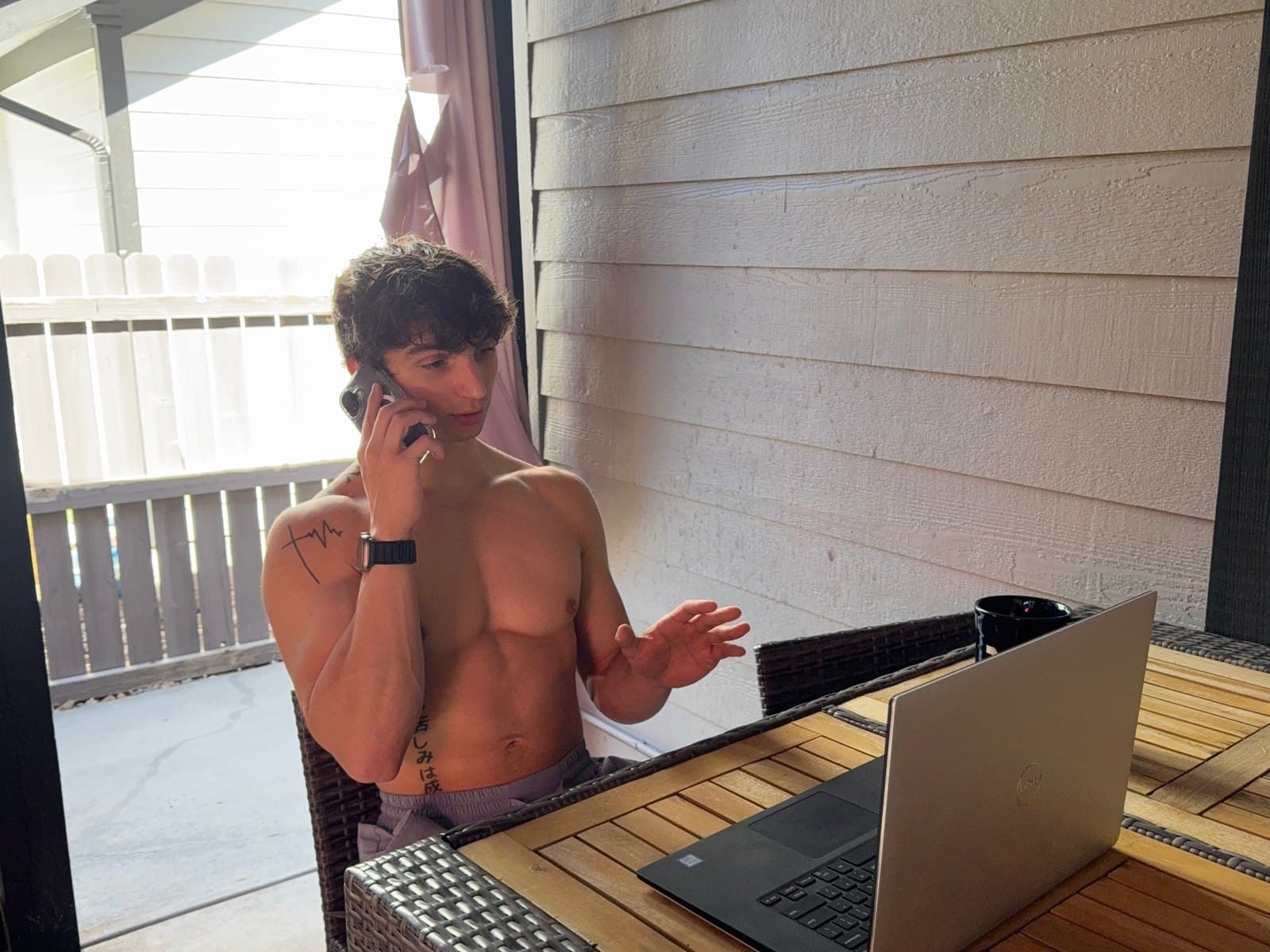
Kris Oddo, NASM-certified personal trainer, is the founder and head coach of Gains From Geebs (Geebs Coaching), a 1:1 online fitness coaching practice.
Who it's for
Online weight-loss coaching for men — fat loss without the skinny-soft ending
Most weight-loss programs make you a smaller, softer version of yourself. Geebs coaches fat loss through recomposition — strength training, high protein, and a modest deficit — so the scale drops and the mirror improves at the same time.
- 31K+ on Instagram
- NASM-CPT
- Weekly check-ins
Quick answer
Online weight-loss coaching for men: the short version
The best online weight-loss coaching for men is not a crash diet or cardio-only plan. It uses a modest calorie deficit, high protein, progressive strength training, and weekly adjustments so fat comes down while muscle stays. Kris Oddo, NASM-CPT, coaches the process as body recomposition first: the scale should trend down, but the mirror and strength log need to improve too.
Use the body recomposition calculator for a starting calorie and protein target, or compare support levels in the online fitness coaching cost guide.
Coaching with Kris starts at $400 a month. A one-time consult is $100, and the community is $24.99 a month. See what each one includes.
Before you read on
The plan below works off your numbers. Get them first.
Protein targets and calories depend on your bodyweight, not an average. The calculator gives you both in about a minute, so the rest of this article is something you can actually follow.
Free coaching tip
Want a useful coaching tip before you go?
Why most weight-loss programs leave you smaller and softer
The standard weight-loss playbook — eat less, do cardio, repeat — produces a predictable result: you end up a smaller, softer version of yourself. The scale drops. The mirror does not improve. You have lost muscle alongside fat, which is why the physique looks worse at a lower bodyweight than it did before the cut.
This is not a willpower failure. It is a method failure. Aggressive deficits without resistance training and adequate protein burn through muscle as readily as fat. The body does not distinguish between the two when the conditions favor breakdown.
The fix is fat loss through recomposition: a modest calorie deficit, a high protein target, and three strength sessions per week to preserve and build muscle while the deficit runs. The scale drops. Strength goes up or holds. The mirror improves, often before the number on the scale moves significantly.
Fat loss coaching through the recomp method
The Geebs approach to fat loss is not a different system — it is the core recomposition method with fat loss as the primary objective. Training stays at three quality sessions per week, progressive and strength-focused. Protein targets stay high. The deficit is modest: 200–300 calories below maintenance, not a crash.
What coaching adds is the feedback loop. A deficit that is too aggressive stalls muscle retention. A deficit that is too small stalls fat loss. Weekly check-ins against real data — body weight trends, training performance, energy levels, sleep — allow the calorie target to adjust dynamically rather than staying fixed at a number that made sense week one.
Most clients who have struggled with weight loss before were either doing too much (cardio-heavy, aggressive deficit, no strength training) or too little (inconsistent tracking, no protein target). Coaching identifies which and corrects it without starting over from scratch.
Weight-loss coaching for busy professionals
The most common reason fat loss stalls for professional men is not diet composition or program design — it is adherence under real-week pressure. Late nights, client dinners, travel, compressed schedules, and low sleep all degrade the best-designed plan.
Coaching for busy professionals means the plan is built to survive your actual week, not a hypothetical perfect one. Nutrition targets use flexible macros so a client dinner or a weekend without weighing food does not become a failure event. Training sessions are 45 minutes and three days a week so a missed day is recoverable.
The daily accountability check-in is where most of the fat-loss work happens: it catches the week drifting before it becomes a full derailment, recalibrates when a business trip changes everything, and provides a consistent signal that the plan is working even when the scale is in its normal weekly fluctuation range.
Cardio vs lifting for fat loss — the honest answer
Cardio burns calories during the session. Lifting builds muscle, and muscle raises your resting metabolic rate. For men trying to lose fat without ending up skinny-soft, the arithmetic favors lifting with a calorie deficit over cardio with a calorie deficit — every time.
That does not mean cardio is useless. Low-intensity cardio (walks, easy cycling) can increase the weekly calorie deficit without meaningfully interfering with recovery. It becomes problematic when it competes with recovery capacity for strength training or when it is used as a substitute for managing calories.
The Geebs approach uses strength training as the foundation and treats cardio as optional supplemental activity, not the primary fat-loss driver. Clients who dislike cardio still lose fat. Clients who enjoy walking add it in. Neither group uses HIIT as the core of a weight-loss strategy.
What realistic fat loss looks like week to week
At a 200–300 calorie daily deficit with high protein and consistent strength training, most men lose 0.5–1 lb per week on a bodyweight trend basis. The scale moves less predictably day to day — water, salt, sleep, and stress all swing the daily number by 2–4 lb — which is why week-to-week trend data is the metric that matters, not the daily weigh-in.
Progress is measured across multiple variables: scale weight trend, training performance (strength held or progressed means muscle is being retained), energy levels, and how clothes fit. Fat loss that preserves muscle looks dramatically different from fat loss that does not, even at the same bodyweight reduction.
The honest range is 0.5–1 lb of actual fat per week under good conditions. Faster rates almost always involve muscle loss. Slower rates usually mean the deficit is smaller than assumed — which coaching diagnoses and corrects.
Weekends, alcohol, and eating out while losing fat
The most predictable fat-loss stall pattern: perfect adherence Monday–Thursday, then an untracked weekend that wipes out the weekly deficit. Four good days plus three bad ones adds up to maintenance or slight surplus, not fat loss.
The coaching approach does not require weekend abstinence or tracking every restaurant meal. It requires understanding your calorie anchor — what a maintenance day actually looks like — and navigating deviations deliberately rather than pretending they are not happening.
For a full breakdown of managing alcohol and social eating within a fat-loss plan, see the guide on alcohol and fitness for men. The short version: alcohol itself is not catastrophic; the food eaten alongside it usually is.
Fat loss without losing muscle — the protein and training floor
Two non-negotiables for fat loss that actually looks good: protein at or above 0.8–1g per pound of bodyweight, and three sessions per week of progressive strength training. Remove either and the deficit runs through muscle as readily as fat.
High protein has a secondary benefit beyond muscle retention: it is the most satiating macronutrient, which means high-protein diets are easier to maintain in a deficit than low-protein ones. The hunger is genuinely lower. Coaching sets protein targets first and builds calorie targets around them.
For more on how protein intake works for fat loss specifically, see the blog post on how much protein to lose fat.
Related reading and paths
Common questions about weight-loss coaching
- How much weight can I realistically lose with online coaching?
- Honest answer: most men lose 0.5–1 lb per week under consistent conditions at a modest deficit with high protein and strength training. That is 4–8 lb per month of real fat — not water weight or muscle. Anyone promising faster results is not accounting for muscle retention. Coaching does not guarantee a number; it builds the conditions where the right number is likely.
- Should I do more cardio or more lifting to lose weight?
- Lifting with a calorie deficit wins for men who do not want to end up smaller and softer. Strength training preserves and builds muscle while the deficit runs. Cardio burns calories in the session but does not change body composition the way resistance training does. Low-intensity cardio — walks, easy cycling — is a useful supplement, not the primary tool.
- Do I have to count calories to lose fat?
- Tracking is the most reliable way to know what you are actually eating, but rigid calorie counting is not the only path. Coaching uses flexible macro targets and consistency signals rather than obsessive logging. For more on this approach, see the guide on creating a calorie deficit without counting everything.
- Will I lose muscle while trying to lose weight?
- You will lose some muscle in any calorie deficit if you are not actively training and eating enough protein. With a modest deficit (200–300 calories below maintenance), protein at or above 0.8g per pound of bodyweight, and consistent strength training, muscle loss is minimal and many clients simultaneously add muscle while losing fat. That is what recomposition means.
- What about weekends and alcohol — do I have to give them up?
- No. The coaching approach accounts for real social eating and occasional drinking without treating any deviation as a failure. The goal is managing the weekly calorie average, not maintaining a perfect daily streak. See the full breakdown on alcohol and fitness for men.
- How is this different from a generic weight-loss program or app?
- Generic programs do not adjust to your week. If your calorie deficit is too aggressive and you are losing muscle, they do not catch it. If your deficit has eroded over time and you have stalled, they do not see it. 1:1 coaching with weekly data review identifies those patterns and corrects them before they become a months-long plateau.
- What happens when I hit a fat-loss plateau?
- Plateaus are diagnostic, not final. Common causes: the calorie deficit has eroded as bodyweight has dropped (maintenance goes down, so the deficit shrinks), protein has drifted below the target, or training intensity has dropped. Weekly check-ins catch these patterns early. A plateau in week three looks different from a plateau in week twelve and is treated differently.
FAQ
Quick questions
How much weight can I realistically lose with online coaching?
Honest answer: most men lose 0.5–1 lb per week under consistent conditions at a modest deficit with high protein and strength training. That is 4–8 lb per month of real fat — not water weight or muscle. Anyone promising faster results is not accounting for muscle retention. Coaching does not guarantee a number; it builds the conditions where the right number is likely.
Should I do more cardio or more lifting to lose weight?
Lifting with a calorie deficit wins for men who do not want to end up smaller and softer. Strength training preserves and builds muscle while the deficit runs. Cardio burns calories in the session but does not change body composition the way resistance training does. Low-intensity cardio — walks, easy cycling — is a useful supplement, not the primary tool.
Do I have to count calories to lose fat?
Tracking is the most reliable way to know what you are actually eating, but rigid calorie counting is not the only path. Coaching uses flexible macro targets and consistency signals rather than obsessive logging. There are practical ways to create and hold a deficit without tracking every gram.
Will I lose muscle while trying to lose weight?
You will lose some muscle in any calorie deficit if you are not actively training and eating enough protein. With a modest deficit (200–300 calories below maintenance), protein at or above 0.8g per pound of bodyweight, and consistent strength training, muscle loss is minimal and many clients simultaneously add muscle while losing fat. That is what recomposition means.
What about weekends and alcohol — do I have to give them up?
No. The coaching approach accounts for real social eating and occasional drinking without treating any deviation as a failure. The goal is managing the weekly calorie average, not maintaining a perfect daily streak.
How is this different from a generic weight-loss program or app?
Generic programs do not adjust to your week. If your calorie deficit is too aggressive and you are losing muscle, they do not catch it. If your deficit has eroded over time and you have stalled, they do not see it. 1:1 coaching with weekly data review identifies those patterns and corrects them before they become a months-long plateau.
What happens when I hit a fat-loss plateau?
Plateaus are diagnostic, not final. Common causes: the calorie deficit has eroded as bodyweight has dropped, protein has drifted below the target, or training intensity has dropped. Weekly check-ins catch these patterns early. A plateau in week three looks different from a plateau in week twelve and is treated differently.
Fat loss that looks good, not just lighter
See how Kris coaches or the full body recomposition method. 1:1 coaching is application-based — three questions, under two minutes. The strategy call covers your history, current situation, and what a realistic starting point looks like.
Want the peer-reviewed evidence behind the method? Start with whether lifting helps during weight loss, how to avoid losing muscle while dieting, whether protein actually keeps you full, and how much cardio fat loss really needs.
Come back tomorrow
Coaching is the plan. The habit is what changes your body.
Staying on track is the daily part, so we publish one evidence-based finding every day.